

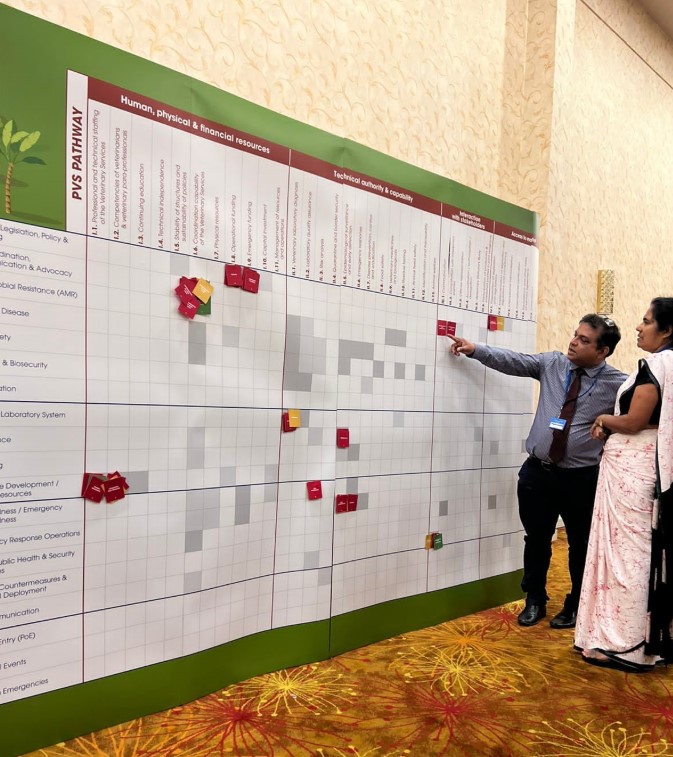
In this blog, Dr Catharina C Boehme discusses the critical role of science-driven collaboration in advancing One Health and strengthening health security in South-East Asia
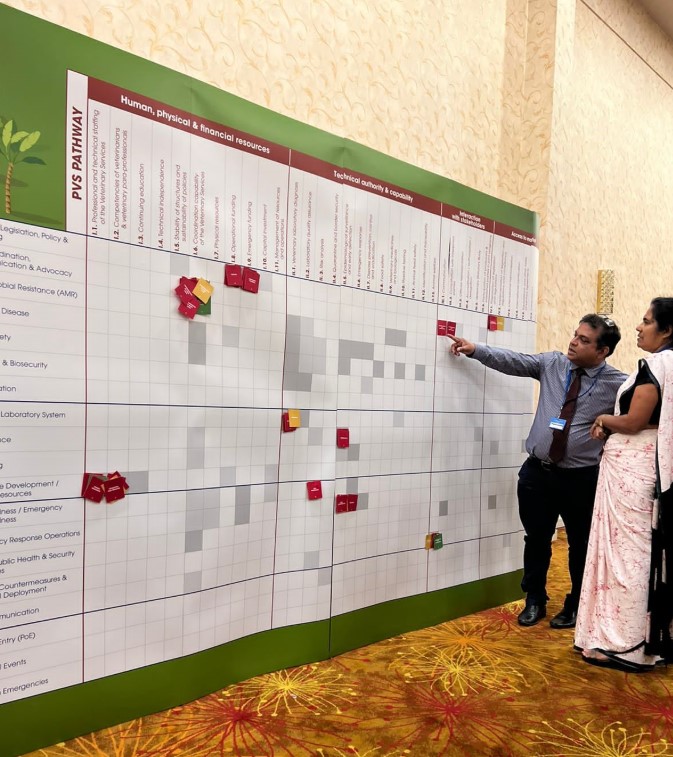
World Health Day (WHD) is an annual global awareness campaign observed on April 7 to mark the founding of the World Health Organisation (WHO) in 1948. Each year highlights a critical global health priority. Under the theme “Together for health. Stand with science”, the 2026 observance launches a year-long campaign emphasising the role of scientific collaboration in protecting the health of people, animals, plants, and the planet. The campaign underscores both scientific progress and the multilateral cooperation required to translate evidence into action, with a particular focus on the One Health approach.
Two major global events anchor the 2026 campaign: the International One Health Summit, hosted by the Government of France under the French G7 Presidency, and the inaugural Global Forum of WHO Collaborating Centres (7–9 April), convening nearly 800 scientific institutions from over 80 countries. Together, these events represent an unprecedented scientific network organised around a United Nations agency, highlighting the importance of science-driven partnerships in advancing global health security.
In this context, Dr Boehme emphasises that science must guide evidence-based action across human, animal, and environmental health domains. The interconnected dynamics among these systems shape the emergence, transmission, and persistence of infectious diseases. Anthropogenic pressures, including land use change, biodiversity loss, agricultural intensification, and climate variability, have altered host–pathogen interactions, increasing the risk of zoonotic spillover and accelerating antimicrobial resistance (AMR). The One Health framework offers a systems-based approach to mitigate these risks; however, scaling this approach across the WHO South-East Asia Region remains constrained by fragmented data systems, limited analytical integration, and weak governance.
Current surveillance systems inadequately capture cross-species transmission dynamics. Human and animal health information systems remain largely vertical and pathogen-specific, with limited integration of environmental data. This fragmentation restricts mechanistic and statistical modelling, which depends on harmonised, longitudinal, multi-domain datasets. Differences in diagnostic capacity, reporting standards, and metadata ontologies further reduce comparability across jurisdictions. As highlighted in the WHO guidance on integrated surveillance, expanding data streams without standardisation can reduce data quality, limit model performance, and weaken early warning capabilities.
Evidence from countries in the WHO South-East Asia Region demonstrates both feasibility and scalable design features. WHO-supported and nationally led initiatives in countries such as Bangladesh, India, and Thailand illustrate integrated One Health approaches across surveillance, prioritisation, coordination, and early detection systems. These experiences show how evidence-based frameworks can inform public health decision-making while remaining adaptable to diverse national contexts.
Despite these advances, regional scale-up remains limited. The expansion of non-interoperable systems reinforces silos, uneven capacity creates persistent gaps in surveillance and analysis, and fragmented governance constrains cross-sector coordination. These limitations prevent pilot initiatives from achieving system-wide impact and reduce the region’s ability to respond effectively to emerging One Health threats.
Effective operationalization of One Health depends on authoritative global guidance to standardize practices, enhance interoperability, and address critical technical and governance gaps. This includes harmonized surveillance protocols, shared metadata standards, diagnostic benchmarks, and cross-sectoral data frameworks aligned with international guidance. Advanced analytics, including genomic epidemiology and integrated modelling frameworks, further enable decision-grade insights and standardized risk assessment.
Equally important are investments in systems enablement and capacity development. Field epidemiology training, interoperable digital infrastructure, and real-time data exchange mechanisms are essential to support coordinated cross-border responses. Governance mechanisms that facilitate data sharing, align policy translation, and support regional cooperation are also critical to sustaining One Health implementation at scale.
Persistent gaps in subnational systems, analytical capacity, and governance underscore the need for sustained leadership and coordination. WHO’s continued stewardship provides a unifying technical and governance framework to maintain global coherence, equity, and effectiveness in One Health implementation.
The COVID-19 pandemic demonstrated both the potential for rapid scientific integration and the consequences of uneven capacity across countries. These lessons are directly applicable to One Health, where similar disparities persist. Ensuring that science serves all populations requires a strong and well-resourced WHO capable of coordinating multi-country initiatives and translating local innovations into resilient regional systems.
In conclusion, One Health must be operationalized as an integrated system that combines data, analytics, and governance. While the WHO South-East Asia Region demonstrates technical feasibility, scale-up remains constrained by fragmentation, capacity gaps, and limited localization. Sustained investment in a strong and well-funded WHO is essential to transform local innovations into resilient, scalable systems capable of addressing complex and emerging health threats at the human, animal, and environmental interface, thereby advancing the World Health Day vision of standing with science to protect planetary health.