

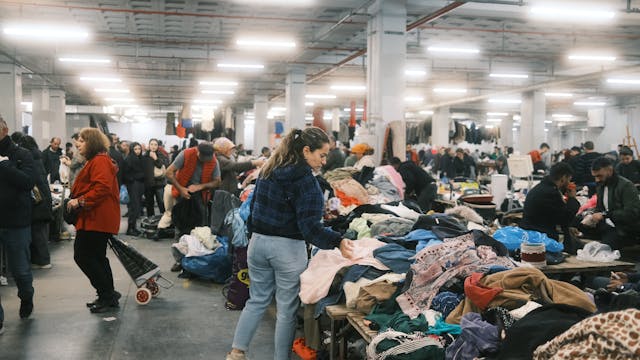
Quick summary: Second-hand shopping has moved well beyond budget necessity, now attracting consumers across income levels who are drawn to the dopamine reward of unexpected finds, the self-expression it enables, and its perceived alignment with sustainable values. Research suggests that thrift shoppers tend to report stronger self-congruence and lower social comparison scores, though evidence also shows that frequent second-hand buyers often purchase more clothing overall, raising questions about whether thrifting reduces consumption or simply reframes it. For mental health practitioners and public health communicators, the trend points to a deeper search for meaning, identity, and emotional reward in everyday purchasing decisions, one that policy and practice may need to engage with more critically.
Second-hand shopping has shifted from a practical necessity to a deliberate lifestyle choice. What was once considered the preserve of those with limited budgets is now mainstream, embraced by people across income levels who are increasingly questioning what and why they buy.
The UK online second-hand market was valued at £4.3bn in 2024 and is projected to reach £4.8bn in 2025, with two-thirds of Britons having bought pre-owned goods online in the past year. The most commonly purchased categories span clothing, electronics, and small household appliances, reflecting a shift that reaches well beyond fashion. This is not simply about saving money. It reflects a broader rethinking of what consumption means and what it costs, not just financially, but psychologically.
The reward system at work
There is a neurological explanation for why thrifting feels good. The joy of not knowing what you might find activates the brain’s reward system, releasing dopamine when you discover something unique. It provides a small burst of positive emotion that can lift mood and break the monotony of daily routine.
This contrasts sharply with the experience of browsing a fast-fashion website, where the range is predictable and the outcome guaranteed. Second-hand shopping requires patience and presence. You walk in without a guaranteed find, sift through racks, touch fabrics, and imagine possibilities. This process engages the senses and slows down decision-making in ways that share some features with mindful attention.
Identity and self-expression
Clothing is rarely just clothing. It is one of the most immediate ways people communicate who they are. Research shows that individuals who primarily wore second-hand or vintage clothing reported higher levels of self-congruence, the alignment between one’s inner sense of self and outward appearance. They also scored lower on measures of social comparison, suggesting less preoccupation with fitting in.
Some vintage and second-hand shops do not distinguish much between luxury brands and lesser-known labels in their pricing, which shifts the focus from status to personal style, fostering a sense of financial control and self-respect. For many shoppers, this is part of the appeal. The item becomes an expression of individual taste rather than a signal of brand allegiance.
The sustainability paradox
The environmental case for buying second-hand is well established, but the reality is more complicated. A study using a nationally representative survey of over 1,000 US consumers found that second-hand consumption was positively correlated with new clothing purchases, particularly among younger consumers and frequent shoppers. Highly engaged second-hand consumers also exhibited high overall consumption and short garment retention.
This suggests that thrifting, for some, becomes another form of accumulation rather than a genuine reduction in consumption. Drawing on moral licensing theory, researchers proposed that second-hand purchases may psychologically justify continued overconsumption, with sustainability knowledge failing to reliably predict sustainable behaviour.
What it reveals about our relationship with things
The popularity of second-hand shopping points to something worth examining. People are searching for meaning in what they own, not just utility. During periods of uncertainty or loss, older and vintage items can offer a connection to the past, often reflecting a standard of craftsmanship that mass-produced goods rarely replicate.
Whether thrifting represents genuine change or a repackaging of the same consumer impulses depends largely on the individual. For some it is a considered ethical choice; for others it is the same urge to acquire, expressed through a different retail channel. The more honest question is not where we shop, but why we feel compelled to keep shopping at all.
Dennis Relojo-Howell is the managing director of Psychreg.