

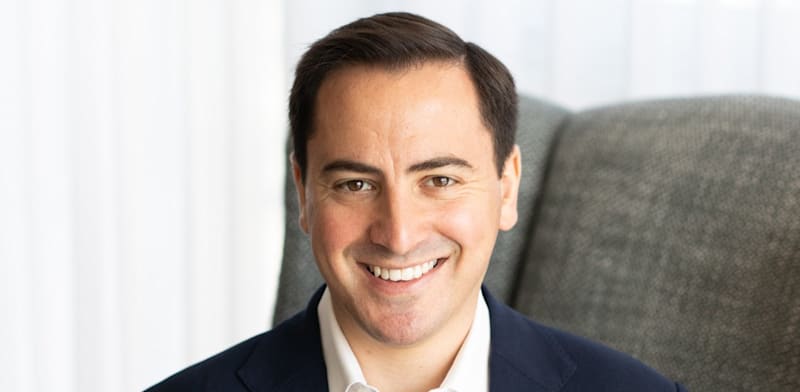
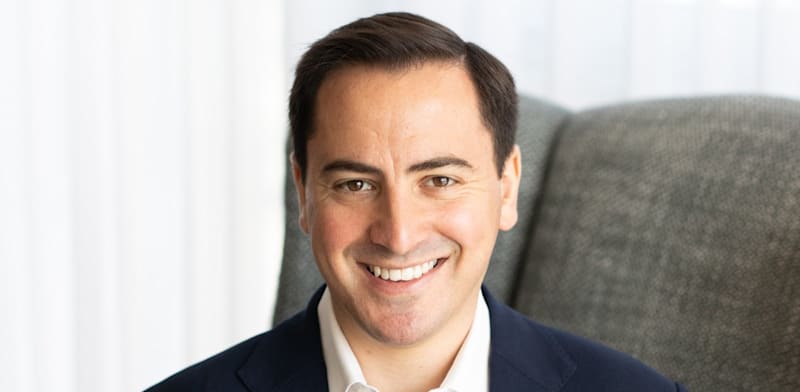
Childhood and family: I was born in London to a French father and a British mother. My father owns a consulting company and my mother is an educator. When I was in second grade, we immigrated to Israel, to Jerusalem. The transition was exciting and relatively easy. Before that, we used to spend a lot of time in Israel, during holidays and vacations. I grew up in a religious home and studied in a state-religious school. To this day, this is my way of life. I had many friends, but I was a problematic student because I was very bored. In the end I finished high school successfully and completed my matriculation exams, largely thanks to two principals the school had, with whom I still maintain a good relationship.
Military: After school I did a year in a pre-military religious preparatory program and then enlisted in Unit 504 (which specializes in human intelligence, including recruiting and operating agents outside Israel). I served there as a combat soldier and commander for three years and later also as a reservist. It was a fascinating service that gave me skills that accompany me in the business world as well. I learned there how people operate and what can motivate them, how to enter a room, scan, understand and build situations very quickly, identify risks and threats but also opportunities.
Studies: I completed a bachelor’s degree in political science and history at the Hebrew University, and at the same time worked as an advisor to a senior minister. I planned to immediately continue to a master’s degree abroad, but then I met my wife, from Herzliya, from a Syrian family. We were introduced when she visited Israel, dated for about a year and a half and decided to get married. I later completed a master’s degree in public policy and administration.
Politics or business: Until I finished my studies, I was completely convinced I would go into politics, but I discovered a lot of mud and negativity there, and I also wanted to earn a better living. So I joined my father’s consulting company, Maydex, as number two. I managed the Tel Aviv branch for about ten years, during which we focused on companies in defense, aviation and public transportation. We did technology scouting for foreign companies and helped them secure partnerships with international firms. I gained extensive experience, and then October 7 shook me on every level.
Entrepreneurship: Family friends of mine, Yitz and Aaron Applbaum, veteran venture capitalists, and Yoav Knoll, an Israeli Air Force veteran, founded Kinetica VC and they invited me to join as partner. We added to the team Brig. Gen. (res.) Amit Kunik, a former senior official in the intelligence community, and Maj. Gen. (res.) Saar Tzur, former head of Northern Command.
To strengthen the connection of our portfolio companies abroad, we brought in an international external advisory team, including a former Italian defense minister, a former head of procurement for the US Marines, a former Secretary of the Navy under Trump, and partners from the US fund 8VC.
Kinetica: Since our establishment in 2024, we have seen nearly 500 startups, but invested in only seven, including Line5, Particle, LimitlessCNC and LiteVision. We are on a clear path to completing a $150 million fundraise, part of which has already been raised. We have investors from all over the world, including from countries in the region. We are looking only for companies with expert teams that present a real technological leap. We are not interested in a company that brings a drone that is a bit lighter, flies a bit faster and a bit farther. We are looking for technologies that will be the next GPS, the next cellular – something that represents a true leap forward.
Defense economics: It’s great that we have Arrow, Iron Dome, David’s Sling and more, but we cannot continue like this economically. It is important for us as a fund to invest in companies that will not only offer technological improvement, but also a substantial economic improvement. If against an improvised drone that costs a few thousand dollars we deploy an Arrow missile and fighter jets and spend millions of dollars per incident, it is not sustainable.
Defense-tech: The boom we saw in cybersecurity over the past two decades will happen in the next decade in defense-tech. Budgets abroad are doubling, tripling and quadrupling. Even if the Russia-Ukraine war and the war in the Middle East end tomorrow morning, the armies of Europe and the US will enter an arms race similar to the Cold War.
In Europe, there was a belief that everything would be fine; there are countries that barely invested in defense and were left without soldiers and with weapons systems from the 1970s. Putin completely shook them, and they now have enormous budgets. Iran’s neighbors relied for a long time on the US, but now they too have woken up. In the UAE, they were hit more in the current war than Israel did. This is a wonderful opportunity for us to connect with them to strengthen the Abraham Accords, but it is also clearly a business opportunity.
Hobbies: I am a die-hard Arsenal fan, and with God’s help they will win the English Premier League this year. When they play, I don’t schedule anything – no meetings and no Zooms. I’m busy.
Published by Globes, Israel business news – en.globes.co.il – on March 25, 2026.
© Copyright of Globes Publisher Itonut (1983) Ltd., 2026.