

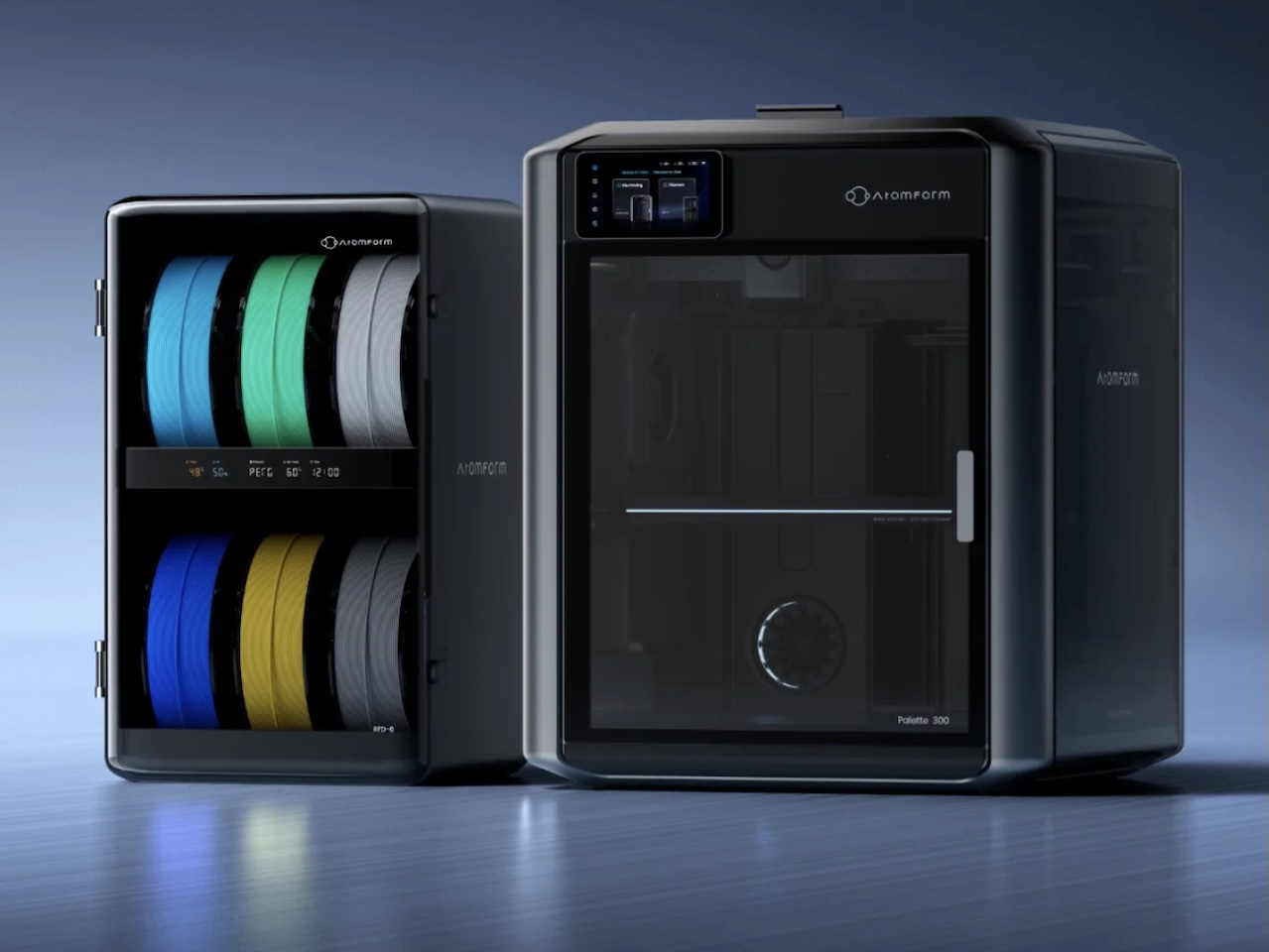
Most multi color 3D printers max out at four to eight filaments. Every time they switch colors, they waste material in a purge cycle that dumps unused plastic. The AtomForm Palette 300, the first multi nozzle 3D printer to carry 12 dedicated nozzles, skips that step entirely. AtomForm claims the design cuts filament waste by up to 90 percent per color change, a number that would make it one of the least wasteful multi-material machines on the market.
Price: From $2,199
Where to Buy: AtomForm
It has 12 separate nozzles, each loaded with its own filament. That setup lets it print with up to 36 colors and 12 materials in a single job with no purging between swaps. You notice the difference immediately in how little plastic ends up in the waste bin compared to conventional systems.
AtomForm is a hardware brand under the MOVA Group, founded in 2023. The company showed off the Palette 300 at CES 2026 in January. It carries a list price of $2,199, with a $50 refundable deposit on atomform.tech that locks in a $999 VIP price for early supporters. Availability is set for early Q2 2026, making this AtomForm’s first commercial printer to actually ship.
Add The Gadgeteer on Google Add The Gadgeteer as a preferred source to see more of our coverage on Google.
ADD US ON GOOGLE
How This Multi Nozzle 3D Printer Swaps Colors
The core technology is called OmniElement. It’s AtomForm’s automatic nozzle swapping system that keeps each of the 12 nozzles loaded with its own filament at all times. The printer doesn’t need to retract, purge, and reload when it switches colors. AtomForm says swaps run 50 percent faster than purge-based systems. That’s a welcome improvement for anyone tired of watching good filament go straight into the waste bin.
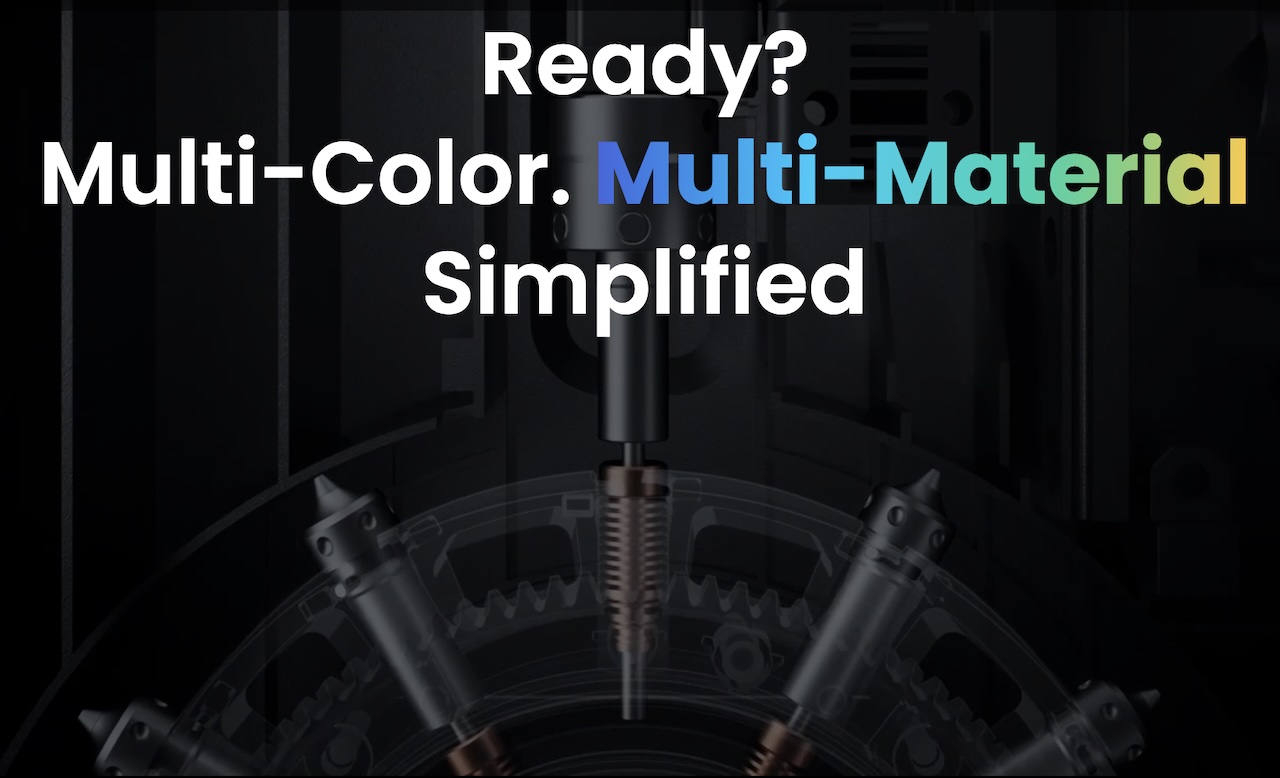 OmniElement reads each nozzle’s color, material type, and diameter before printing starts. When a swap happens mid-print, the system adjusts for tiny position shifts in milliseconds. Alignment accuracy hits plus or minus 0.02 mm. If you look closely at multi-material prints, that precision shows up in the clean transitions between colors and materials that react differently under heat.
ReadyPrint works alongside OmniElement as the feeding system. It loads the next filament while the current nozzle is still printing, as long as the two filaments aren’t on the same feeding layer of the RFD-6. When they are, there’s a short extra loading step. In most cases, though, what’s normally dead time between swaps turns into a smooth handoff. It’s a smart approach that keeps print speed from dropping every time the machine needs a different color or material.
Speed and Precision Under the Hood
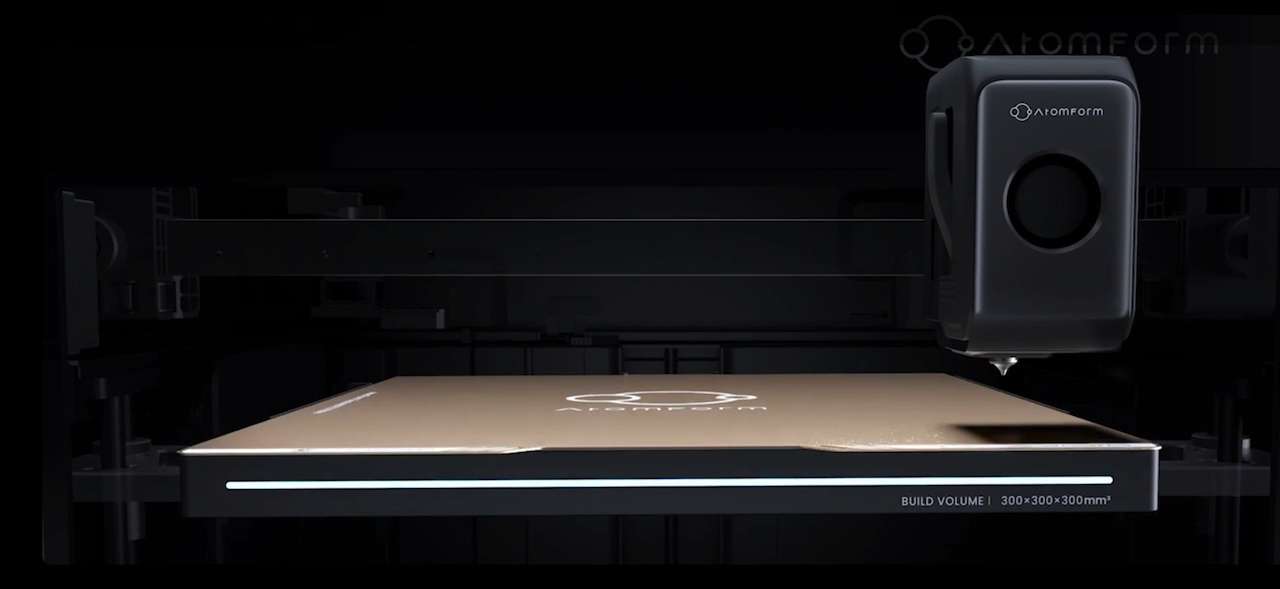
AtomForm rates the Palette 300 at 800 mm/s max print speed with acceleration up to 25,000 mm/s squared. Those numbers put it alongside speed-focused machines from Bambu Lab and Creality. The real question is whether it keeps that pace during complex multi-material prints where nozzle changes break the flow. Build volume sits at 300 by 300 by 300 mm, big enough for full-scale multi-color models or production batches in one run. That’s a generous amount of space for a machine at this price point.
The hardware backing those speeds is solid on paper. FOC step-servo motors give real-time feedback and instant correction, cutting out the missed steps that trip up weaker motors at high speeds. A steel X-axis rail absorbs vibrations for smoother surfaces, even when the print head is moving flat out. Three separate Z-axis motors handle automatic bed leveling, while active vibration control and PA value calibration keep the extrusion steady across long prints. The high-strength frame absorbs impacts and resonance from fast motion, giving the whole system a stable foundation even at top speed.
How the RFD-6 Handles Filament Management
Running 12 nozzles needs a filament system that goes well past a basic spool holder. AtomForm’s companion accessory is the RFD-6, sold separately, which handles drying, storage, and feeding for up to six spools. The best detail is its two-zone layout. The top section dries filament at up to 85 degrees Celsius while the bottom section keeps feeding material to the printer at the same time.
That dry-while-you-print setup is a smart call for moisture-sensitive filaments like nylon and PETG, which soak up humidity from the air and print poorly when wet. If you’ve ever dealt with stringy, bubbling prints from damp filament, you know how much of a time saver built-in drying can be. It removes a whole step from the prep process.
AtomForm does note that running PLA and PETG at the same time while the dryer is on isn’t a good idea. The two materials handle heat differently, so there are pairing limits to keep in mind. It’s a small trade-off, but one worth tracking when planning multi-material jobs.
AI Monitoring and a Quieter Footprint
Four AI-powered cameras and over 50 sensors track the print in real time. The system spots nozzle buildup, checks that each nozzle is locked in through a dedicated camera, and sends alerts straight to the AtomForm app for remote monitoring. Carbon and HEPA filters clean fumes and fine particles from the air, and AtomForm rates the printer at 48 dB or lower in standby, measured one meter from the machine. You can also switch to a local mode that shuts off cloud access entirely, with cameras that only see the print area inside the enclosure. That privacy setup is a welcome touch for users who don’t want a camera-equipped machine phoning home.
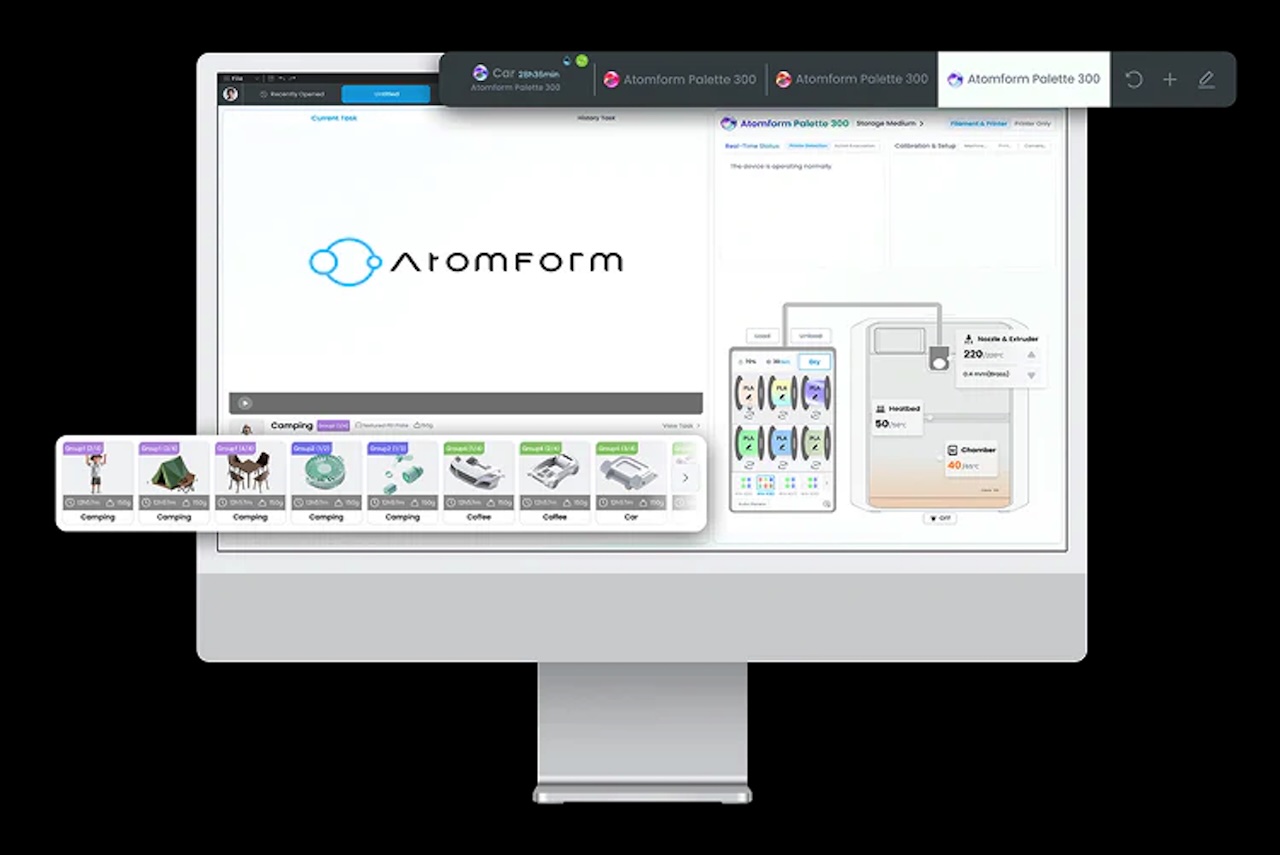
AtomForm added a print queue that lets you line up several jobs without stopping the current one, plus a dashboard for watching multiple printers from a single screen. It’s a workflow layer that signals the company is looking past solo hobbyists and toward small studios, makerspaces, and classrooms running multiple units side by side. The multi-machine thinking is a smart bet for a printer at this price.
Where the Palette 300 Lands in the Market
At $2,199, the Palette 300 sits between the Bambu Lab H2D Combo at $1,749 and the Prusa XL at $2,299 for multi-tool configurations. Both of those printers have proven track records and active user communities, but neither matches 12 dedicated nozzles. Budget multi-color options exist at lower price points, but they top out at four colors and waste more filament per swap.
No other consumer FDM printer offers 12 dedicated nozzles right now. That’s the kind of gap that catches your eye when scanning a spec sheet. The waste savings alone could add up fast for anyone printing multi-color work regularly, assuming the numbers hold up under independent testing.
AtomForm hasn’t shipped a commercial printer before. That makes the Q2 2026 launch both the proof of concept and the first impression. Getting the nozzle system right on the first try would be a strong statement, but first-generation products always carry more risk than established lines.
Price: From $2,199
Where to Buy: AtomForm
The engineering looks solid on paper. Whether it translates to the kind of reliability that earns repeat buyers is the question the 3D printing community will answer once units start showing up.
Love our content?
Sign up for our newsletter today.
No ads, no spam, just links to our latest articles!