


 Most years, you leave Barcelona with a notebook full of announcements and a mental list of things you’ll forget by April. Incremental updates dressed up as revolutions. Concept phones that will never ship. Folding screens nobody asked for, made slightly less fragile than the ones from the year before.
This year felt different. A few things stopped us cold on the show floor, and not in the way a flashy booth does. These stopped us because they made us think about our actual gear, the stuff we carry, train with, or put in our ears every single day, and made us ask whether we’d been settling.
These are the standouts from MWC 2026. What they are, why they matter, and what you should actually know before the hype cycle peaks.
The Gadgeteer MWC 2026 Brand Award: Huawei
No brand at MWC 2026 showed up the way Huawei did. A titanium running watch with redesigned GPS and 14-day battery life. A dual-periscope flagship with two 50MP telephoto lenses. Earbuds transmitting lossless audio at 2.3 Mbps. Three products across three completely different categories, and every one of them landed in the conversation for best-in-class at the show.
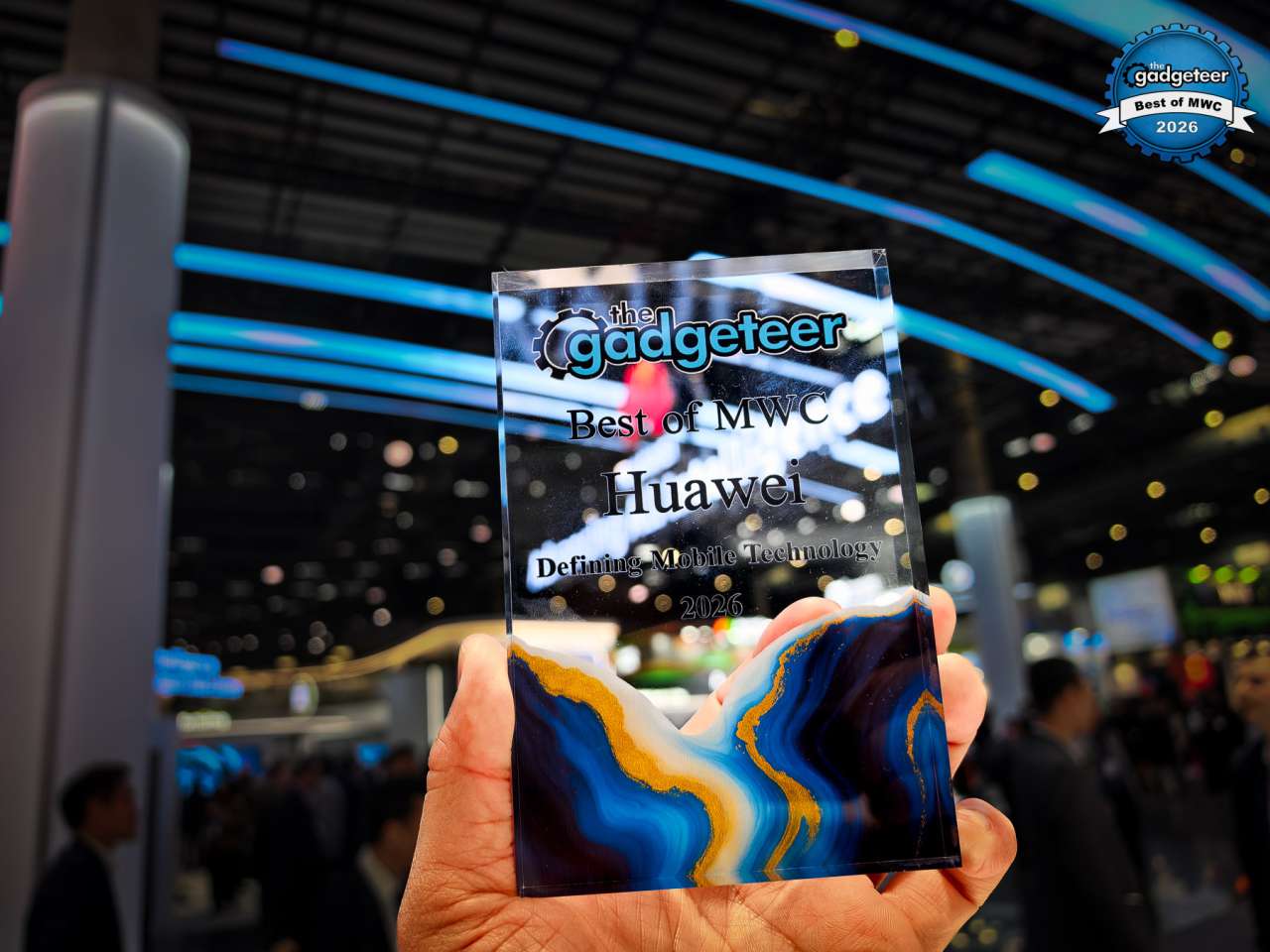
That doesn’t happen by accident. It takes an ecosystem strategy, genuine engineering investment, and the confidence to return to a global stage after years on the sidelines. Huawei earned this. The individual products tell part of the story. The full picture is a brand that came to Barcelona ready to compete on every front at once.
AGIBOT X2: The Humanoid Robot That Had Barcelona’s Full Attention
Every humanoid robot at every trade show does one thing. It performs a routine, nails it, and stops. The handler takes a bow. Everyone moves on. The X2 did the same thing at MWC 2026, and people still couldn’t walk away.
That says something. When the routine is hip-hop choreography, Tai Chi sequences, and a full split executed cleanly by a machine standing at human height, the repetition stops feeling like a limitation and starts feeling like a proof of concept. The X2 ran its demos on a loop. The crowd that gathered for the first run was still there for the third.
The physical performance is what caught most people’s attention first. The X2 can walk, run, do hip-hop choreography, perform Tai Chi sequences, and hit a full split. Those aren’t party tricks in isolation. They’re proof of a joint range of motion and balance system that puts the X2 closer to human movement than anything at a similar price point. At approximately $27,000, it sits in the same ballpark as Tesla’s Optimus target pricing. That comparison will come up constantly, and AGIBOT knows it.
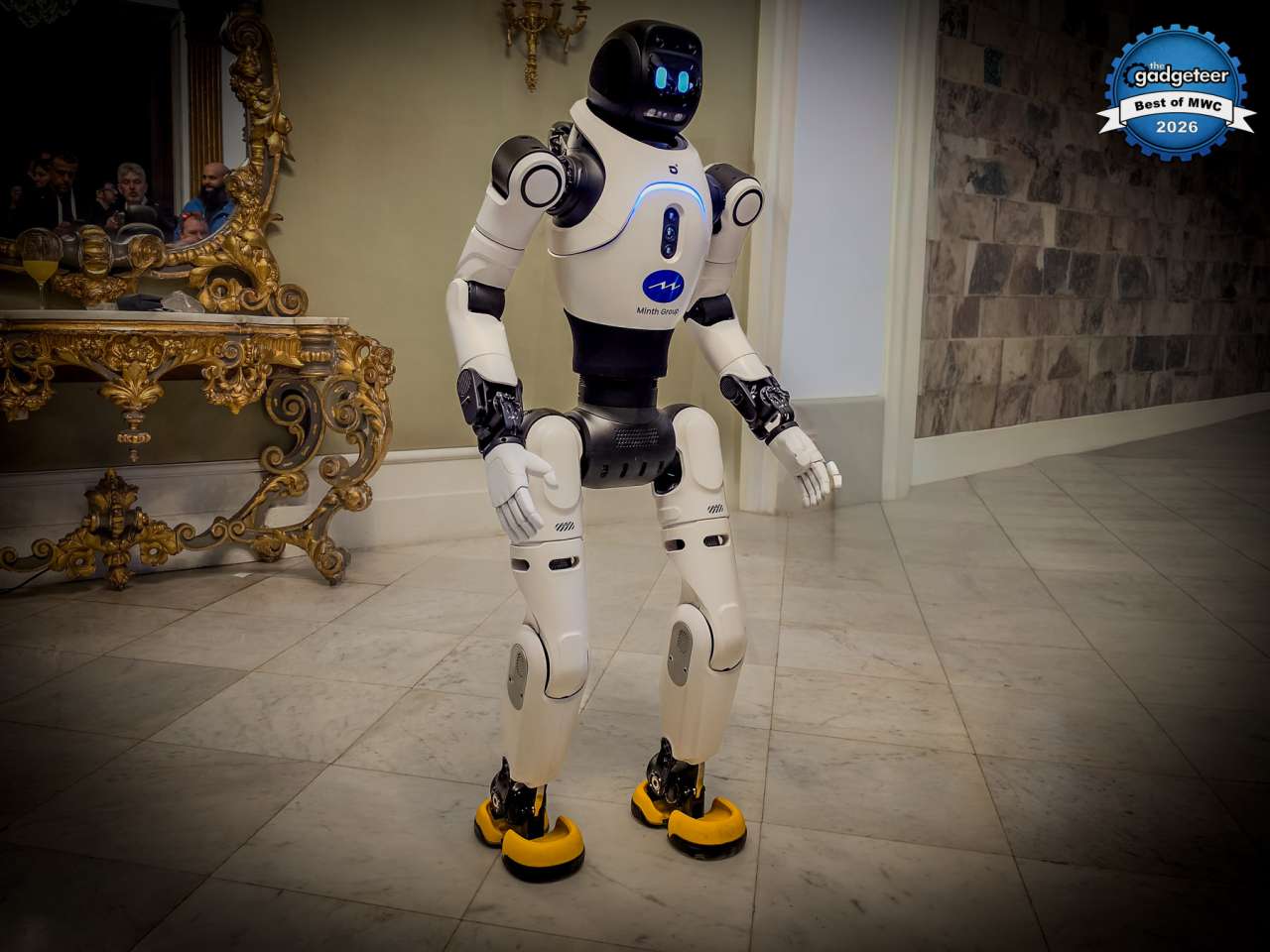
The company’s “one robotic body, three intelligences” framework is what makes the X2 legible in context of the rest of their lineup. AGIBOT didn’t come to Barcelona with one robot. They brought six. The A2 Series handles general-purpose humanoid tasks. The G2 Series is the bipedal platform that ran a 200-unit synchronized performance before the show, a logistics and spectacle proof-of-concept in one event. The D1 quadruped handles patrol and logistics in environments where bipedal movement isn’t practical. The C5 takes care of autonomous cleaning. OmniHand is a standalone high-dexterity robotic hand for environments requiring fine motor precision. Each product targets a different deployment scenario, and all of them share the same underlying intelligence architecture.
AGIBOT won the GLOMO Award at MWC 2026 for their EasyOn 5G-A-RobotNet solution, developed with China Telecom and ZTE. The King of Spain stopped by the booth. Omdia and IDC both ranked AGIBOT the number one humanoid robotics company globally in 2025. The accolades are real, but the floor demo is the more honest credential. Choreographed routines are easy to dismiss until you watch a machine execute a full split cleanly and realize the engineering margin required to do that safely is not trivial.
One brand matched the X2’s range of ambition and spread it across three completely different product categories. Huawei came to Barcelona with a running watch, a flagship phone, and a pair of earbuds. Every one of them landed at or near the top of its category conversation.
Huawei Watch GT Runner 2: A Serious Watch for Serious Runners
Running watches are a crowded category right now. The serious end of the market belongs to a handful of established names. Everyone else fights for the middle, usually by adding features nobody asked for to justify a new model year.
The GT Runner 2 doesn’t play that game. Huawei upgraded the case to titanium, which matters if you’ve ever scratched an aluminum watch on a trail rock or a gym doorframe. They also redesigned the GPS antenna array from the ground up, which is the kind of thing that only sounds boring until you’ve watched your route data zigzag across a park you ran in a straight line through.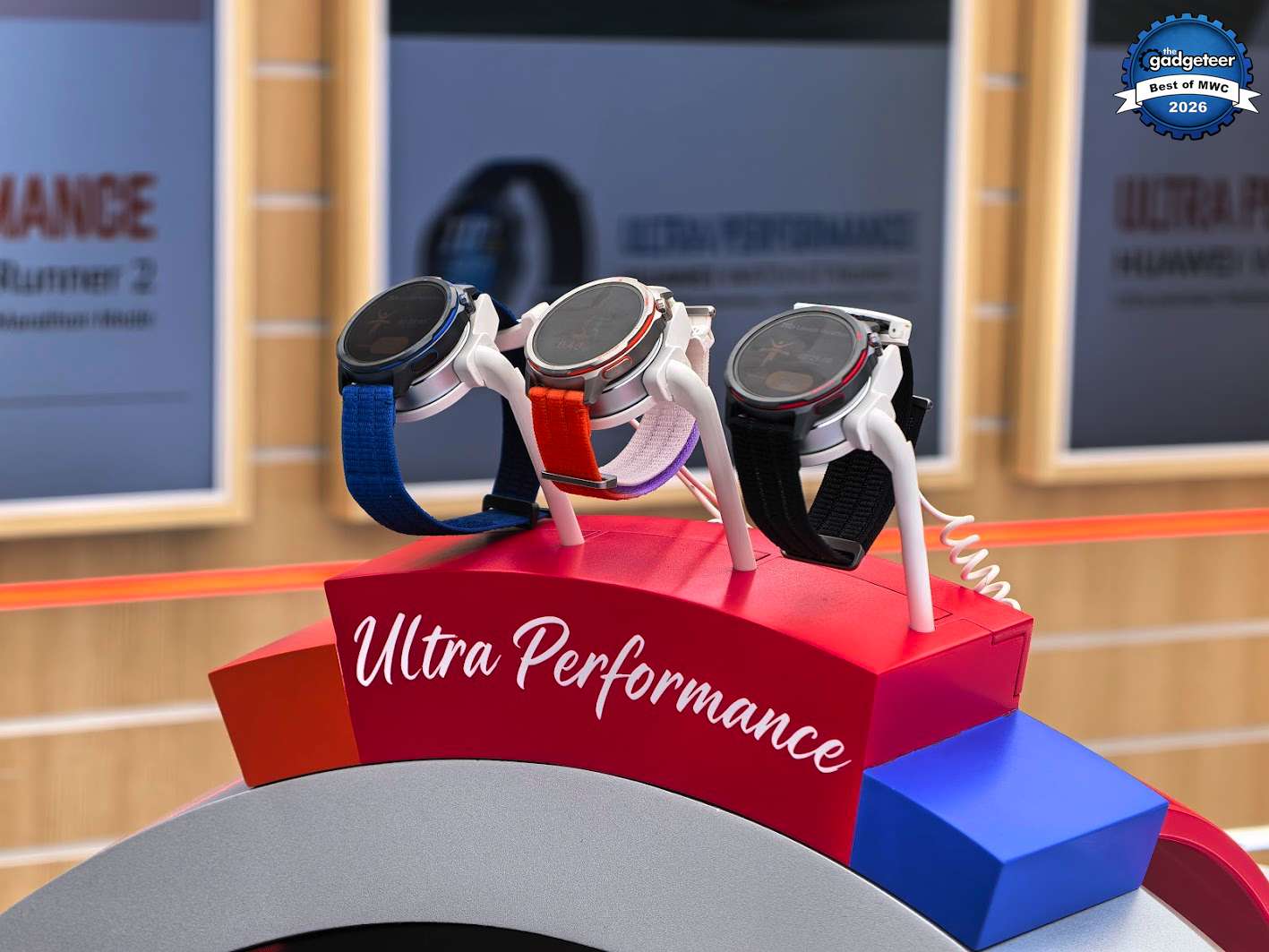
Marathon Mode is the feature that gets the most attention, and for good reason. It’s real-time coaching based on your pace, heart rate, and training load rather than generic zone targets. Whether it delivers in practice is something we’ll test properly once we get a unit, but the concept is right. Runners don’t need more data. They need smarter interpretation of the data they already have.
Battery life is rated at 14 days under light use, 7 days under typical conditions, and 32 hours in continuous outdoor GPS workout mode. The 14-day headline is the best-case figure, but even the 7-day typical number is a real differentiator when competitors are asking you to charge mid-training block.
One honest note: this runs HarmonyOS. No Google services, no Google Maps integration, no third-party app ecosystem the way dedicated smartwatch platforms offer. If you’re deep in the Android or iOS app ecosystem, that’s a genuine trade-off to consider. If you just want a fast, accurate watch with great battery life, it may not matter at all.
Huawei Mate 80 Pro Max: The Camera Phone That Came Back Swinging
Huawei’s return to global ambition is one of MWC’s bigger stories, and the Mate 80 Pro Max is the clearest expression of how serious they are.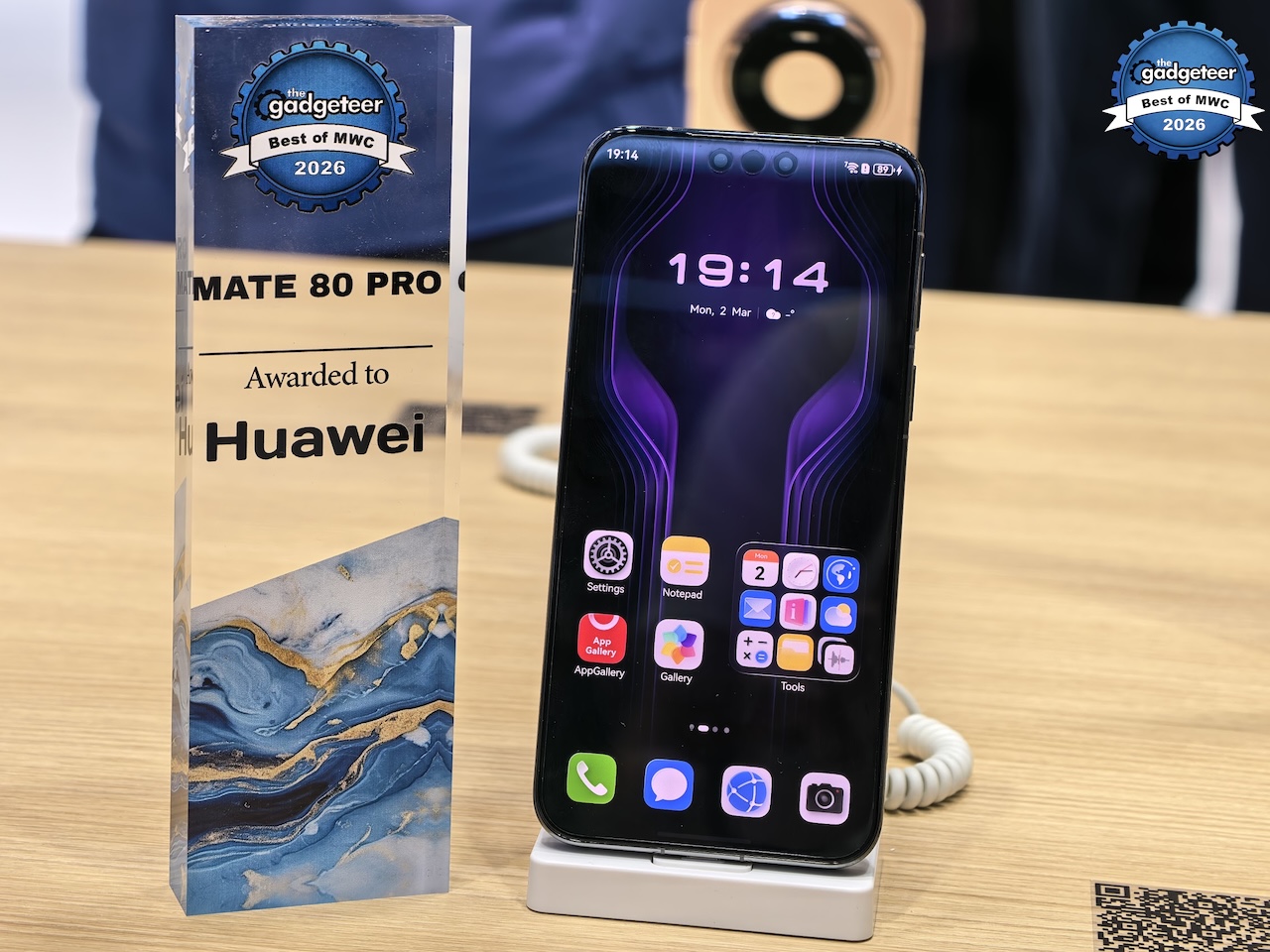
The dual periscope telephoto setup is what gets the headlines, and it deserves them. Two separate 50MP telephoto sensors: one at 4x optical, one at 6.2x. That’s not the same as software interpolation between a single lens. Two physical periscopes mean two genuinely distinct zoom ranges with full optical quality at each stop. The math on what that enables for wildlife, sports, and event photography is significant.
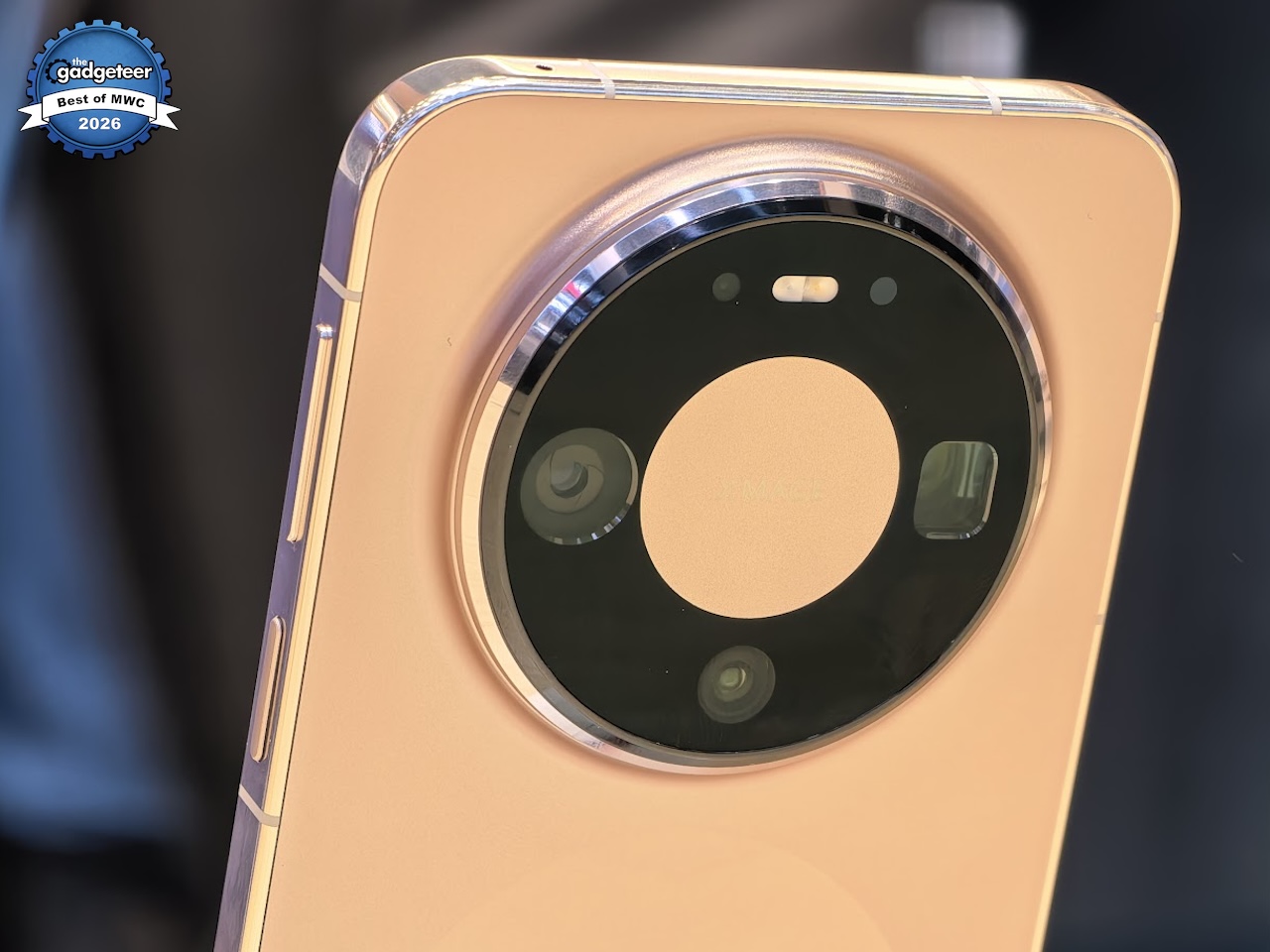
The Dual Space Rings camera design is the visual centerpiece, and it’s a bold move. Not everyone will love it aesthetically, but Huawei clearly made a design decision rather than defaulting to the stacked pill layout everyone else is copying.
Kirin 9030 Pro is the engine underneath, and it pairs with a 6000mAh cell. Battery anxiety on a phone this size shouldn’t be a concern. Expedition Mode adds an extreme conditions layer for users who take their gear seriously off-road or in cold climates, and that’s a thoughtful addition rather than a checkbox feature.
The global comeback angle is real context here. Huawei hasn’t had a clean global launch window in years. Whether the Mate 80 Pro Max lands with full Google services outside of China will determine how many readers can actually buy it. We’re watching that closely.
Huawei FreeBuds Pro 5: Lossless Audio With a Real Asterisk
The FreeBuds Pro 5 has one number that dominates every review so far: 2.3 Mbps. That’s the lossless audio codec speed, and it’s genuinely impressive on paper. No Bluetooth codec currently in consumer earbuds transmits lossless at that rate, which means Huawei is doing something technically real here, not just marketing a lossy codec with a better name.
ANC has also been pushed forward with a dual-driver setup. Early independent testing has rated it best-in-class. We’ll verify that against real-world conditions once we get a unit in hand.

The physical redesign is quiet but meaningful. Ten percent smaller body, six percent lighter. If you’ve worn buds on a long flight or a long run, you know that fit fatigue is real and trim counts.
Battery life is solid without being a standout: up to 9 hours from the buds alone with ANC off, 6 hours with ANC on, and up to 38 hours total with the case if you keep ANC off. Real-world ANC usage lands closer to 27 hours combined. Competitive for the category, though not class-leading.
Here’s the asterisk, because you deserve it upfront: the 2.3 Mbps lossless transmission only works within the Huawei audio ecosystem. If you’re pairing these to a non-Huawei phone, you’ll get standard Bluetooth audio quality. That’s fine for most listeners, but if lossless is your reason for buying, you need a compatible source device. Know that before you commit.
The camera arms race was the other dominant thread at MWC 2026. Before we get there, one phone needs its own moment: the device that walked away with more best-in-show awards than anything else at the event.
Samsung Galaxy S26 Ultra: The First Flagship to Solve the Shoulder Surfing Problem
Every phone screen has the same flaw: people nearby can read it. For decades the fix has been awkward workarounds like tilting the display, shielding it with your hand, or slapping on a dim privacy film.
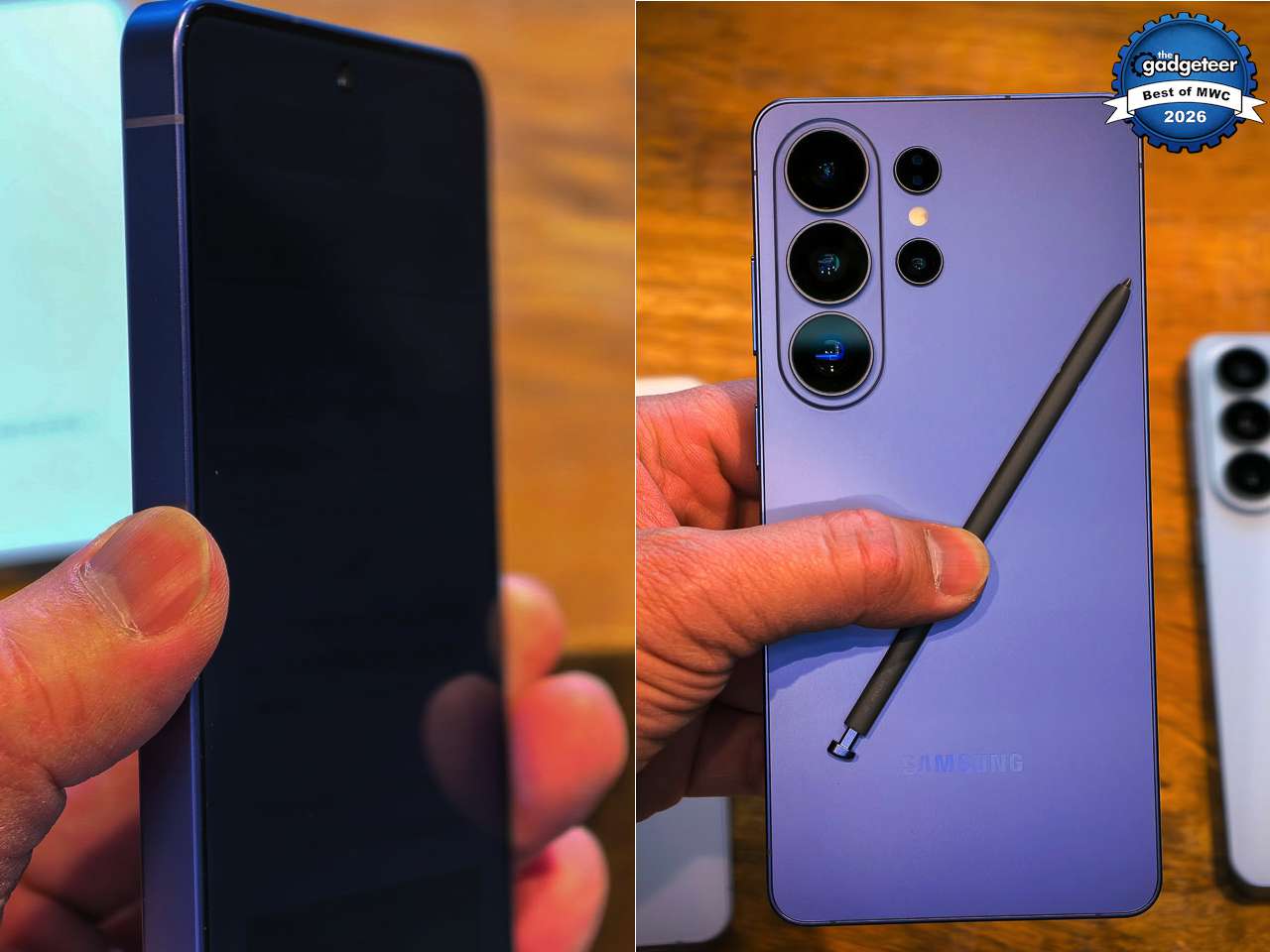
The Galaxy S26 Ultra is the first flagship to solve that problem in hardware. Its built-in Privacy Display makes the screen unreadable from side angles when you toggle it on, while you still get full brightness and accurate color head-on. No film, no case, no software trick.
The rest of the phone is classic Ultra: a 200MP main camera now at f/1.4 for better low light, plus a 50MP ultrawide and 10MP telephoto, Snapdragon 8 Elite Gen 5, 5,000mAh battery, S Pen,
Honor Robot Phone: The Most Interesting Concept on the Floor
Concept only. The Honor Robot Phone has not been announced for commercial release outside China. No global pricing, retail availability, or confirmed production timeline exists. It may never reach markets outside China in this form.
Concept phones at trade shows usually get filed under “probably never ships” within 48 hours. The Honor Robot Phone is different, not because it’s closer to production than most concepts, but because something on the demo floor actually worked the way it was supposed to.
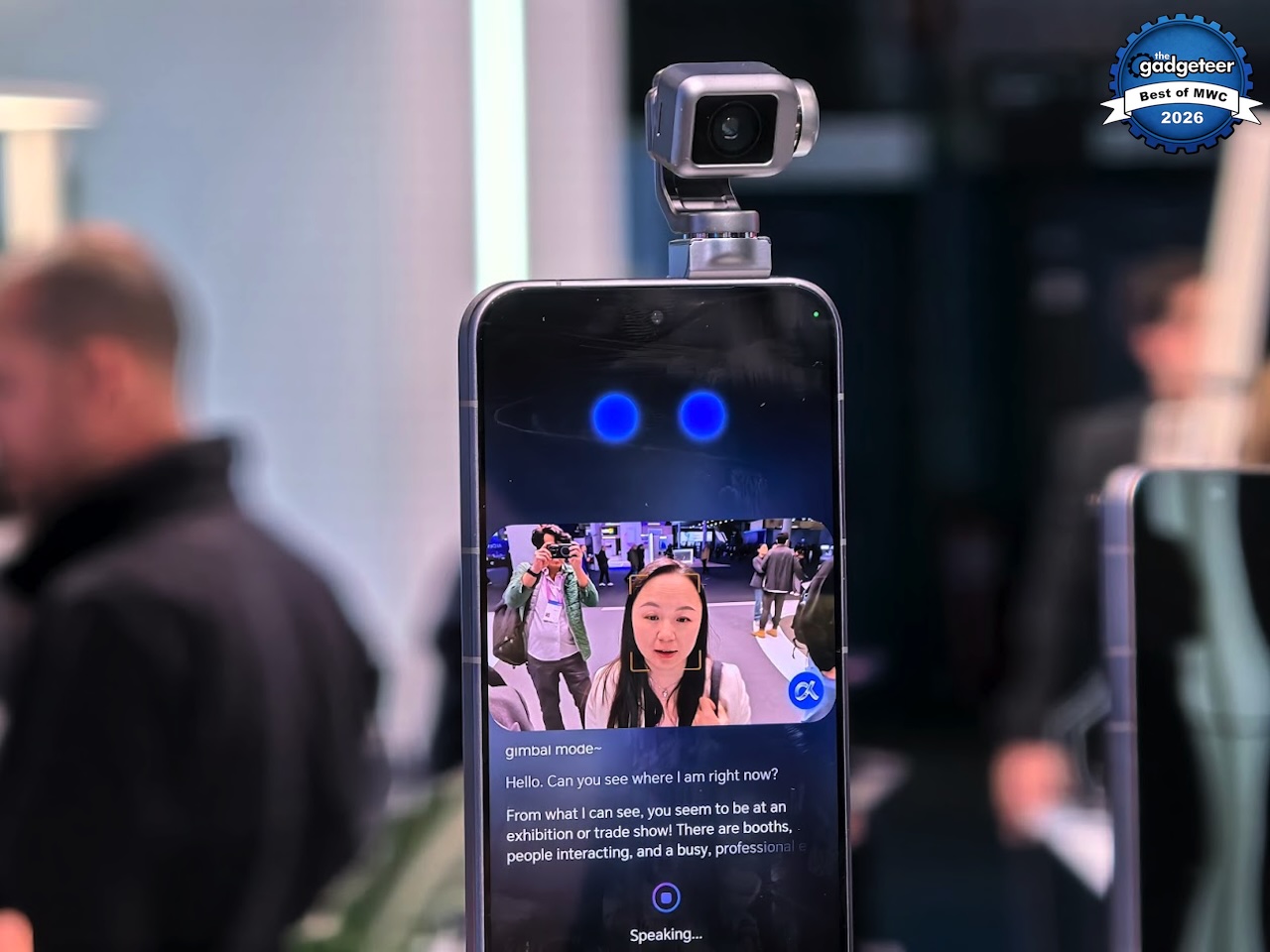
The motion tracking was confirmed live on the show floor: the 200MP main sensor on the 3-axis mechanical gimbal tracked moving subjects in real time. The micro-motor drives physical movement of the camera module itself, not just digital stabilization or software cropping. SpinShot mode lets the camera rotate independently of how you’re holding the phone. That’s a mechanical solution to a problem software keeps trying and failing to solve cleanly.
The ARRI collaboration on AI video processing is the second layer. ARRI builds the cameras used on major film productions. Putting their color science and processing logic into a phone’s AI pipeline is an interesting creative direction, especially as phone video continues to close the gap with dedicated cameras.
James Li, Honor’s CEO, took the MWC main stage for the first time with this device. That’s not a small thing. Honor has been building toward a global identity independent of Huawei for a few years now, and stepping onto that stage with something genuinely novel is a statement.
China launch is targeted for the second half of 2026. Global availability isn’t confirmed. This is still a concept in the truest sense, but it’s the most compelling vision of what a camera phone could structurally become that we’ve seen at a trade show in years. We’ll be watching the production version closely.
Xiaomi 17 Ultra and the Leica Edition: Barcelona’s Best Camera Story
Xiaomi and Leica have been co-engineering camera hardware for a few years now, and every generation moves the collaboration further from marketing partnership into something that actually shapes what the phone can do. The 17 Ultra at MWC 2026 is the clearest proof of that progression yet.
The headline addition this year is a physical rotating camera ring. Not a software control ring. Not a digital UI element on screen. An actual ring that rotates around the camera module housing and changes the optical configuration as you turn it. It’s a tactile interaction with a phone camera that we haven’t seen done this way before, and it’s the kind of thing that makes you want to pick the device up and use it rather than read about it.
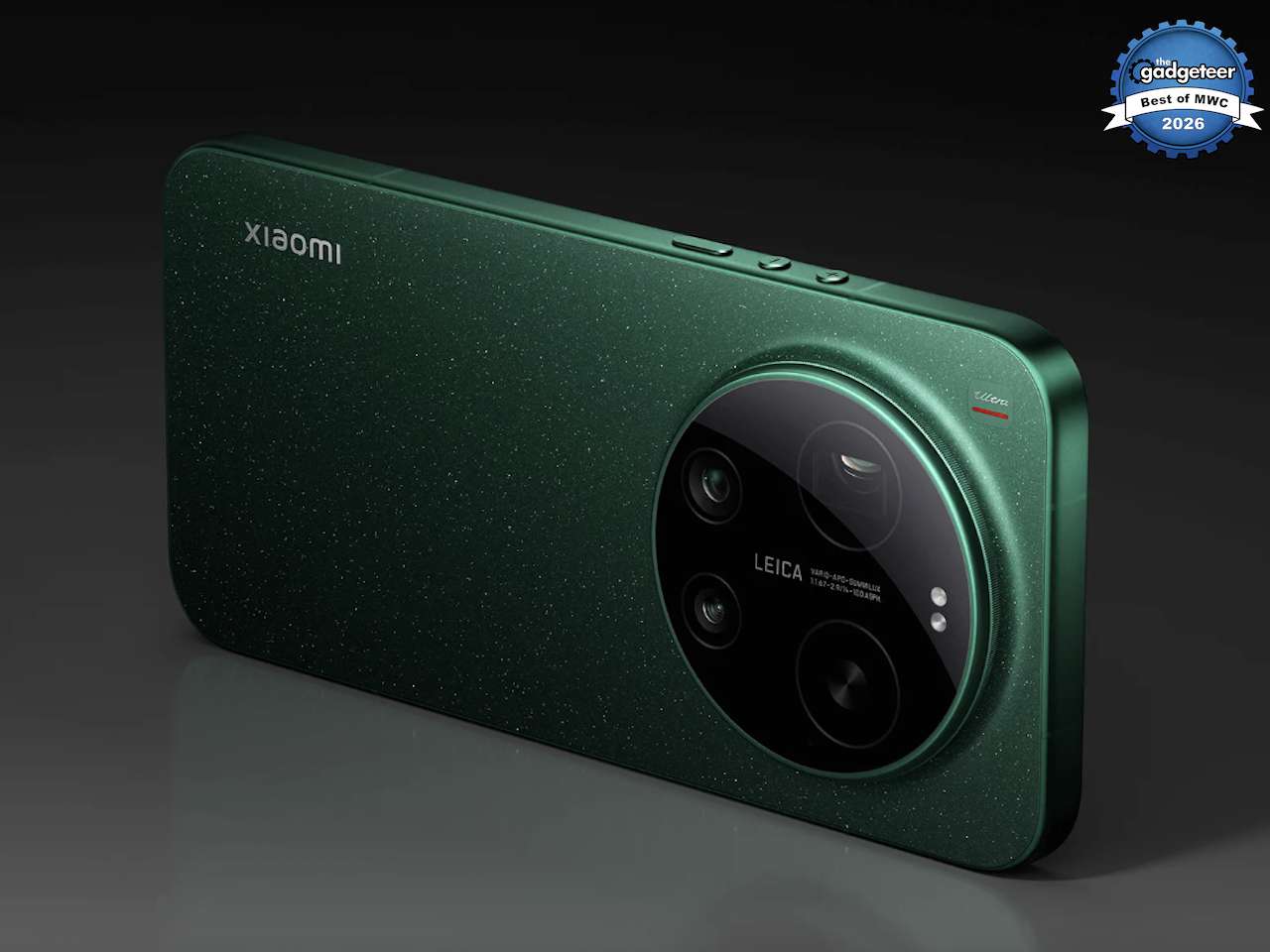
The imaging numbers back up the physical ambition. A 200MP periscope telephoto covers the 75 to 100mm equivalent range, co-designed with Leica’s optical engineering team. Snapdragon 8 Elite Gen 5 handles processing throughout. A 6,000mAh battery means long shooting sessions don’t require managing battery anxiety alongside composition decisions. That combination is a serious kit.
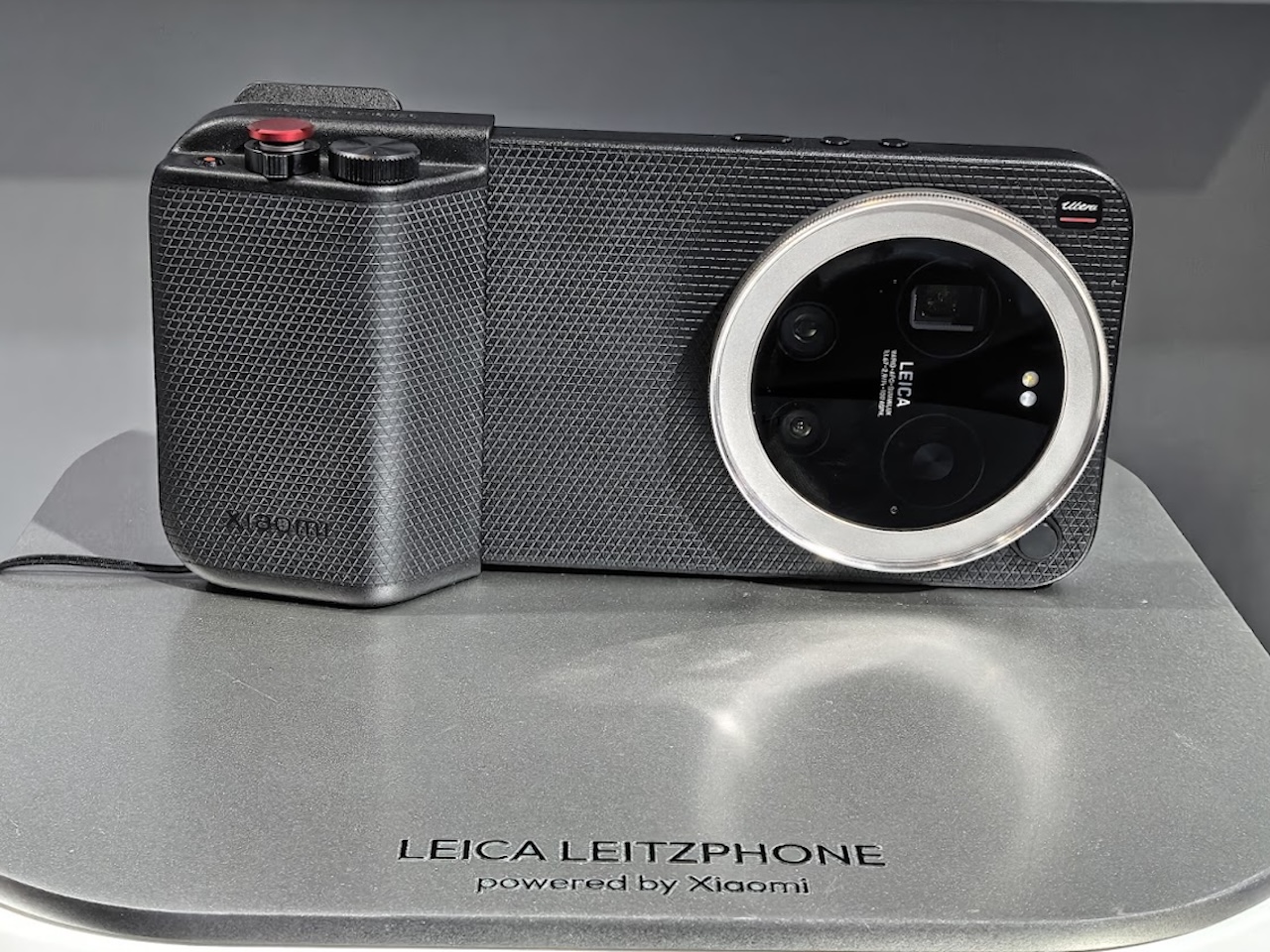
Starting at €1,499 in Europe (roughly £1,249 / $1,649), the 17 Ultra isn’t for everyone. But for readers who take mobile photography seriously and have been watching the Xiaomi-Leica partnership develop, this is the most complete version of that vision to date. Xiaomi also showed a separate Leica Leitzphone concept at MWC, pushing the co-branded direction into even more dedicated-camera territory. We’re watching that one for any production signals.
Vivo X300: The Zoom Story That Came With a Telescope
PCMag’s Best Phone Zoom award at MWC 2026 didn’t go to the Xiaomi 17 Ultra with its Leica periscope, or to the S26 Ultra with its upgraded aperture. It went to the Vivo X300, a phone most North American readers haven’t spent time with, powered by MediaTek’s Dimensity 9500 and arriving in Barcelona with an accessory that changes the conversation entirely.
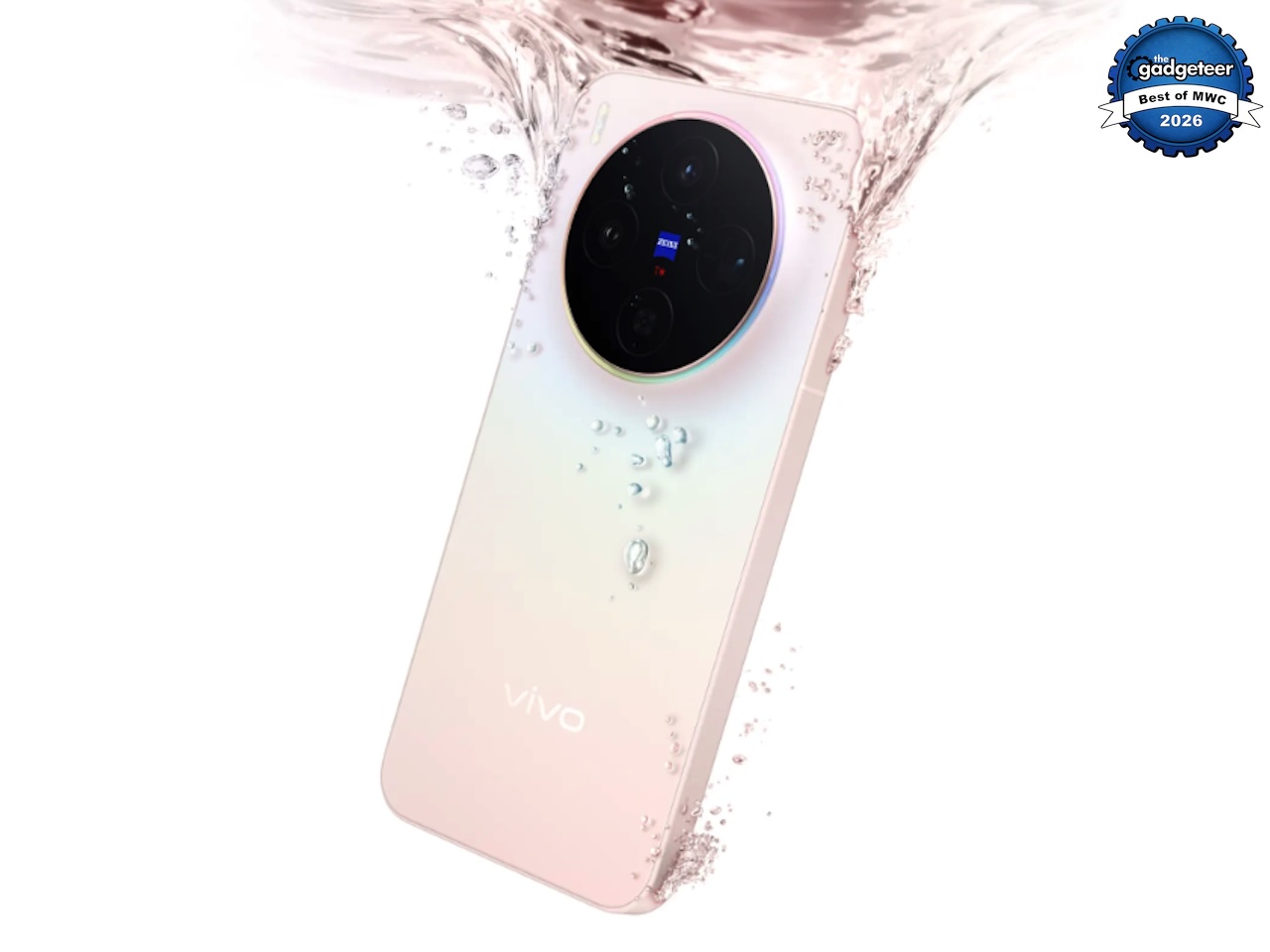
The 400mm Zeiss teleconverter attaches directly to the camera module. This isn’t a third-party lens adapter clipped onto a case. It’s a Zeiss-engineered optical extension that pushes the X300’s telephoto reach into territory where you’d normally need a dedicated camera with a long prime lens. The setup transforms the phone into something closer to a targeted zoom instrument than a smartphone with aggressive hardware inside the chassis. PCMag’s judges saw it on the show floor and gave it the award. That’s a meaningful endorsement from a publication that handled a lot of devices that week.
The base camera system is a triple 50MP configuration across main, ultrawide, and telephoto lenses, all on a 6.78-inch 1.5K LTPO AMOLED display running at up to 120Hz. Dimensity 9500 is MediaTek’s current 3nm flagship processor, the same chip showing up across multiple best-in-class devices this generation. LPDDR5X Ultra RAM and UFS 4.1 storage complete the performance picture.
The price is where the X300 makes its clearest argument. At around $419, it delivers flagship-adjacent optical performance and a Zeiss accessory ecosystem at a price the Xiaomi 17 Ultra can’t approach. Vivo’s Zeiss collaboration is following a similar arc to Xiaomi’s Leica partnership: a branding arrangement that has deepened into genuine optical co-engineering over successive generations. The X300 is the most convincing proof of that trajectory so far.
Form factor was the other battleground. Two companies arrived in Barcelona with fundamentally different visions of what a foldable screen could be, and both had hands-on demos that drew real crowds and real opinions.
Motorola Razr Fold: The Book-Style Foldable That Changes the Comparison
The Razr line built Motorola’s foldable credibility on the back of a flip phone form factor. The Razr Fold is a different conversation entirely. This is a book-style foldable, Motorola’s first, and it showed up at MWC 2026 with specs that make Samsung and Google look over their shoulders.
Start with the display. The inner screen runs at 6,200 nits peak brightness. That’s not a typo. Samsung’s Galaxy Z Fold 6 tops out around 2,600 nits, which means Motorola has more than doubled that figure in its first attempt at this form factor. The outer screen runs its own 6,000 nits at 165Hz. Both displays support the Moto Pen Ultra stylus, a capability Samsung’s Galaxy Z Fold 7 still doesn’t offer across both screens simultaneously.
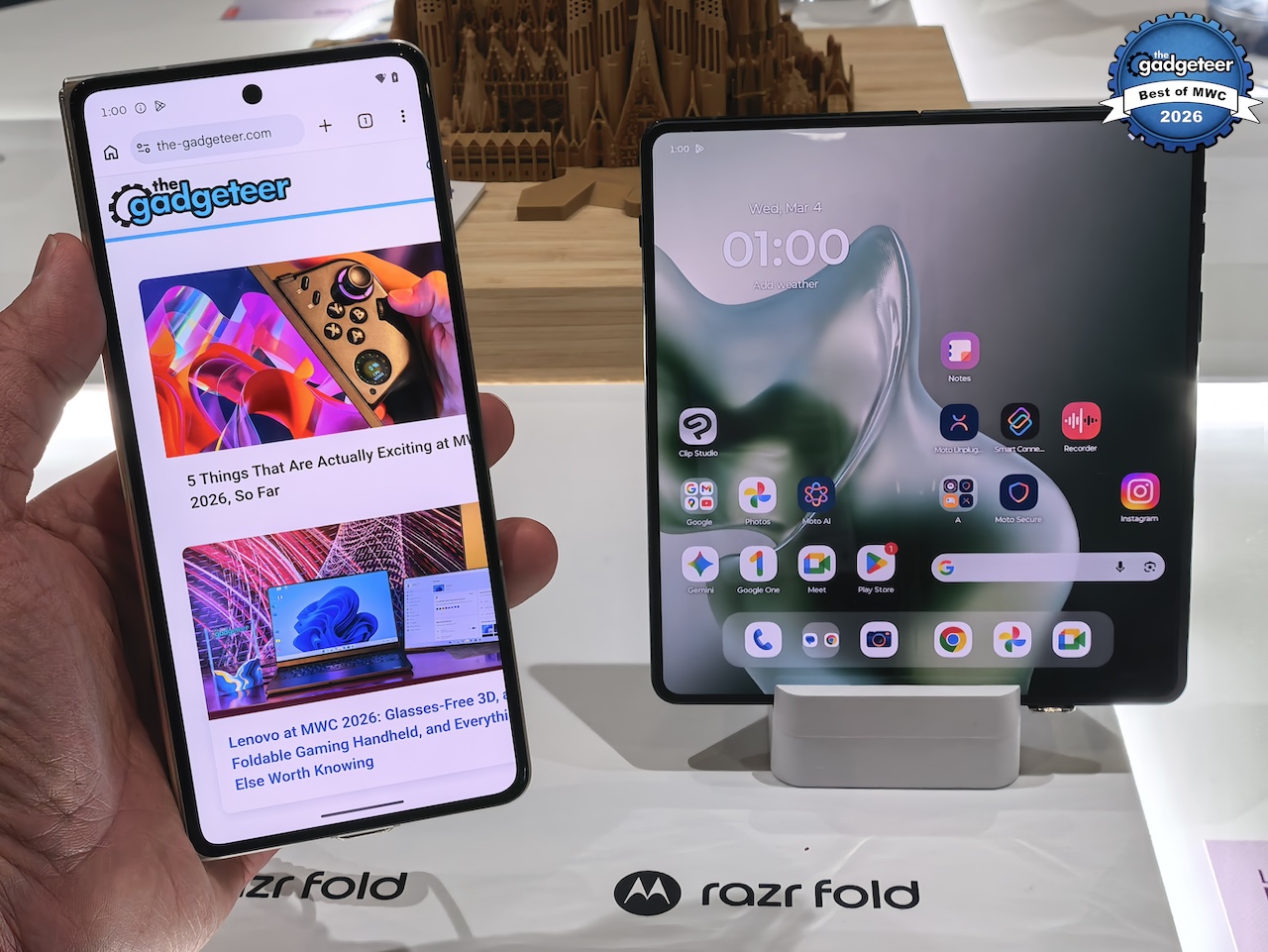
The camera setup is triple 50MP: a Sony LYT-828 main sensor with OIS, a 50MP ultrawide, and a 50MP periscope telephoto at 3x optical. DxOMark awarded a Gold rating before the phone ships, which is rare for any foldable and essentially unheard of for a first-generation device in a new form factor. Samsung’s Z Fold 7 leads on peak resolution with a 200MP main sensor, but the supporting cameras fall off sharply after that. Motorola’s matched 50MP configuration trades headline numbers for a more consistent all-around result, and the DxOMark score suggests that trade worked out.
The physical numbers are competitive. At 4.6mm open and 9.9mm folded, it’s slightly thicker than the Galaxy Z Fold 7 at 4.2mm and 8.9mm. But it packs a 6,000mAh silicon carbon battery with 80W wired and 50W wireless charging against the Fold 7’s 4,400mAh cell. That’s a 36 percent larger battery. Snapdragon 8 Gen 5 handles the processing (not the Elite variant), alongside 16GB RAM, 512GB storage, Android 16, and a seven-year software update commitment that matches what Samsung and Google offer.
Pricing lands at €1,999 in Europe, a bundle that includes the Moto Pen Ultra stylus. US pricing hasn’t been confirmed. Motorola’s track record of aggressive post-launch discounting is relevant context: the Razr Ultra launched at $1,499 and quickly hit $799. That pattern may not repeat on a flagship-tier book foldable, but it’s worth factoring in before committing at launch price. A FIFA World Cup limited edition is also reportedly in the works, which signals Motorola sees this as a platform worth building around rather than a one-cycle experiment.
Lenovo at MWC 2026: A Modular Laptop and a Foldable Gaming Handheld That Probably Shouldn’t Exist Yet
Concept only. Neither the ThinkBook Modular AI PC nor the Legion Go Fold has a confirmed release date, pricing, or production commitment from Lenovo. Both were shown as exploratory concepts. They may not ship in this form, or at all.
Lenovo brought two concepts to Barcelona that feel like they came from the product roadmap five years out and got bumped forward. Out of its mind is the right description, honestly. But sometimes that’s exactly what a trade show needs.
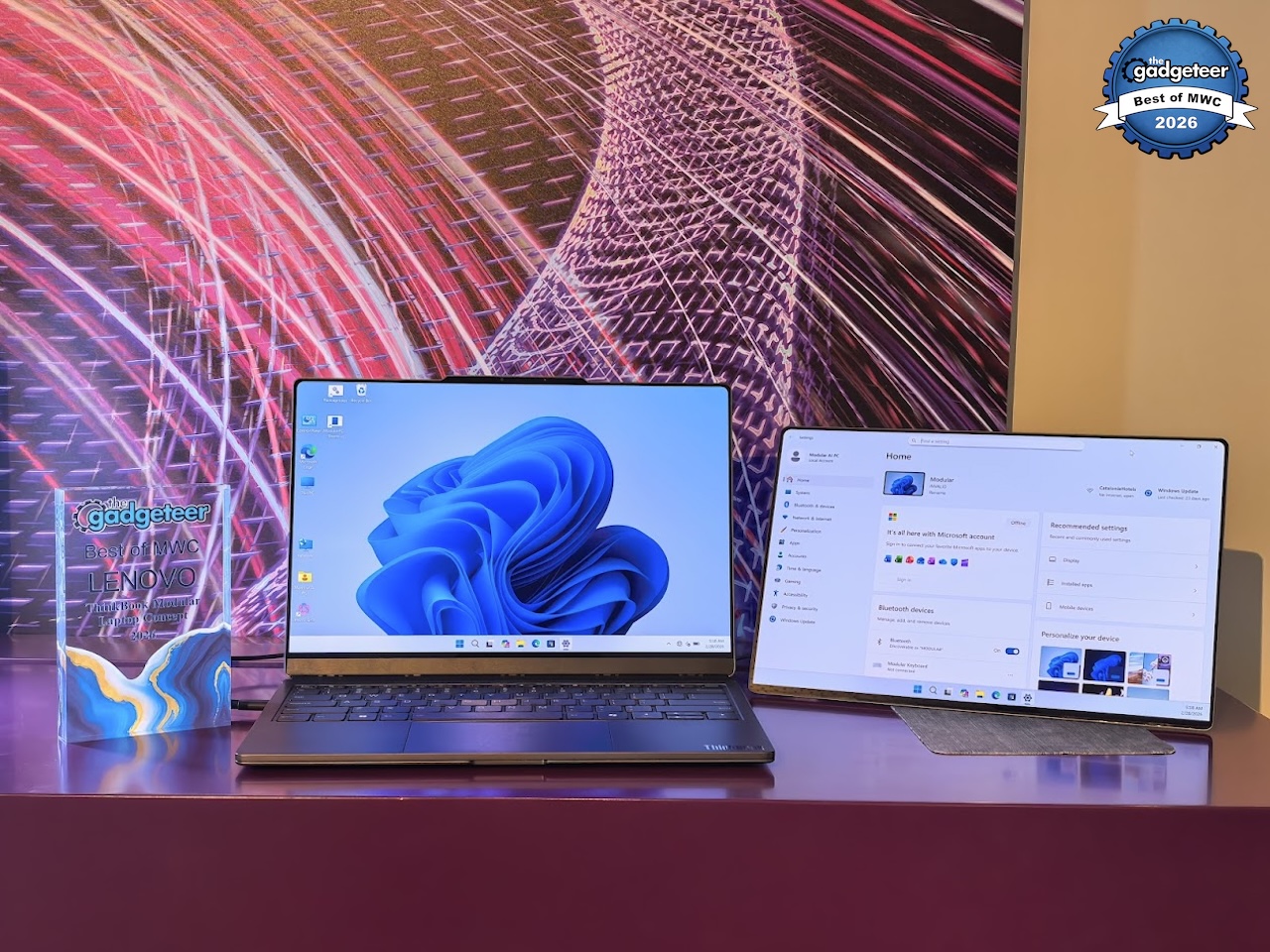
The ThinkBook Modular AI PC is a 14-inch laptop with a detachable second screen and swappable port modules. The idea is straightforward once someone says it out loud: instead of carrying a dock or hunting for a USB-C hub, you configure the ports and display layout for what you’re actually doing that day. A day in the office gets different port modules than a day on a plane. The second screen attaches, detaches, and repositions without tools. The fact that nobody ships this already feels like an oversight that one company finally decided to fix.
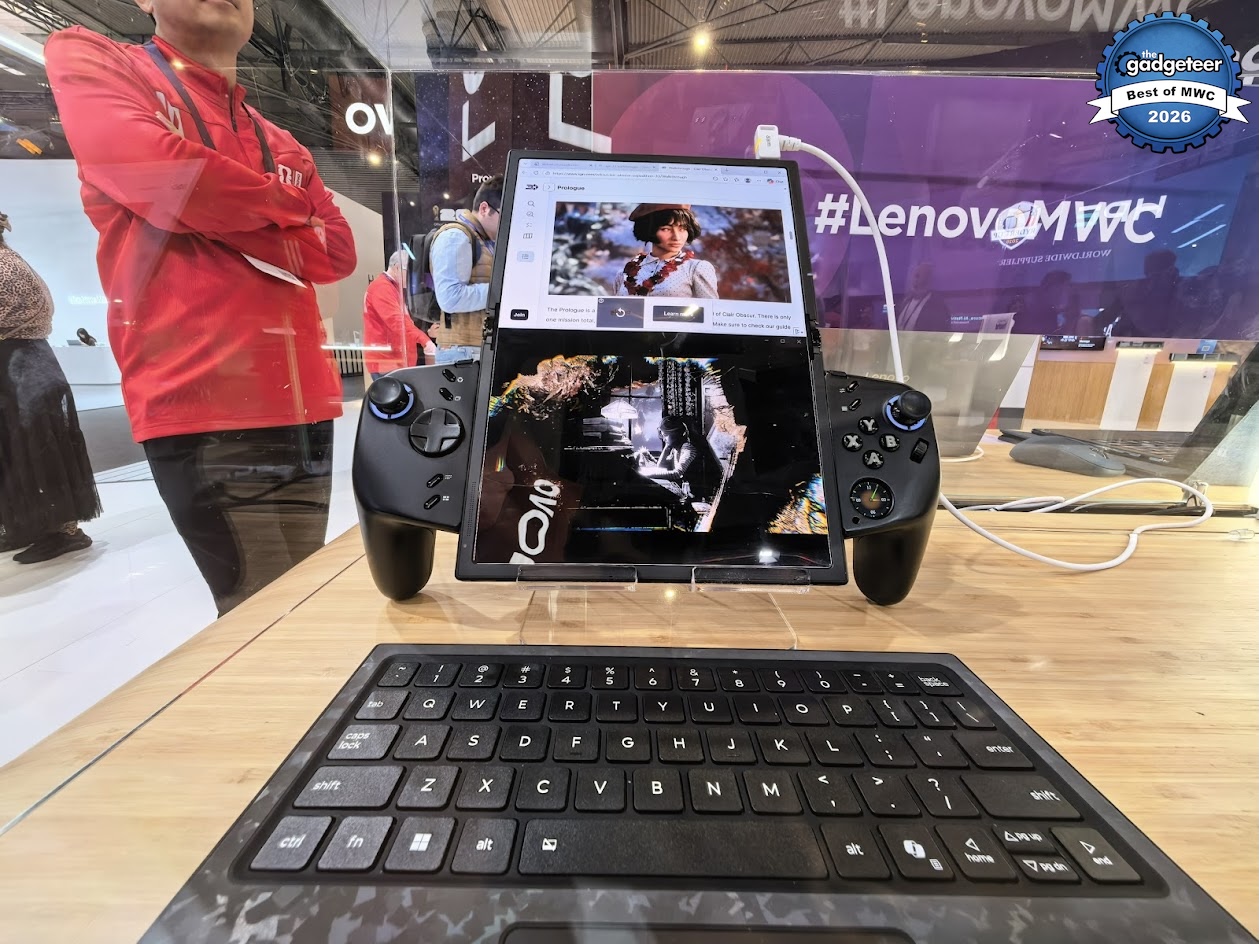
Legion Go Fold is the gaming half of Lenovo’s MWC story. It targets players who want a handheld that packs small but plays on a larger canvas, and the flexible display does the work. It unfurls from a compact form factor into a surface that changes how gaming handhelds think about screen real estate. Less “small screen crammed into a portable” and more “a bigger canvas that folds down when you’re done.”
Neither has a launch date. Neither has a price. Lenovo was explicit that these are concepts. But both cleared the bar that separates a concept worth caring about from a rendering exercise: people lined up, touched them, and left with opinions.
Not every standout at MWC 2026 came from an established name. Two brands spent the week quietly making the case that ambition isn’t a budget line item.
Tecno Camon 50 Ultra: The Camera Challenger Nobody Expected to Talk About This Week
Tecno has been edging toward the mainstream camera conversation for a couple of years, and the Camon 50 Ultra is the most confident step they’ve taken yet.
The design takes clear visual cues from the flagship tier, which lands as a real statement in a market where mid-range brands rarely take visual risks. The chipset is a Dimensity 7400, not a flagship processor. Tecno is betting on imaging instead, claiming the highest-ranked camera score in its price class and leaning hard into AI processing to close the gap with more expensive hardware.
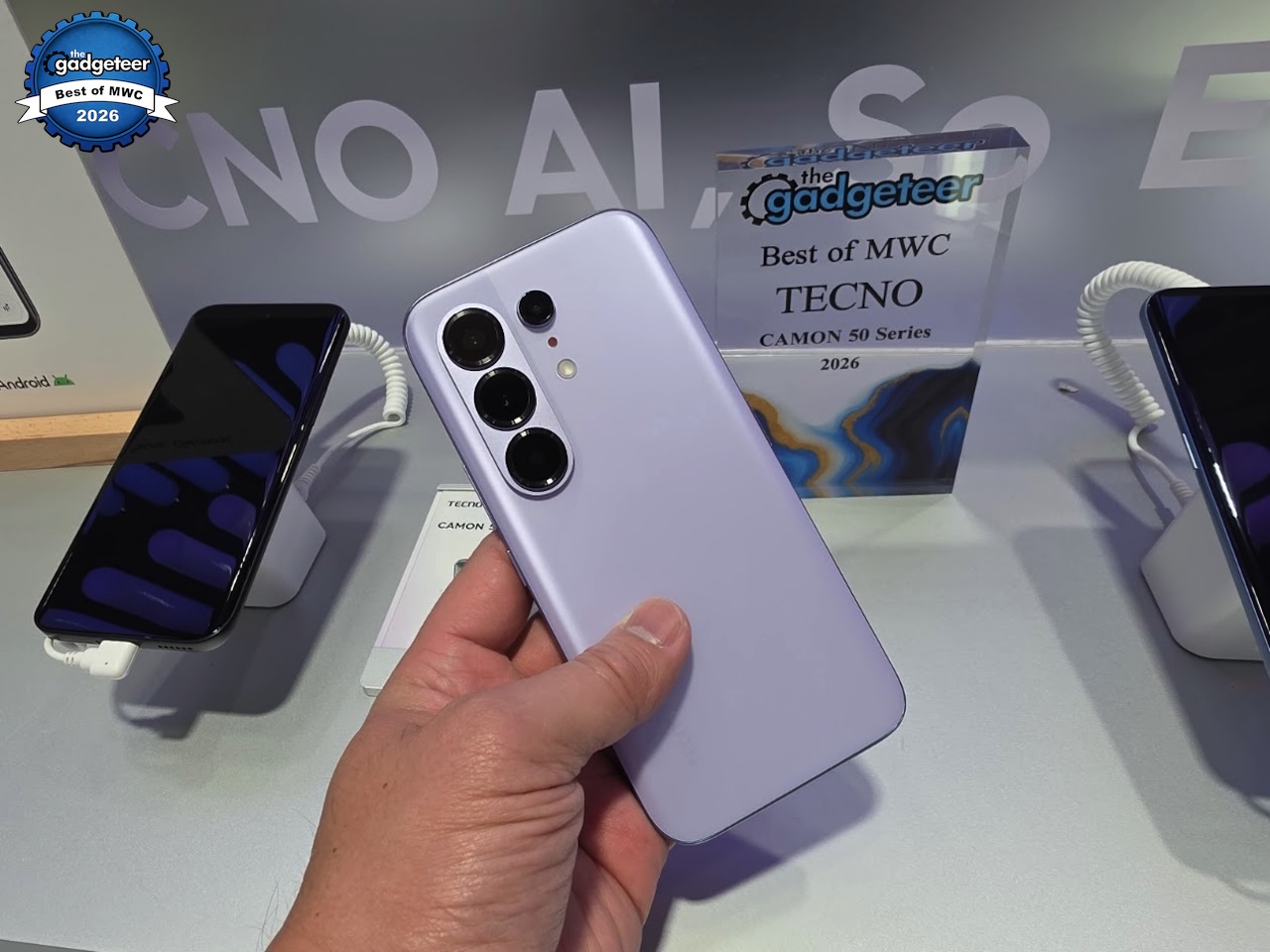
That’s the right strategy for where Tecno sits right now. Competing on raw processing power against flagship-tier chips isn’t winnable at this price tier. Competing on camera intelligence and computational photography is a different game, and AI tools have made that fight more even than it’s ever been. Whether the results look natural under real-world conditions is what we’ll answer when we get a unit in hand. The specs say the right things. The trade show floor rarely tells the whole story.
For readers who want serious camera performance without flagship pricing, this is one to watch.
Tecno’s Modular Phone: The Most Debated Concept in Barcelona
Concept only. Tecno has not announced a release date, pricing, or production plan for the modular phone. This is an early-stage concept. Whether it reaches market, and in what form, remains entirely open.
The question everyone was asking on the show floor: does anyone actually want a modular phone in 2026? It’s a fair challenge. Every modular concept before this one promised flexibility and delivered a frustrating physical experience. The honest answer is that it depends entirely on whether Tecno solved the problem those earlier attempts couldn’t.
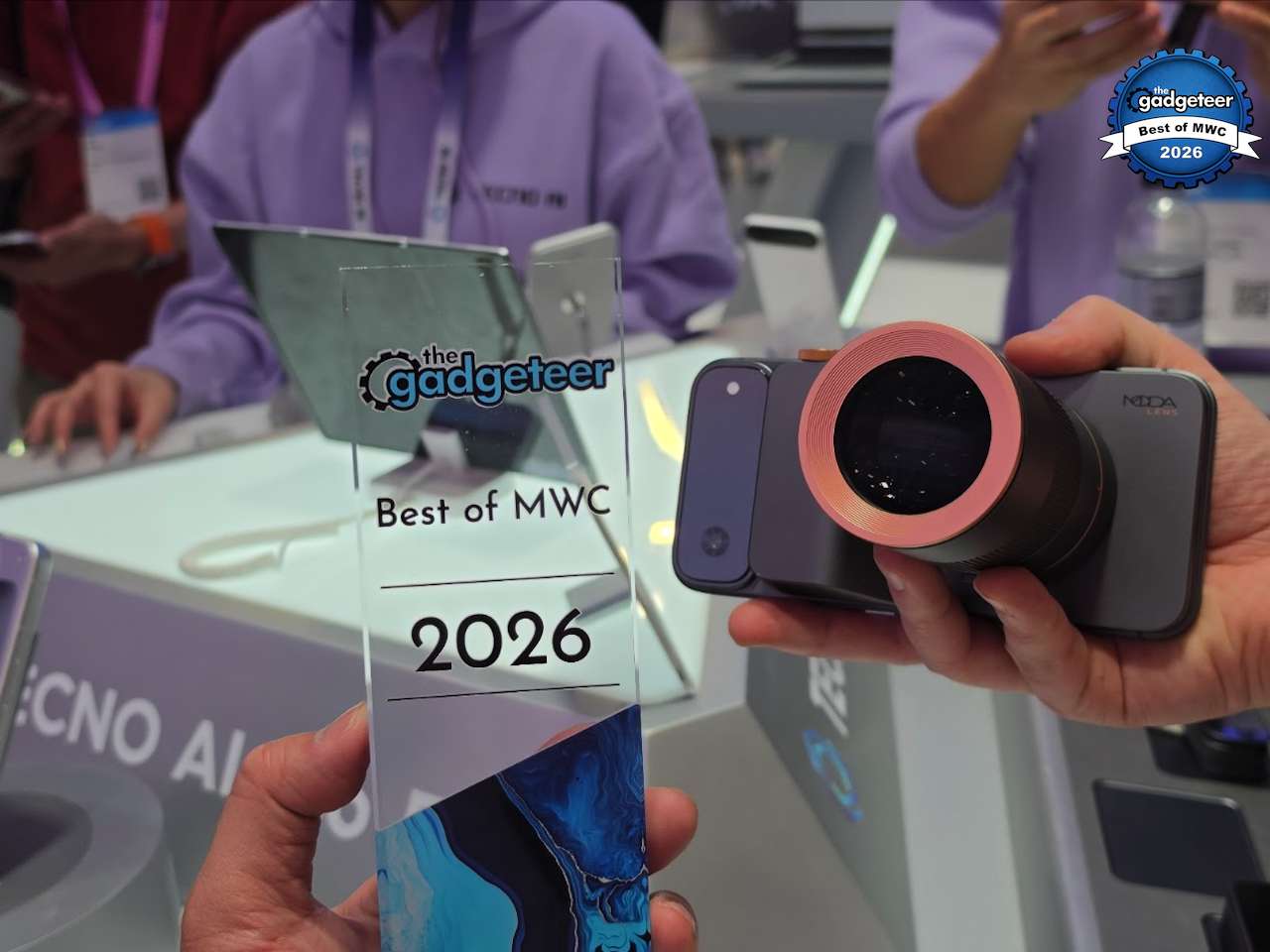
The core body is 4.9mm thick. That’s the headline number. Matte glass chassis, rectangular magnetic array on the back, pogo-pin power delivery. About a dozen modules can snap on: camera upgrades, battery packs, speaker attachments, and more. mmWave technology handles the data transfer between the core and the modules fast enough that swaps feel immediate in live demos. Hands-on demos confirmed the magnetic snap as genuinely satisfying in a way past modular attempts never managed.
That sensory detail matters more than it sounds. Past modular concepts failed partly because the physical interaction never felt premium. The snap, the weight, the confidence of a solid connection: these things determine whether someone actually uses a feature or quietly ignores it. Tecno’s magnetic approach solves the feel problem. Whether the ecosystem commitment follows is still an open question.
We’d call it the most interesting gamble of the week, one that needs three years and a consistent module library to prove itself.
A separate thread ran through MWC 2026 that most roundups ignored entirely: the products designed around how you feel, who you’re with, and what surrounds you, not just what the hardware can do. Some were practical. Some were genuinely speculative. One was designed for your pet. All of them were more interesting than another foldable.
TCL NXTPAPER 70 Pro: The Phone Built for People Who Hate Looking at Phones
There’s a specific kind of exhaustion that comes from a full day of screen time. Not sleepiness. Not boredom. The particular fatigue behind your eyes after eight hours of Zoom calls, document editing, and late-night scrolling, the kind that makes you want to close every window and sit in a dark room for ten minutes. TCL built an entire phone around solving that problem.
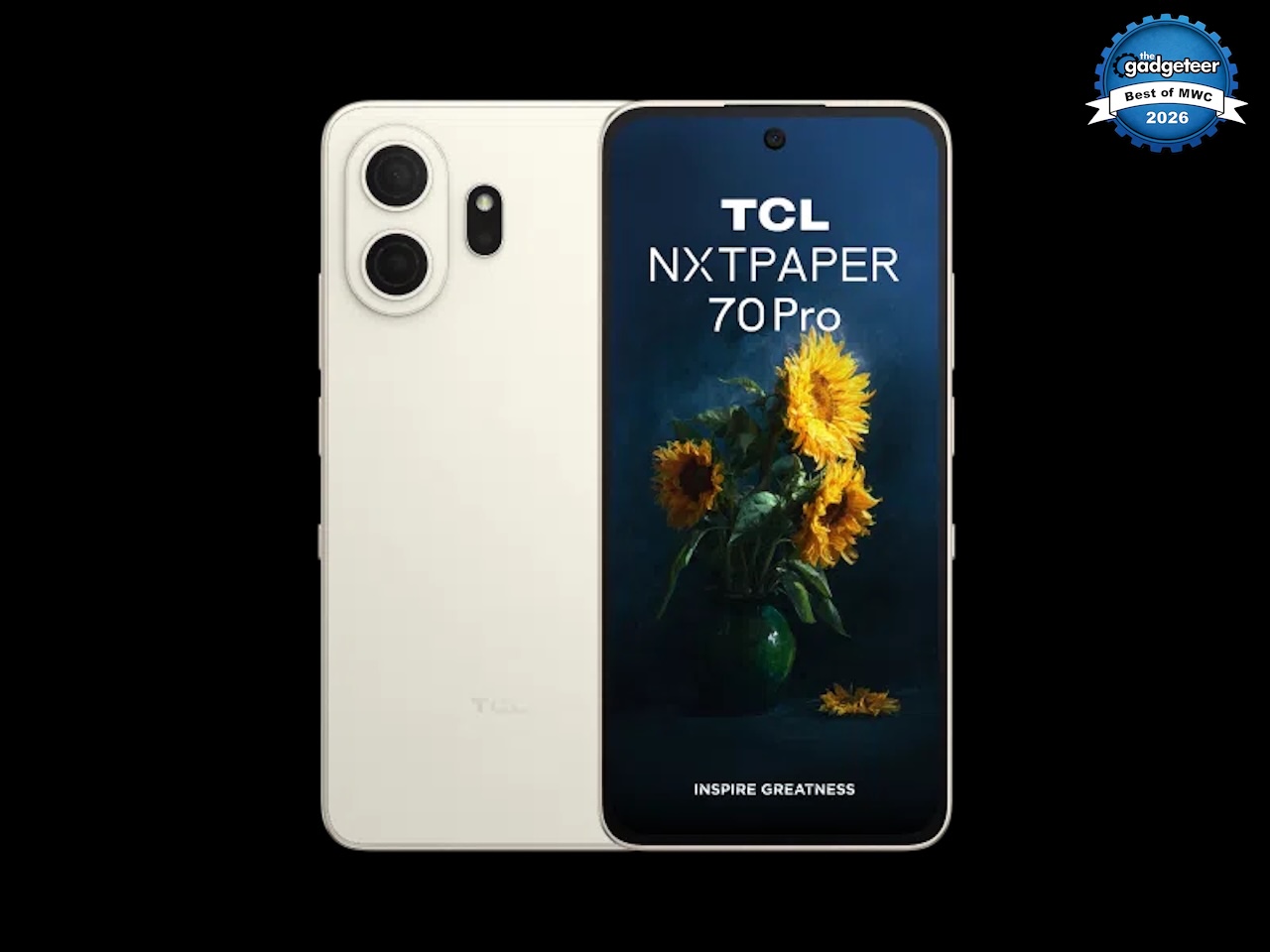
The TCL NXTPAPER 70 Pro runs NXTPAPER 4.0, TCL’s most developed version of their eye-comfort display platform. Seven technologies work together: natural light output through Circular Polarized Light, zero flicker at any brightness level, blue light reduction down to 3.41 percent, anti-glare treatment based on nano-matrix lithography, dim-light protection for evening sessions, circadian tone adjustment that tracks time of day, and TruePaper Restoration that gives the display a visual quality closer to paper than glass. Each of these addresses a real and distinct source of eye strain. Most phones try one or two. This one tries all seven at once.
The feature that makes it practical rather than theoretical is the NXTPAPER Key. It’s a physical button on the chassis dedicated entirely to switching display modes. Color Paper Mode for normal use, Ink Paper Mode for reading sessions that benefit from a calmer palette, and Max Ink Mode for full paper-like monochrome when you want every possible advantage in comfort and battery life. Max Ink Mode runs the display at a near-paper visual quality and pushes standby time to 26 days. Reading sessions extend to about a week on a charge. These aren’t marketing estimates built on light-use assumptions. They come from turning the display into something that consumes almost nothing.
For readers who spend serious time with long-form content, the T-Pen stylus and Screen Off Memo add a handwriting layer that fits naturally with how people actually read and annotate. You don’t have to unlock, open a notes app, and navigate. You just write. The AI tools go further: Outline, Q&A, Audiobook, and Podcast modes give you multiple ways to process content without changing how you physically interact with the device.
The camera is 50MP with OIS, an 8MP ultra-wide, and a 32MP front camera. TCL’s MuseFilm imaging processes the output toward a more cinematic look, with CCD-style filters for anyone who prefers film-inspired results over clinical sharpness. 4K video stabilization combines OIS, EIS, and horizon lock. It’s a capable camera system for a phone priced at €299. The Dimensity 7300 chipset handles everything cleanly, and the 5200mAh cell with 33W fast charging means you won’t be managing battery anxiety on top of eye-strain management.
An IP68 rating means you don’t have to baby it. Gemini handles real-time translation and live subtitles, useful for anyone who works across languages. The US launch is confirmed for April, making this the rare MWC announcement with an actual near-term availability date for North American readers.
SunLED SunBooster: Near-Infrared Light That Clips to Your Laptop
The wellness angle at MWC 2026 had a quiet contender that most roundups skipped entirely. SunLED Life Science, based in Amsterdam, showed the SunBooster: a $249 clip-on device that attaches to a laptop or monitor and delivers near-infrared light at 850nm for two to four hours of use.
The premise is grounded in something real. Natural sunlight contains near-infrared wavelengths that we lose almost entirely when we move indoors. Most office environments, even bright ones, don’t replicate that spectrum. The SunBooster‘s three 850nm LEDs deliver an optimized dose designed to address that gap without requiring a lifestyle change. You clip it on and keep working.
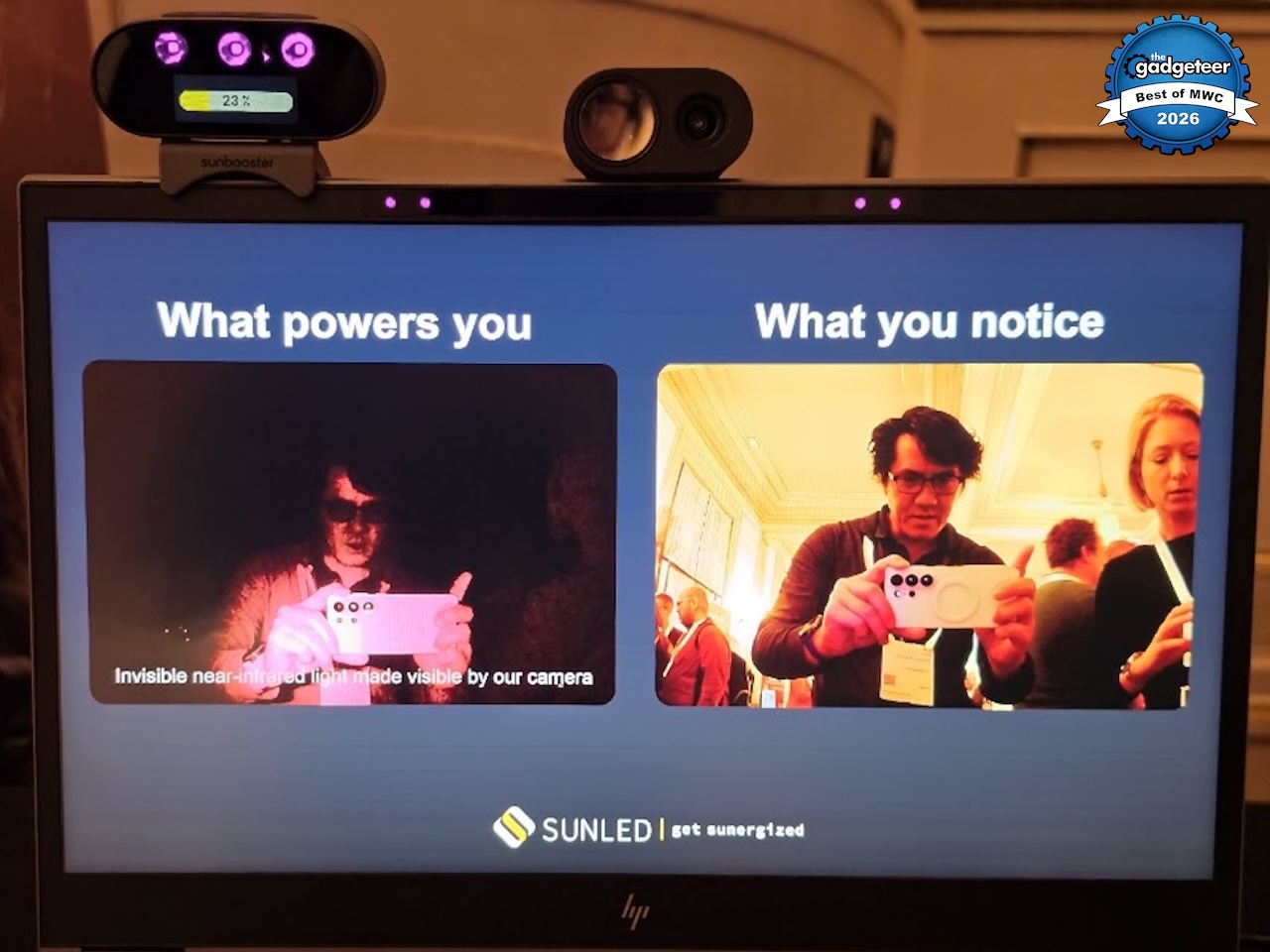
SunLED’s technology is clinically tested and patented. Worth noting: SunBooster isn’t a SAD lamp. SAD lamps flood a room with visible brightness to influence circadian rhythm. SunBooster works on a completely different wavelength, targeting cellular function with invisible light rather than tricking the brain with brightness. The near-infrared research base behind its mood and energy benefits is legitimate, and the SunBooster is a clean, focused application of that science.
What makes SunLED a different kind of MWC story is that it isn’t just selling a consumer product. The company also licenses its near-infrared integration technology to device manufacturers, positioning itself as a platform for wellness features inside future laptops, phones, and wearables. The SunBooster is the proof of concept. The bigger play is getting that technology embedded at the hardware level across the industry.
At $249, it’s accessible for a device targeting a specific wellness need. If the follow-on integrations materialize, this is the kind of MWC debut that looks modest now and significant in hindsight.
Xpanceo Smart Contact Lenses: The Display You Put in Your Eye
Concept only. Xpanceo has not released a commercial product. A working prototype with AR functionality, health monitoring, and wireless charging is targeted for early 2027. No pricing or retail availability exists at this stage.
Every bezel-to-screen ratio debate, every foldable experiment, every pursuit of the thinnest slab in your pocket is solving the same underlying problem: fitting more display into less physical space. Xpanceo is asking a different question entirely. What if the display were the contact lens?
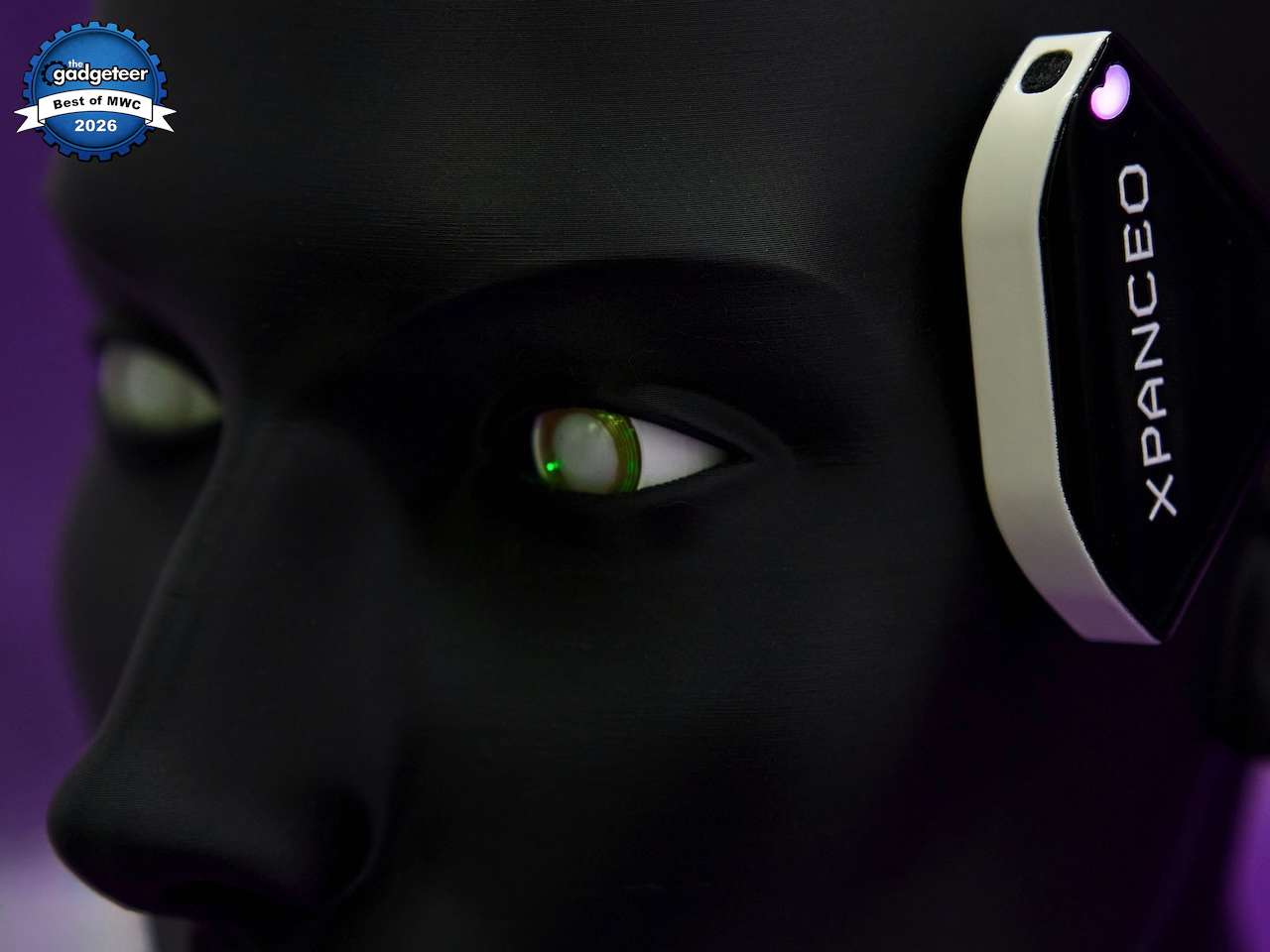
The concept shown at MWC 2026 combines a micro-display with continuous blood glucose monitoring through tear fluid analysis. Power and processing route through an over-the-ear companion device, keeping the lens itself minimal. The AR layer projects notifications, navigation directions, and media directly into your line of sight. The health monitoring layer reads glucose levels passively and continuously, without a finger prick or a separate patch on your arm.
These are two problems the medical device world and consumer tech world have been trying to solve independently for years. Xpanceo is attempting both in the same lens, in a form factor that disappears on your face. The target for a working integrated prototype is early 2027. That timeline is aggressive given where contact lens computing currently sits. But the research direction is credible, the components are converging, and MWC 2026 was the moment they put a timeline on it publicly.
If it works, the category it creates doesn’t have a name yet.
Scople: The AI Pin That Reads the Room
Most AI wearables at MWC 2026 were solving the same problem: giving you faster access to information your phone already has. Scople is doing something different. It reads the people around you.
The device clips to your shirt with a magnet and runs a camera through proprietary AI to analyze the facial expressions and emotional signals of people nearby in real time. PCMag’s reviewer tested it directly on the show floor: happy when smiling, sad when frowning, angry when scowling. The detection was accurate across all three. That’s a small demo, but it’s the kind that either works convincingly or exposes itself immediately, and it worked.
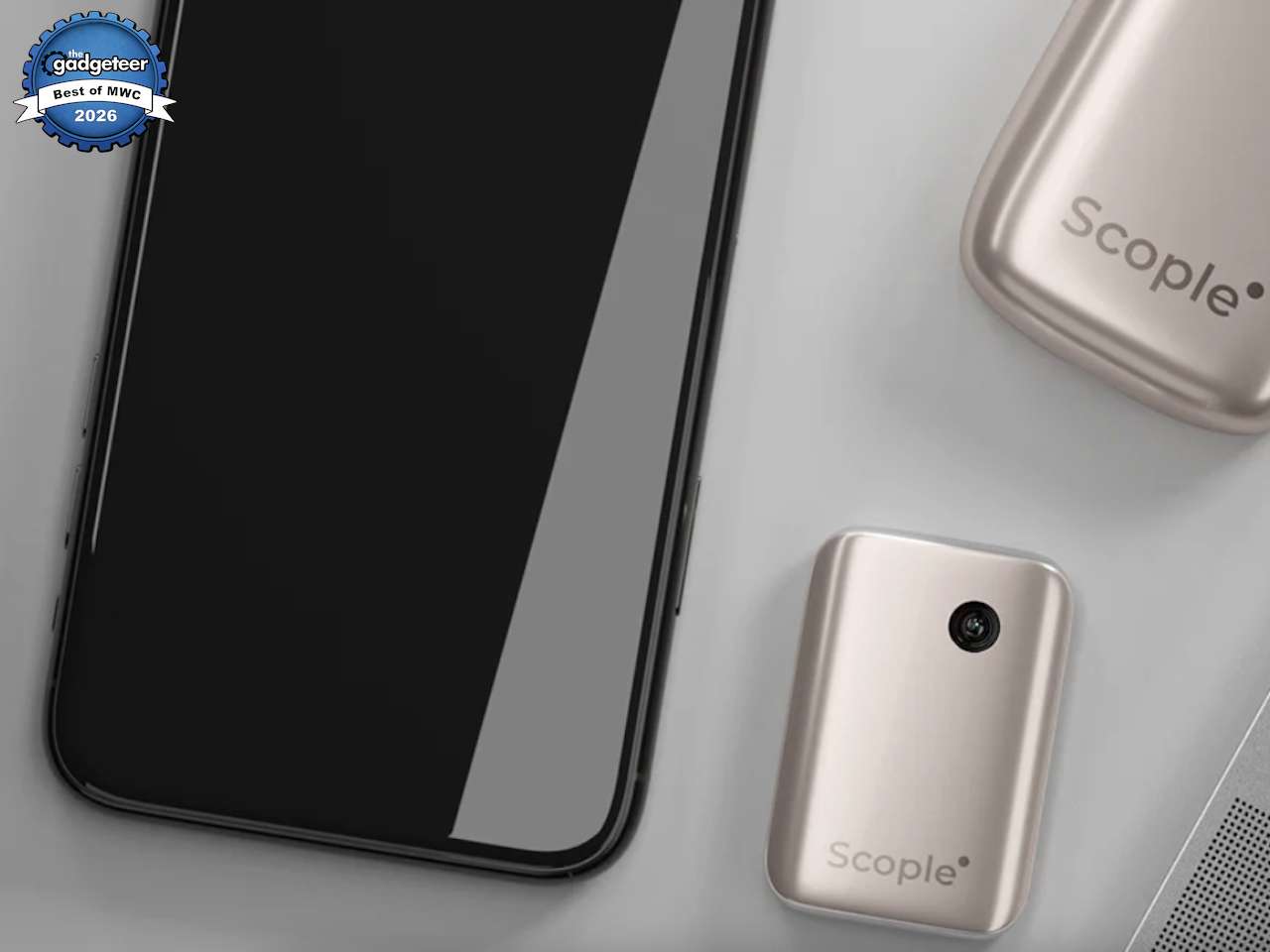
Beyond emotion reading, Scople monitors your environment and consumption habits. Too long indoors, it nudges you outside. Too many drinks at a gathering, it flags the pattern. The company states the camera never saves video or photos. It processes visual data the way eyes do: see, analyze, discard. Privacy will be the loudest objection here, and it’s a legitimate one. A wearable that continuously analyzes people around you without their awareness raises real questions in public spaces. Scople’s answer, that it only processes and never stores, is what every AI pin maker says. Whether it satisfies you is a personal call.
It launches on Kickstarter in the US in late April at $100. The more interesting question isn’t whether it sells at that price. It’s what happens when people start wearing these in offices, on dates, and in negotiations.
Not every MWC standout was solving a human problem.
PetPhone: The $90 Collar That Lets You Call Your Dog
This is a real product. The PetPhone attaches to your dog or cat’s collar and enables two-way audio communication between you and your pet through a companion app. You call the collar. Your pet’s end plays your voice. With some training, your pet can initiate a call back.
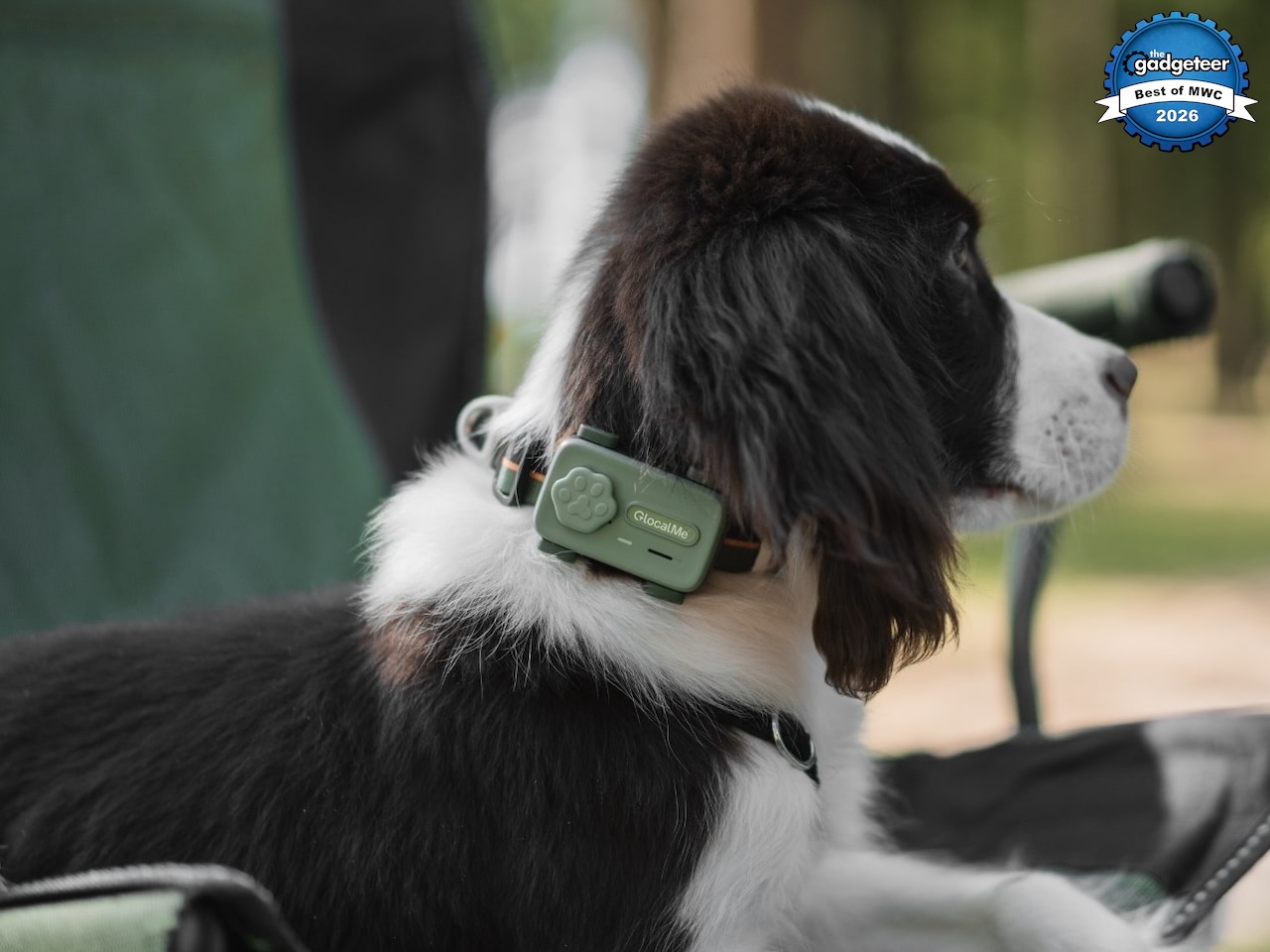
Dogs trigger it by jumping three times in a row. Cats do it by jumping onto something roughly three feet high. The hardware detects the motion pattern and routes a call to your app. These are real detection triggers built into the firmware, not software approximations.
You’ll need a cellular data plan, roughly $10 a month on top of the $90 device cost. For anyone who has spent a workday genuinely wondering whether their dog is okay, the value math is harder to dismiss than it sounds.
PetPhone was one of the most unexpectedly useful things at MWC 2026. Not the most technically impressive product at the show. Not the most ambitious. Just immediately, obviously useful in a week full of products solving problems most people don’t have yet.
The last stop is the most singular product of the entire show. Not the most talked about, not the most-awarded. The most obsessive.
EAR Micro T10 Bespoke: The $3,000+ Earbuds That Call Themselves Computers
Some things at MWC 2026 were ambitious. The T10 Bespoke is obsessive. Starting from $3,000, hand-built in the United States, and weighing 3.2 grams per ear, these are earbuds only in the loosest categorical sense.
EAR Micro partnered with Klipsch to build the T10 Bespoke, and the combination of components tells you what they were going for. Klipsch X10 drivers handle the audio transduction. EAR Micro’s own custom chips run alongside an ARM primary processor embedded in the chassis. That processor enables head motion detection, onboard audio intelligence, and a signal path delivering genuine ultra-high-fidelity audio in a form factor nobody has achieved before.

The dimensions are the technical headline: 2.5 cubic centimeters. That’s smaller than anything currently on the market that contains this level of computing hardware. Fitting an ARM processor, custom audio chips, Klipsch drivers, and supporting circuitry into that volume while keeping the unit at 3.2 grams is genuinely significant engineering. The fact that the result fits in your ear without looking theatrical is the part that takes it from impressive spec sheet to usable product.
Custom fine metals and Reishi materials give the physical construction a different character than most earbuds. Hand-built, repairable, and described as renewable, which is a notable position in a category defined by disposability. CanJam Dubai 2026 gave these a live audience before MWC, and the reviews from that show were positive across the board. The audiophile community tends to be an unsentimental crowd, so positive reception there carries real weight.
These are not for most people. But if you’ve been waiting for someone to take the in-ear computer idea seriously and do it without compromise, this is the closest anyone has come.
What’s Next
MWC 2026 delivered more range than most years. Humanoid robots and contact lens displays on one end. A $90 collar that lets you call your pet on the other. The products on this list span every price point and every category, and most of them point at something genuinely different coming in the next twelve to twenty-four months.
Several devices from this list are in for review at The Gadgeteer, including the Samsung Galaxy S26 Ultra and the Motorola Razr Fold. As those go live, we’ll link them from here. One thread worth tracking separately: the Dimensity 9500-powered zoom race is just getting started. What Vivo showed with the X300 and what OPPO and MediaTek demonstrated alongside it suggests the next wave of extreme zoom cameras will make the current generation look like a warm-up. If any of these caught your attention, bookmark this piece and check back.
Love our content?
Sign up for our newsletter today.
No ads, no spam, just links to our latest articles!