

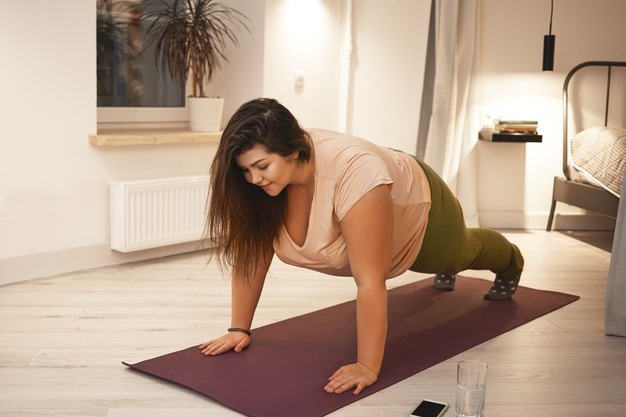
When done properly, home workouts can be just as effective, enjoyable, and sustainable as gym training. The key is not doing more but doing smarter. Creating a home routine that fits your space, goals, and lifestyle will always beat copying a gym programme that doesn’t translate to real life.
Here are 10 practical, proven ways to exercise at home, including how to choose the right equipment, how to use your space, and how to stay consistent without burning out.
1. Use the space you have
One of the biggest mistakes people make is assuming they need a spare room or garage to work out. You don’t.
Before buying any equipment, stand in the space you already have (living room, bedroom, garden, even a hallway) and ask:
- Can I move my arms freely?
- Can I step forwards, backwards, and sideways?
- Can I jump or rotate safely?
That’s enough to start.
A clear 2m x 2m space is more than sufficient for most training styles, from strength work to boxing-inspired cardio. The goal isn’t perfection, it’s consistency.
Top tip: Choose a space that’s easy to access. If it takes effort to “set up” every time, you’ll train less often.
2. Build your routine around movement, not machines
Gyms are often built around machines. Homes shouldn’t be.
The most effective home workouts focus on fundamental movements: squatting; lunging; pushing; pulling; rotating; reacting. These movements build strength, coordination, balance, and fitness all at once; without heavy kit.
Bodyweight training, resistance bands, boxing-style drills, and functional circuits all work exceptionally well at home because they adapt to your ability and space.
3. Choose essential home kit (less is more)
You don’t need a full gym setup. In fact, too much equipment often leads to confusion and clutter.
If I were starting from scratch, I’d prioritise a set of resistance bands, a mat, and one piece of dynamic or reactive equipment, with light dumbbells or kettle bell as an optional extra.
Dynamic systems (including tools like the TRiBOXKiNG training system) add variety, coordination, and cardio without taking up space. But they should complement your training, not replace fundamentals.
Pros of minimal kit:
- Affordable
- Easy to store
- Encourages creativity
Cons:
- Requires more self-discipline
- Less load progression if not structured properly
4. Create an “exercise trigger”
Motivation is unreliable. Environment is not. One of the simplest tricks I recommend is creating an exercise trigger – something that cues your body to move.
Examples:
- Leaving your mat laid out
- Keeping gloves or bands visible
- Training at the same time each day
- Playing the same warm-up song
Over time, your brain links the trigger to action. This matters far more than willpower.
5. Use time-based workouts (not reps)
At home, time-based training often works better than counting reps.
Instead of “3 sets of 12 squats”, try “40 seconds of squats, 20 seconds rest”. This keeps intensity high, simplifies tracking, and adapts naturally to different fitness levels.
Time-based circuits are especially effective for fat loss, cardiovascular fitness, and busy schedules. They also make mixed workouts easier – combining strength, boxing, coordination, and core work in one session.
6. Add reactive or boxing-style training
One area many home workouts miss is reaction and coordination.
Static exercises build strength, but reactive training challenges the nervous system – improving speed, balance, timing, and mental engagement.
This is where boxing-inspired systems, reflex drills, or multi-target equipment (including options like TRiBOXKiNG®) can be extremely valuable.
Benefits include:
- Higher calorie burn
- Improved focus
- Reduced boredom
- Full-body engagement
Importantly, this style of training doesn’t require you to “be a boxer”. It’s about movement, not fighting.
7. Don’t ignore recovery (especially at home)
When you train at home, it’s easy to overdo it, especially if you’re squeezing workouts between work and family life.
Recovery matters just as much as effort. Make time for mobility work, stretching, low-intensity sessions, and at least one full rest day per week.
Short mobility sessions (10–15 minutes) can dramatically improve how your body feels and performs.
8. Mix cardio and strength in the same session
You don’t need separate “cardio days” and “weights days” at home. Combining both is often more practical and effective.
For example:
- Squats plus punches
- Lunges plus rotational movements
- Core work plus footwork drills
This keeps sessions efficient, maintains heart rate, and improves real-world fitness.
9. Track effort, not just outcomes
Instead of obsessing over scales or mirrors, track sessions completed, time trained per week, energy levels, and consistency streaks. These indicators are far more motivating and sustainable.
At home, success comes not from chasing perfection but from showing up regularly.
10. Make it enjoyable (or it won’t last)
This might be the most important point of all.
If you dread your workouts, you won’t stick to them. Experiment with music, different training styles, short sessions, new equipment, and boxing, circuits, mobility, or HIIT.
Your routine should evolve with you. What matters is finding movement you want to return to.
Takeaway
Home exercise doesn’t have to be a compromise. When done right, it can be flexible, effective, and genuinely enjoyable.
You don’t need a huge space, expensive machines, or endless motivation. You need smart choices, simple structure, and tools that work with your life, not against it.
Whether that’s bodyweight training, resistance bands, boxing-style conditioning, or a dynamic system like TRiBOXKiNG®, the best setup is the one you’ll actually use.
Consistency beats complexity every time.
Clive Payne is a fitness innovator, kick-boxer, and founder of TBKFiT. He created TRiBOXKiNG, a portable system that sharpens coordination, timing, and movement.