

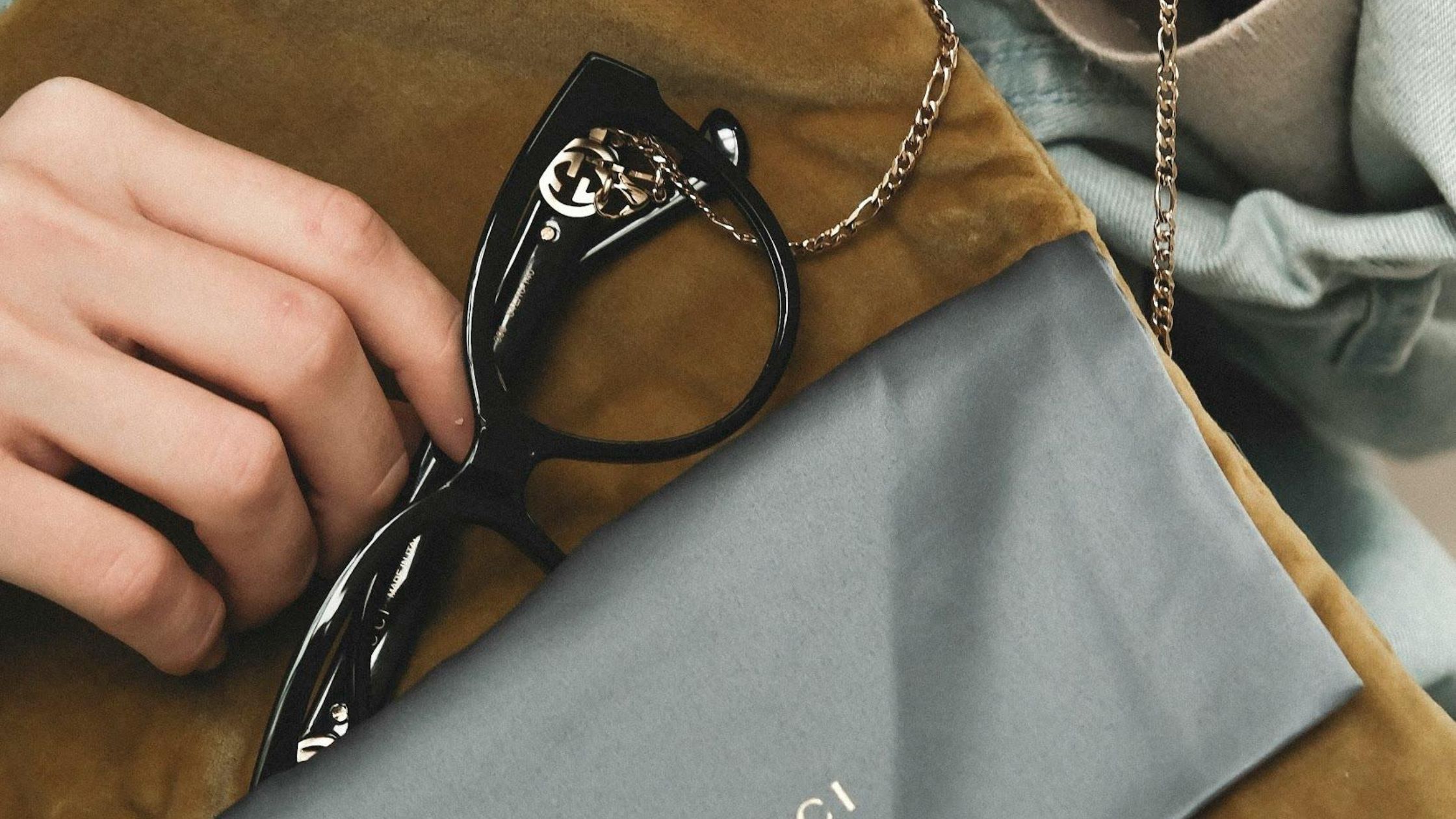
The word luxury has quietly lost its meaning. It’s why I’m keen to help reshape the narrative and why I believe sustainable luxury should be the new standard.
Luxury is suggested everywhere now — on fast-fashion labels, influencer hauls, and dresses made from polyester that cost less than a meal out. The language of luxury has been stretched so far that it no longer tells us very much about the garments themselves.
At the same time, most of us have become increasingly disconnected from the people who make our clothes. Around 97% of garments are produced overseas – that out of sight out of mind psychology plays a role in how we feel (or don’t) about how things are made. The fashion industry relies on an estimated 40 million garment workers worldwide, the majority of whom are women, and many of whom do not share the labour protections we take for granted in the West.
Research highlighted in The True Cost documentary shows just how distant production has become from the people who wear the finished garments. And when we look closer at the conditions behind the industry, the numbers are difficult to ignore. In Oxfam’s Made in Poverty report, nine out of ten garment workers interviewed in Bangladesh cannot afford enough food for themselves and their families. Many skip meals or fall into debt simply to survive.
It raises a much bigger question: If luxury brands are also using the same factories as fast-fashion brands. What are we paying for? Andwhat does luxury actually mean anymore? Because if luxury is simply a higher price tag attached to the same system, then the word luxury has lost its value.
What Luxury Historically Meant
Historically, luxury clothing meant something very different. We waited for a prized piece to be made. We valued it.
A luxury garment was the product of time, skill and carefully chosen materials. We knew that tailors, pattern cutters, textile specialists and leatherworkers who had spent years mastering their craft were making the items. Their expertise was visible in the finished piece: how a jacket sat on the shoulders, how a seam held its structure after years of wear, how fabric aged rather than deteriorated.
The price reflected that process. And because global supply chains and outsourcing to cheaper countries wasn’t an option – people hired locally and were paid fairly.
Craftsmanship and Skilled Labour
Historically, luxury relied on skilled labour. A tailor could only produce a limited number of garments, and a craftsperson’s time and expertise could not be scaled infinitely without compromising quality.
Scarcity existed not because brands artificially restricted supply for marketing purposes, but because craftsmanship itself required time and mastery. Luxury, in other words, was inseparable from human skill. This does not mean the garment workers producing clothing in countries such as Bangladesh lack skill. On the contrary, many are highly experienced specialists who are exceptionally good at their craft.
The problem lies in the conditions under which they are required to work.
Factory systems often prioritise volume above everything else. Workers are paid based on the number of units they produce, meaning speed becomes the only metric that matters. When the focus shifts entirely to output, there is little time for careful construction, attention to detail, or the kind of craftsmanship traditionally associated with luxury garments.
In these systems, the issue is not a lack of skill — it is a lack of time and fair compensation for that skill.
The Disappearing Value of Skill
Over the past few decades, that connection has gradually weakened.
As the fashion industry accelerated, production moved increasingly towards systems designed for speed and scale. Factories are now often expected to meet tight deadlines while operating within extremely narrow margins.
When time disappears from the process, craftsmanship inevitably disappears with it. Many luxury brands continue to market heritage and artisanal craftsmanship, yet the realities of their supply chains can look very different. This contradiction sits at the heart of modern fashion: garments costing hundreds or even thousands of pounds can still be produced within the same global manufacturing systems used by far cheaper brands.
The price may be higher, but the production model is often the same.
The Economics of Cheap Fashion
The economics behind clothing pricing reveal just how little of the retail price reaches the people making the garments.
A breakdown of a typical €29 T-shirt sold in Europe illustrates this clearly.
- Retailers take roughly 60% of the price to cover profit, staff, rent and taxes.
- Brands take around 12%.
- Materials account for approximately 12%.
- Transport and logistics take another share.
- Factory profit averages around 4%.
And the wages of the garment worker who sewed the T-shirt? Less than 1% of the retail price. Once you see that breakdown, it becomes difficult to look at clothing pricing in the same way again. If a garment is extremely cheap, someone else is absorbing the cost — and it is usually the person who made it.
The Problem with Fast Fashion it is difficult to comprehend how a garment costing only a few pounds can be produced fairly while also accounting for the environmental impact of fashion production. Growing fibres, spinning yarn, weaving textiles, dyeing fabric, cutting garments and transporting them across continents all require resources.
When we consider the entire process, the numbers simply do not add up.
When Luxury Supply Chains Come Under Scrutiny
It is easy to assume that labour exploitation is a problem confined to fast fashion. In reality, the luxury sector has also faced increasing scrutiny as journalists and investigators examine the complex global supply chains behind high-end goods.
In recent years, Italian authorities have investigated labour conditions in workshops linked to luxury fashion production. Police raids in manufacturing hubs such as Prato uncovered migrant workers producing garments and leather goods under extremely long hours and very low wages. One investigation near Florence found workers producing luxury goods for €3.5 per hour, with some sleeping inside factories.
Major brands — including Prada, Gucci and others — were drawn into the investigation as prosecutors examined the subcontractor networks used by luxury houses. Importantly, the responsibility remains with these brands directly even if opaque subcontracting systems can make oversight difficult. It’s never an excuse.
In response, Prada has taken steps to tighten control of its supply chain, conducting extensive audits and cutting ties with more than 200 suppliers that failed to meet its labour standards. These latest scandals highlight an uncomfortable truth: a luxury brand name or a high price tag does not automatically guarantee ethical production or a high quality item that will last.
True luxury must be able to withstand scrutiny — not only in design and heritage, but in the conditions under which garments are made. And in the context of quality true luxury must endure, there can be no corners cut when it comes craftsmanship and garment longevity.
Why Price and Value Are Not the Same Thing
Of course, a higher price tag does not automatically guarantee ethical production. Luxury garments priced at several hundred pounds are sometimes made from inexpensive synthetic fabrics such as polyester — materials that cost relatively little to produce and often lack the longevity associated with traditional luxury textiles.
Price alone tells us very little. What matters is how the price is distributed.
For luxury to have meaning again, a garment’s price should reflect three key elements.
Fair Compensation for Makers
A meaningful share of the retail price should reach the people who made the garment, allowing skilled workers to earn a living wage.
Quality Materials
Responsibly produced fabrics — whether that means organic cotton, traceable wool or carefully developed textiles — cost more than the cheapest alternatives.
Time and Craftsmanship
Well-made clothing requires skill, attention and time.
Skilled craftsmanship takes time — and time has a cost. And we must be prepared to invest and support these costs if we expect the very best.
Sustainable Luxury and the Power of Discernment
But redefining luxury is not only about how garments are produced. It is also about how we choose to consume them. One of the most important shifts in sustainable fashion is not simply paying more for clothing. It is developing discernment.
Discernment is the ability to recognise quality and craftsmanship and it means understanding fabrics, noticing thoughtful construction and recognising when a garment is worth investing in.
Most people do not need more clothes. What they need is a clearer sense of what deserves a place in their wardrobe. This philosophy sits at the heart of how I approach styling today.
Since 2017 I have committed to buying only what I truly need, and I often talk about the importance of #100wears and outfit repeating — garments that earn their place through longevity rather than novelty. On my own personal journey building a sustainable wardrobe, I understood the importance of investing in better-quality pieces and why for some people initially – it can feel expensive but often leads to spending far less over time.
What Sustainable Luxury Looks Like in Practice
As a stylist, I increasingly work with women who want wardrobes that reflect both their personal style and their values. When a wardrobe is built intentionally, every piece carries more meaning. Clothes stop being disposable purchases and start becoming part of a considered collection that supports the life someone wants to live.
The brands I recommend are the ones that can show where their money goes: to skilled workers, to quality materials, and to production that respects the people involved. For example, brands such as CUURVE who produce sustainable luxury under garments in the UK, work with specialist garment makers who are paid fairly for their time and expertise. Transparency like this helps us reconnect clothing with the people who make it.
Redefining Luxury
Redefining luxury is not about making expensive items more accessible. It is about redefining what we expect when we buy into luxury.
When we pay a premium, we should expect that a fair share of that price reaches the people who made the garment. Luxury should reflect craftsmanship, fair wages, quality materials, and garments designed to last. But there is another dimension to luxury that we rarely talk about: the ability to choose better. When we have the means to support responsible brands and higher standards, using our purchasing power thoughtfully becomes its own form of luxury.
Luxury should not just be measured just by how much something costs or how famous a brand name is. When we invest in a garment, we should also be investing in the people who make it and the land where it is produced. When luxury brands charge premium prices yet fail to deliver quality craftsmanship or fair livelihoods for the people behind their products, the label “luxury” loses its meaning.
And perhaps the ability to do better – simply because we can – is the greatest luxury of all.