

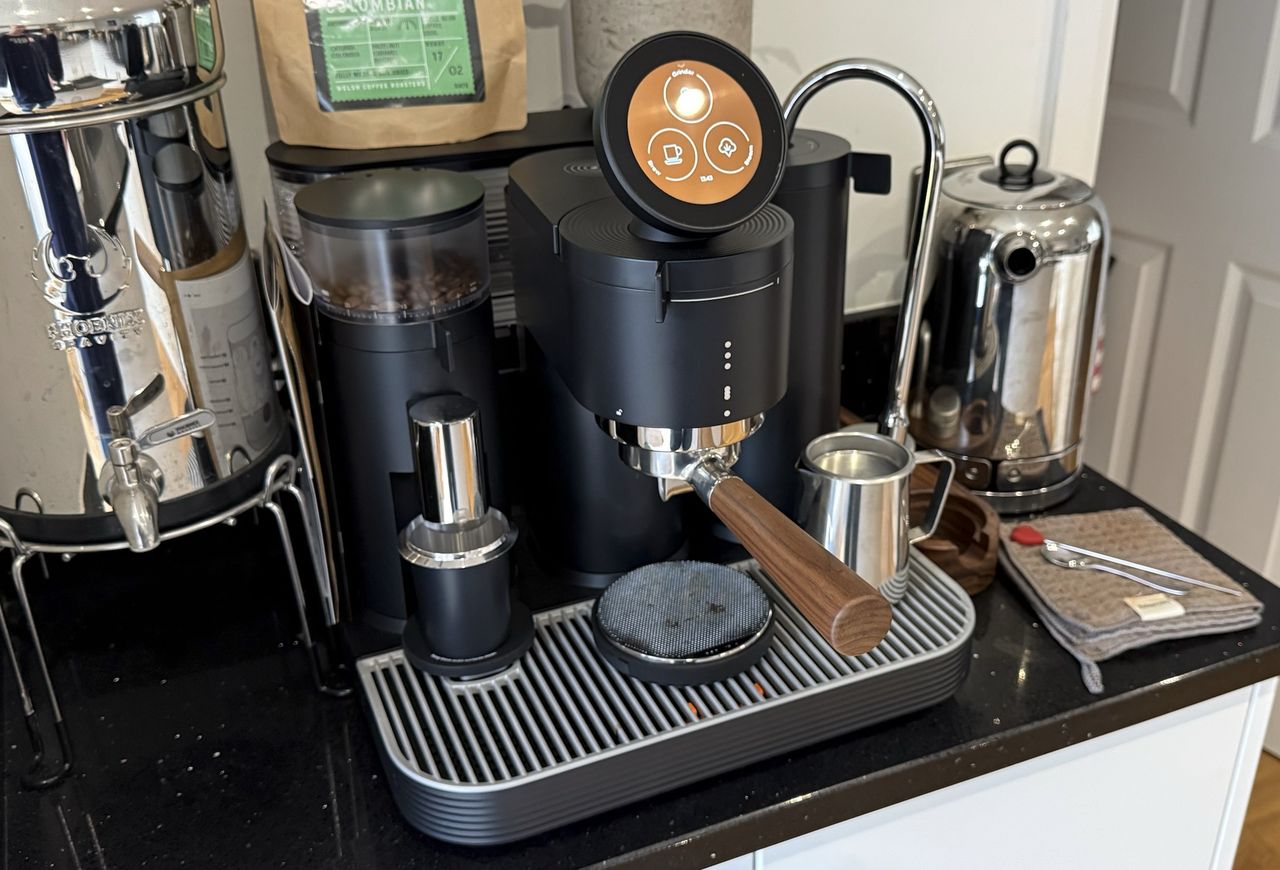
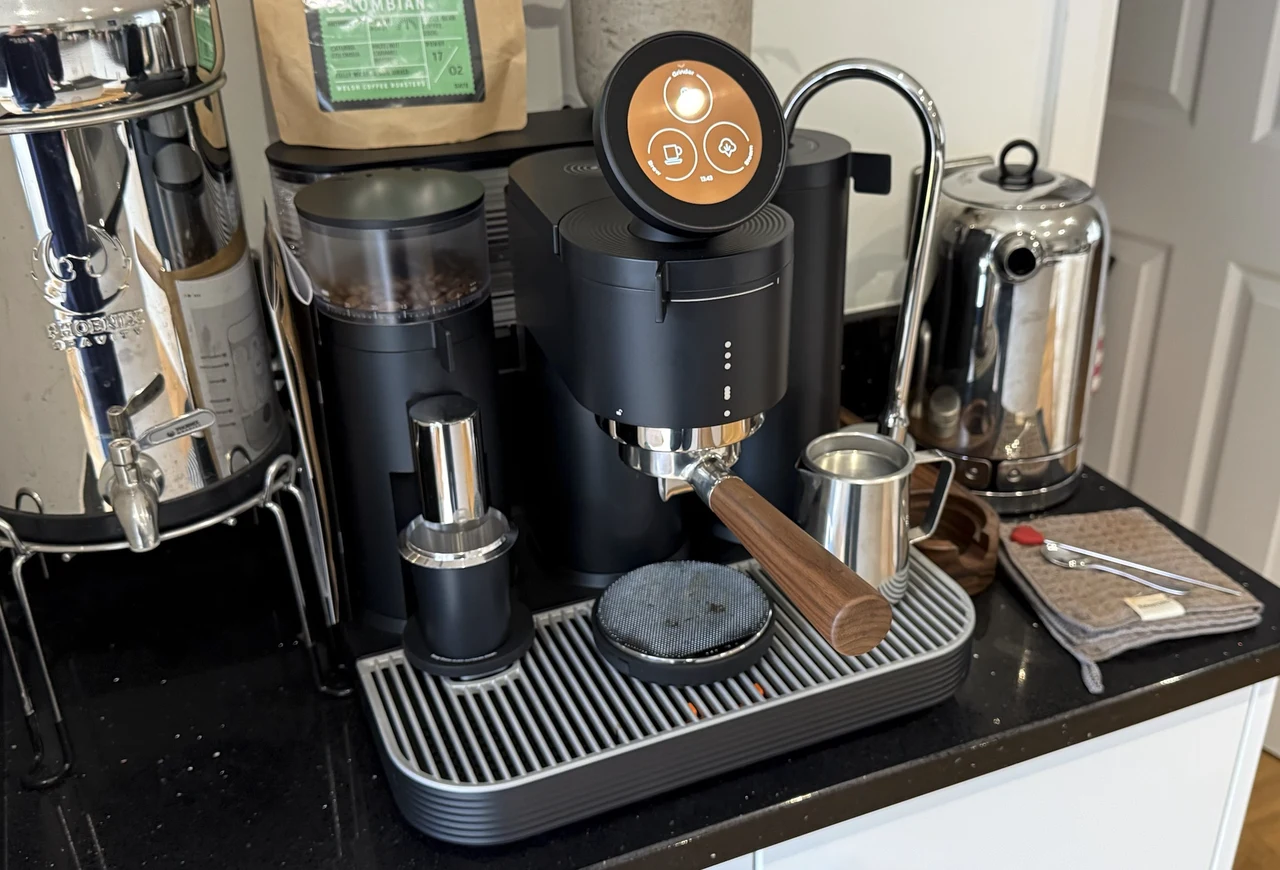
Home espresso tends to split into two camps: traditional machines that reward practice and guided systems that try to reduce the “barista homework.” Over a number of weeks, I used the Meraki Espresso Machine daily for straight espresso plus milk drinks (mostly lattes and cappuccinos). I focused on what matters when a machine lives on a counter: how quickly it becomes routine, how repeatable shots feel, how manageable milk steaming is across different milks and how much cleanup I’m actually willing to do when I’m half-awake.
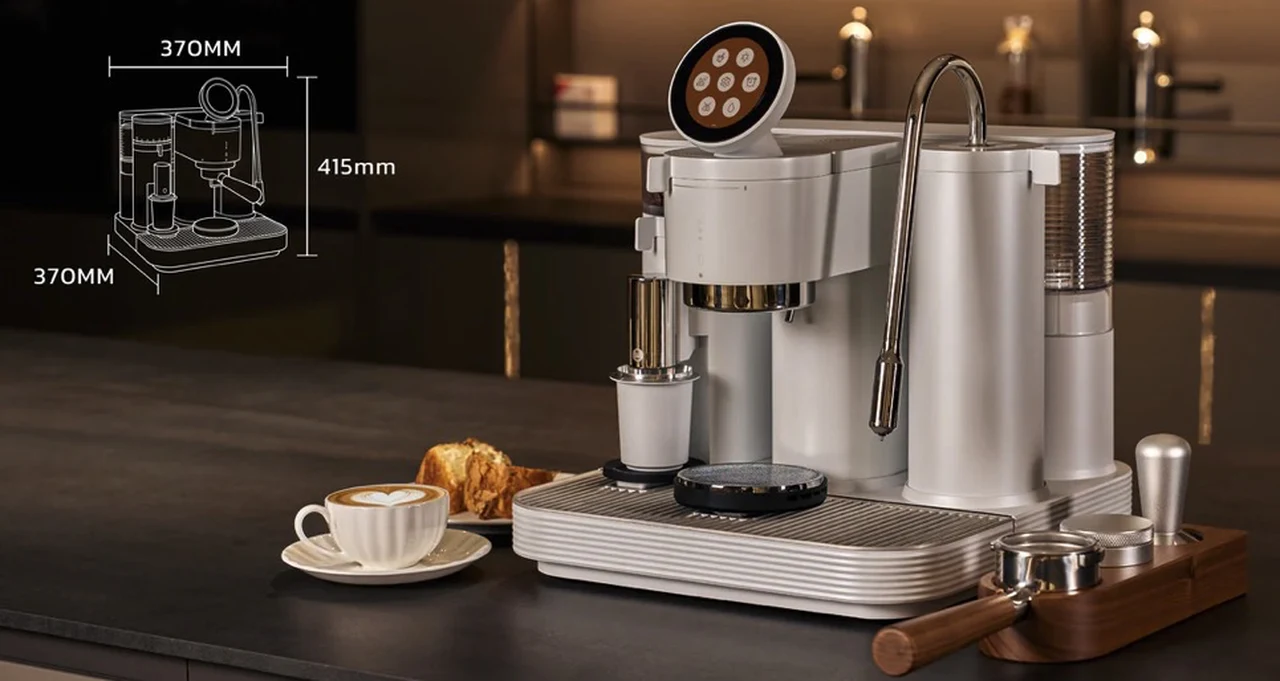
My review unit is the standard Meraki Espresso Machine: an all-in-one countertop setup combining an espresso-focused grinder, dual boilers, a rotary pump, a touchscreen-guided workflow and two integrated scales (one under the grinder and one under the brew station). Officially, it measures 370 x 370 x 415 mm and weighs 14.5kg. It also includes a 2000ml water tank and a 650ml drip tray.
Key Features
-
- The dual built-in scales enable grind-by-weight and brew-by-weight, making it easier to repeat recipes and cut down on day-to-day shot variation.
- You can plug it into a smart plug and turn it on while you’re in bed and by the time you get downstairs, the boiler will be up to temperature.
- A large, straightforward touchscreen keeps the workflow moving between grinding, brewing and steaming without feeling like a menu puzzle.
- The rotary pump and dual-boiler setup support a café-like pace for back-to-back espresso and milk drinks with less waiting between steps.
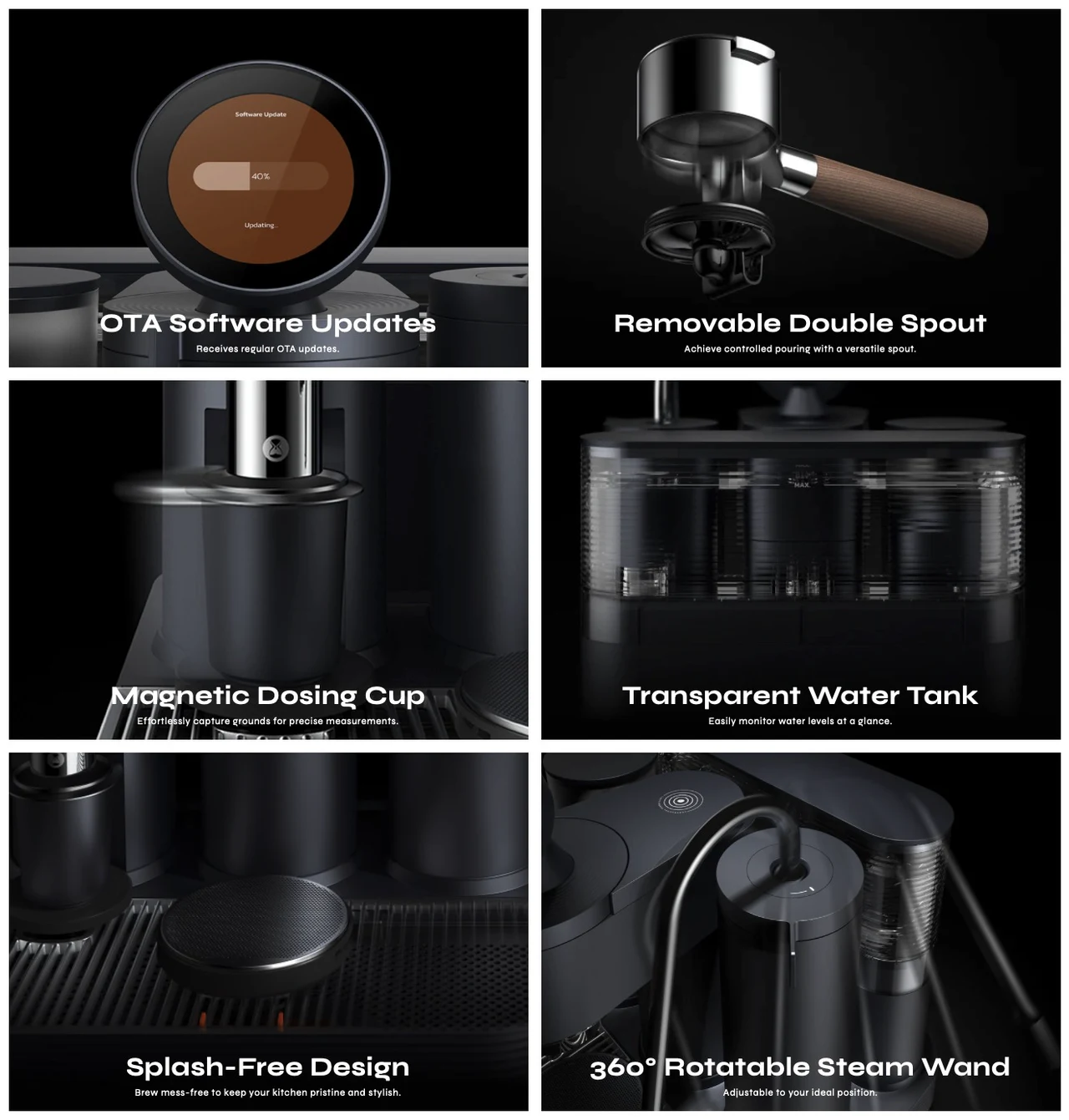
- The removable coffee bean hopper allows you to quickly swap coffee.
- CoffeeSense™ NFC scanning can quickly suggest starting parameters for compatible beans, which is convenient but ties some of the “smart” experience to Meraki’s bag ecosystem.
- The steam wand’s wide range of motion and strong steam output help you find a comfortable frothing angle and heat dairy or alternative milks quickly.
- Trade-offs include a heavy 14.5kg chassis and several key accessories that aren’t dishwasher-safe.
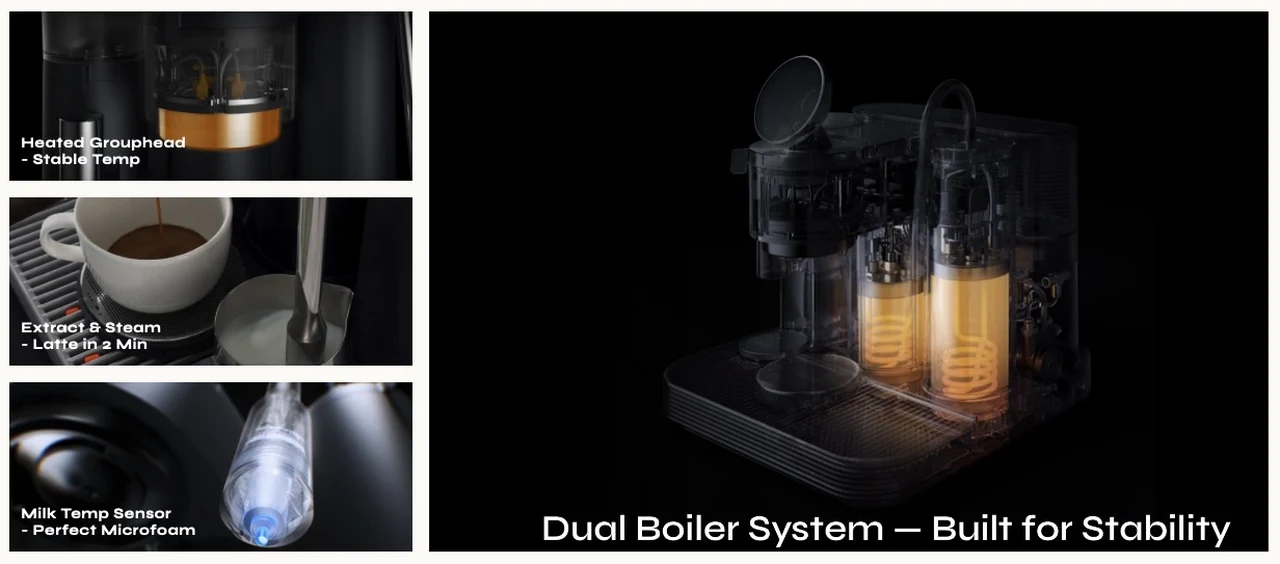
A few of those specs map directly to what I experienced day to day. The dual-boiler layout, 350ml for brewing and 550ml for steaming, changes the pace of milk drinks. Instead of pulling a shot and then feeling like the machine is “catching up” before I can texture milk, I could move from espresso to steaming without that familiar home-machine hesitation. In daily use, that’s what made the Meraki feel like a true morning appliance rather than a weekend project.
The two integrated scales (each listed as 1 kg max capacity with ±0.2g scale accuracy) reshape the workflow into targets I can repeat. I’m not relying on a timer and hope to stop at the right moment; I’m watching weight. Using scale-based dosing and a weight-based shot endpoint didn’t remove the need to dial in, but it made my adjustments more deliberate: change one thing, taste, then decide what to do next.
Design, Build & Daily Ergonomics
The Meraki is heavy and I noticed it before I pulled a single shot. That weight paid off once it was placed. When I locked in the portafilter or pulled the drip tray, the machine stayed planted rather than skating around the counter. The downside is equally real: this is not a “store it in a cabinet and bring it out” espresso setup. When I committed a spot for it, it rewarded that commitment; when I imagined shifting it for extra counter space, I immediately didn’t want to.
On the counter, the machine looked modern and intentionally designed, but what mattered more was how it handled the mess of real use. Coffee dust, stray grounds and the occasional milk splash wiped off easily. In practice, I didn’t find myself being precious about it, which is a compliment for something that’s going to be touched with sticky fingers during a rushed morning.
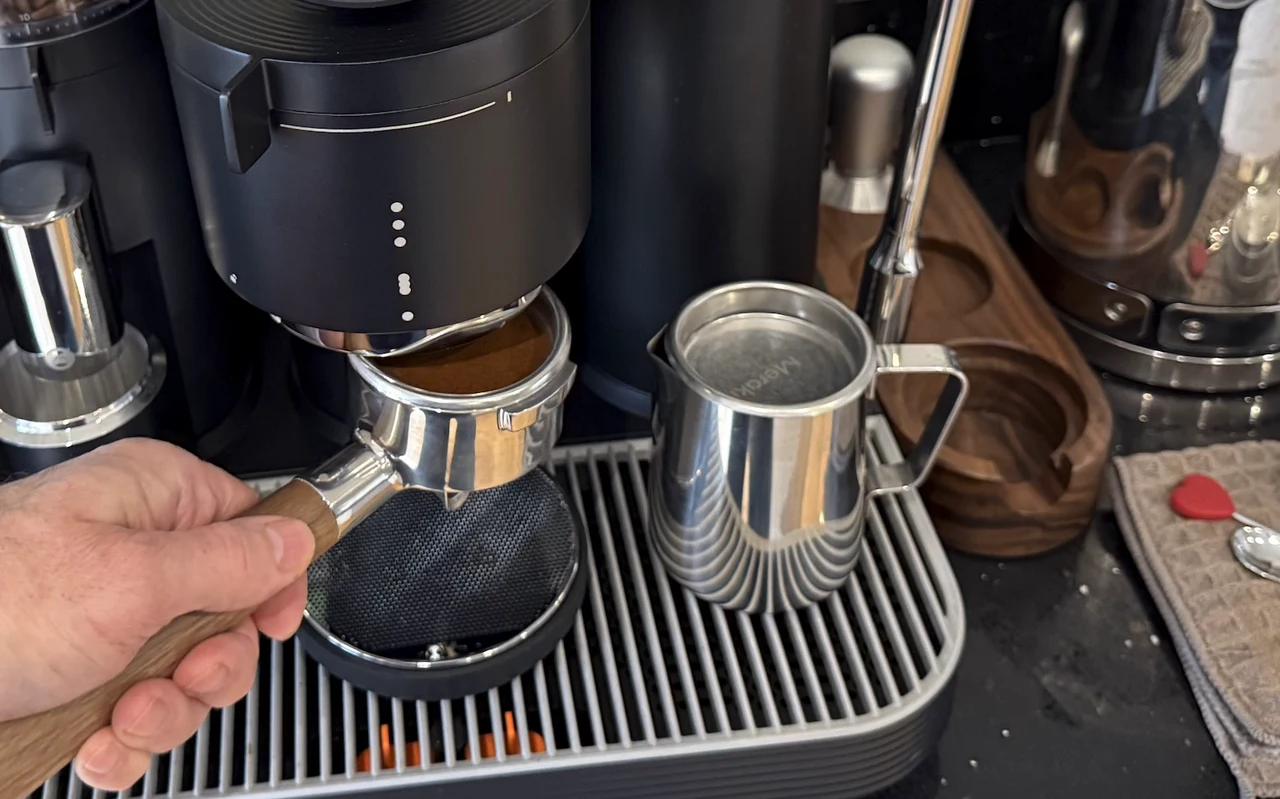
The drip tray (650ml) was practical for daily rinse-and-purge routines and it slid smoothly in and out. I’m the type who cleans as I go, so I appreciated that the Meraki didn’t punish that habit with awkward catches or fiddly alignment. A quick rinse, a quick wipe and I was back to the next step.
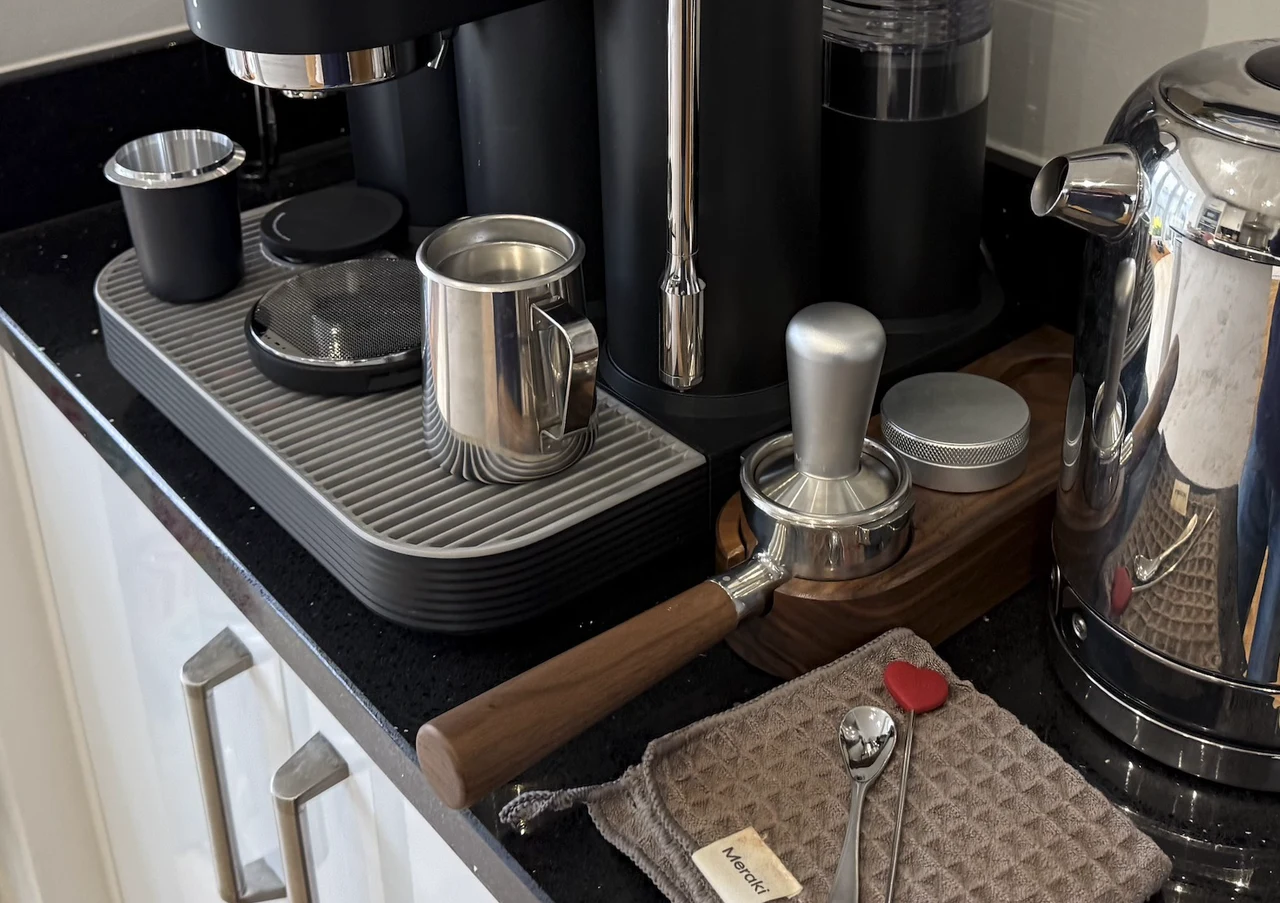
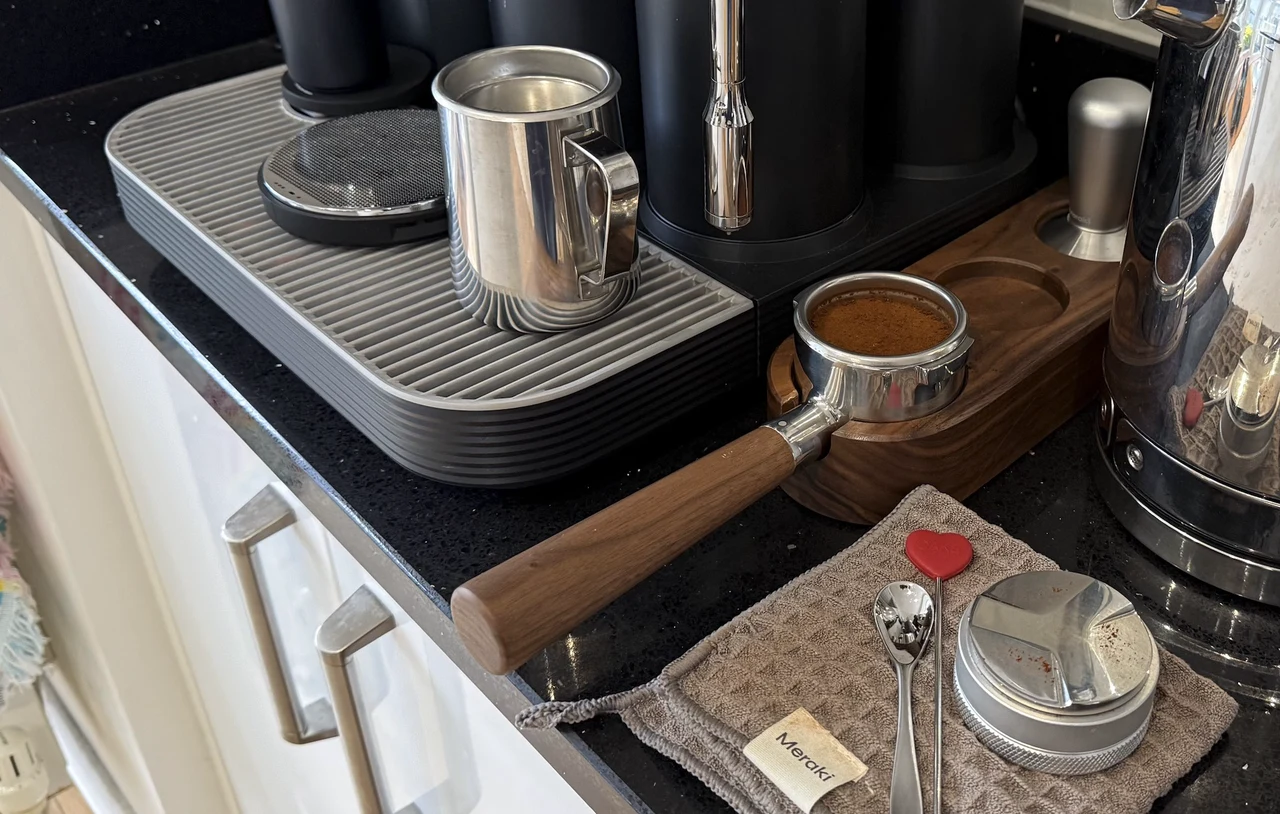
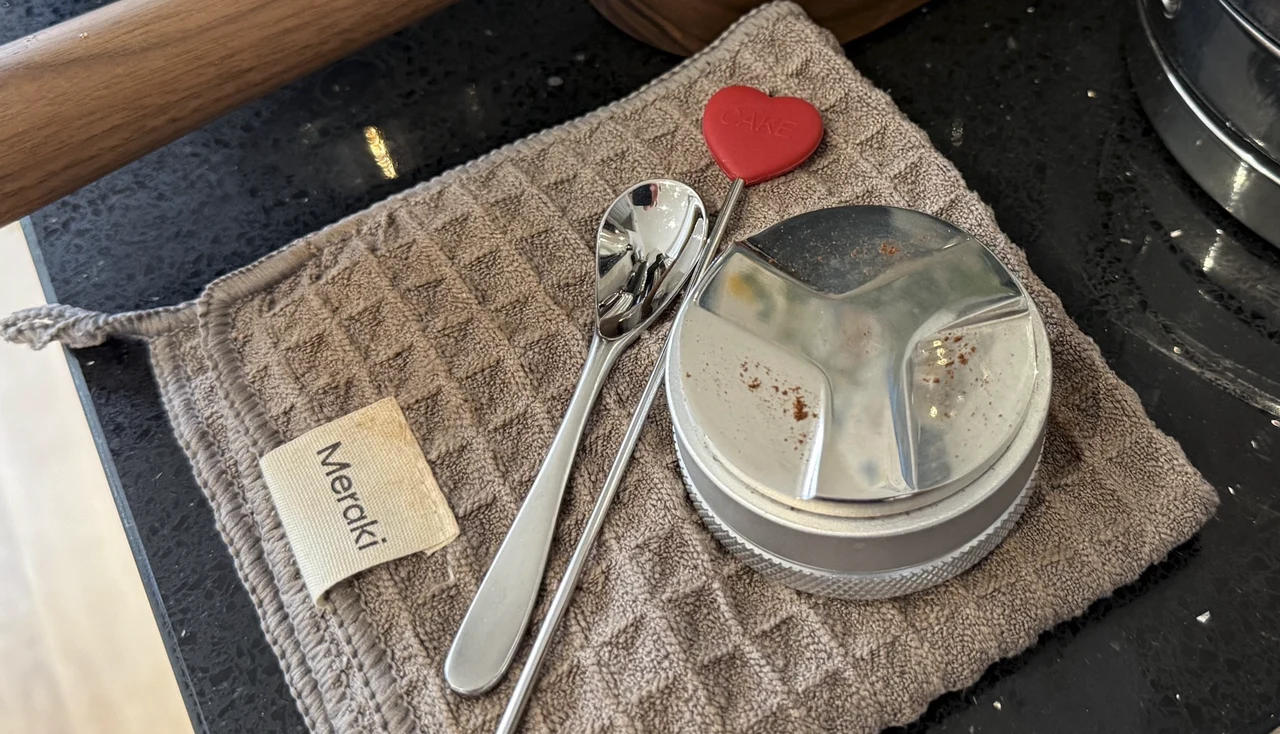
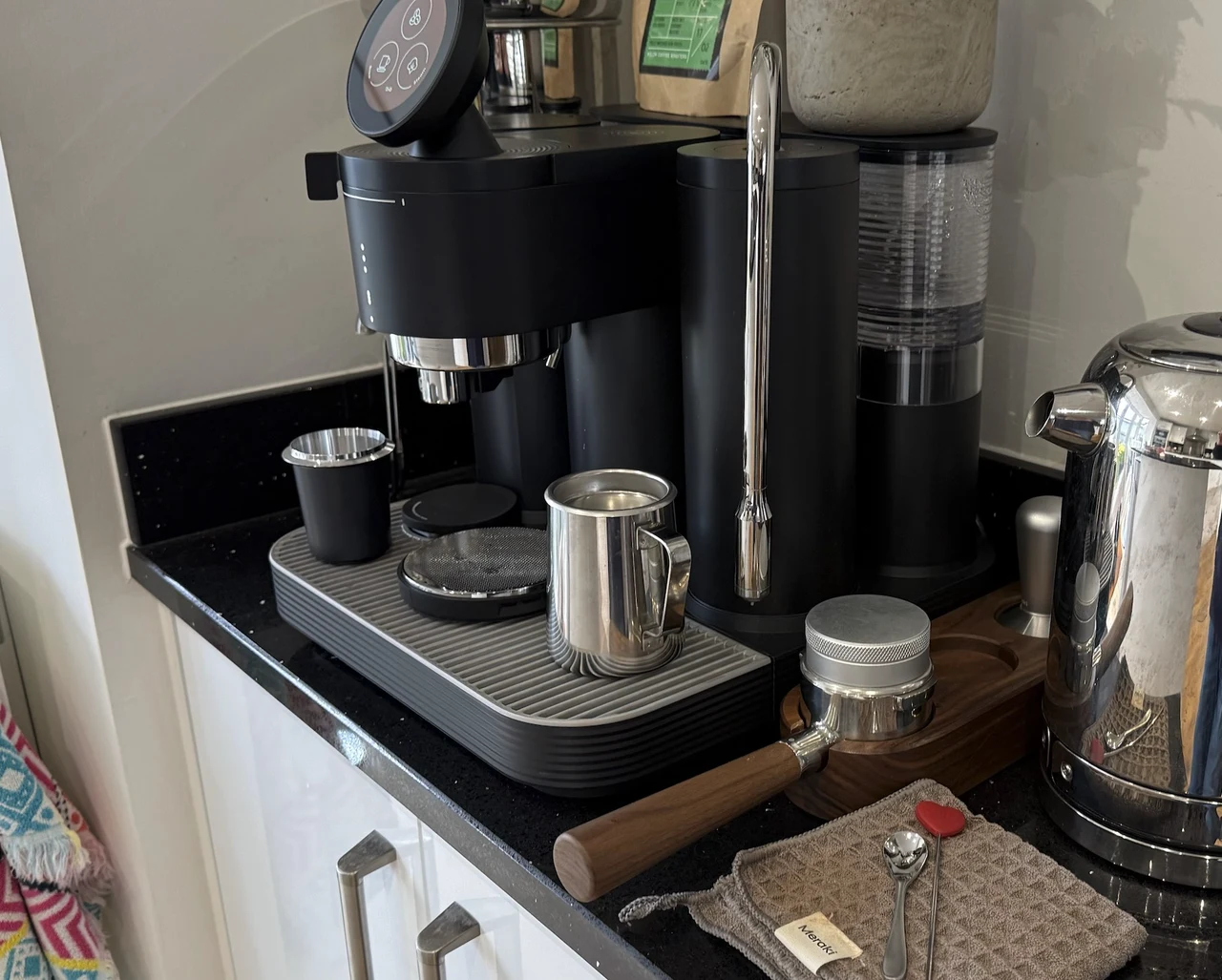
Accessories were mostly reassuringly solid. The milk jug, tamper and flattening stone felt like tools meant to be used, not merely included. The cleaning reality, though, is mixed. Most of Meraki’s accessories are not dishwasher-safe, especially the drip tray, dosing cup, and portafilter. Although the stainless steel milk jug can be safely used inside a dishwasher.
Interface & Controls: Touchscreen & Manual Options
The Meraki’s user experience is built around a touchscreen that routes you through grinding, brewing and steaming. It’s straightforward enough that I stopped thinking about navigation after a few sessions, which is exactly what I want from a machine that’s supposed to lower friction. Espresso already has plenty of steps where I can mess up; I don’t need menu friction to be another one.
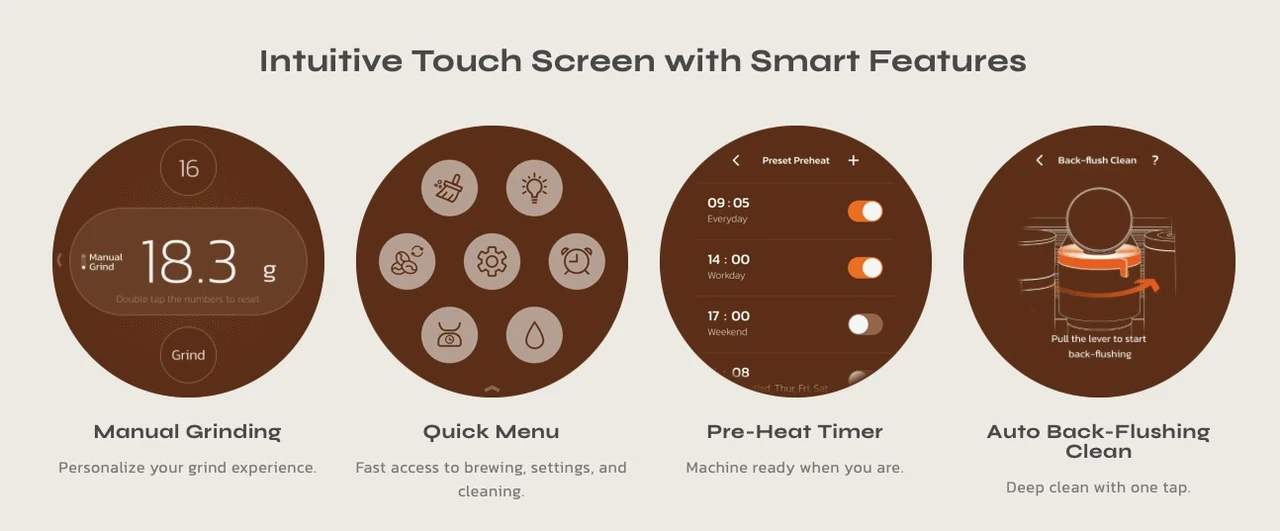
During early mornings, the biggest benefit was reduced mental overhead. I could move from “make a latte” to “start grinding” without wondering which setting I changed yesterday. In daily use, that kind of consistency matters more than novelty features because it helps a process become habit.

I also appreciated that the Meraki didn’t feel like it was trying to lock me into a rigid autopilot. I had manual control available for brewing and steaming, so I could stop a shot when it looked right or end steaming when the milk sounded and felt correct. That’s important because coffee is variable by nature and I don’t always want a machine to override what I’m seeing.
The touchscreen-forward approach will appeal most to someone who wants structure without giving up agency. I’m comfortable learning espresso, but I still liked how the interface kept me moving through a repeatable sequence rather than letting me forget a purge or get lost in my own tinkering.
Espresso Workflow: Grinder, Scales & CoffeeSense™
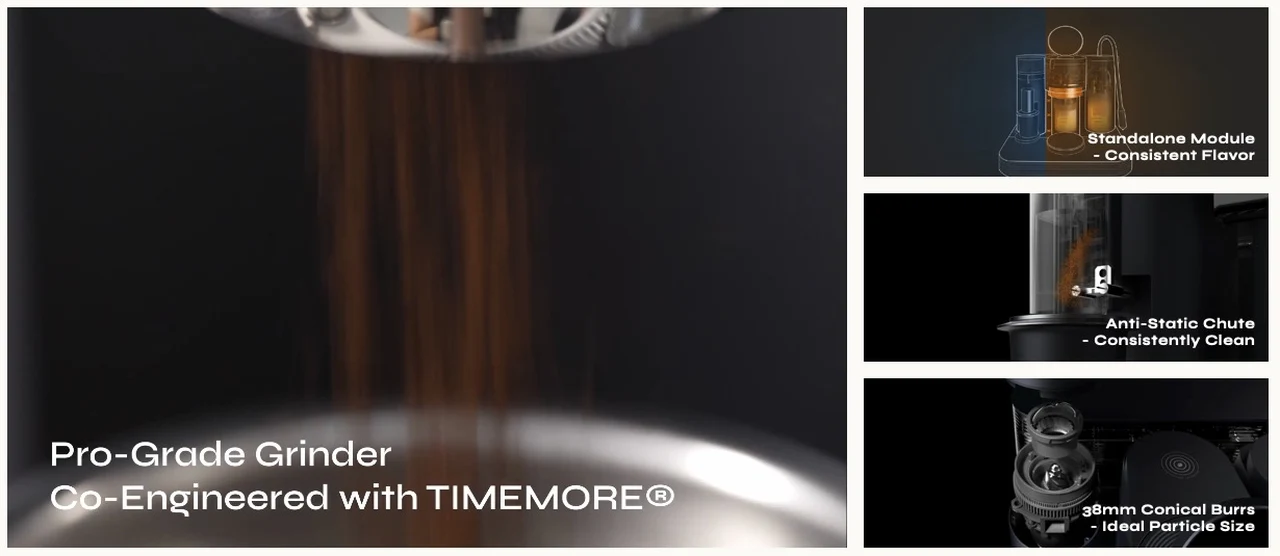
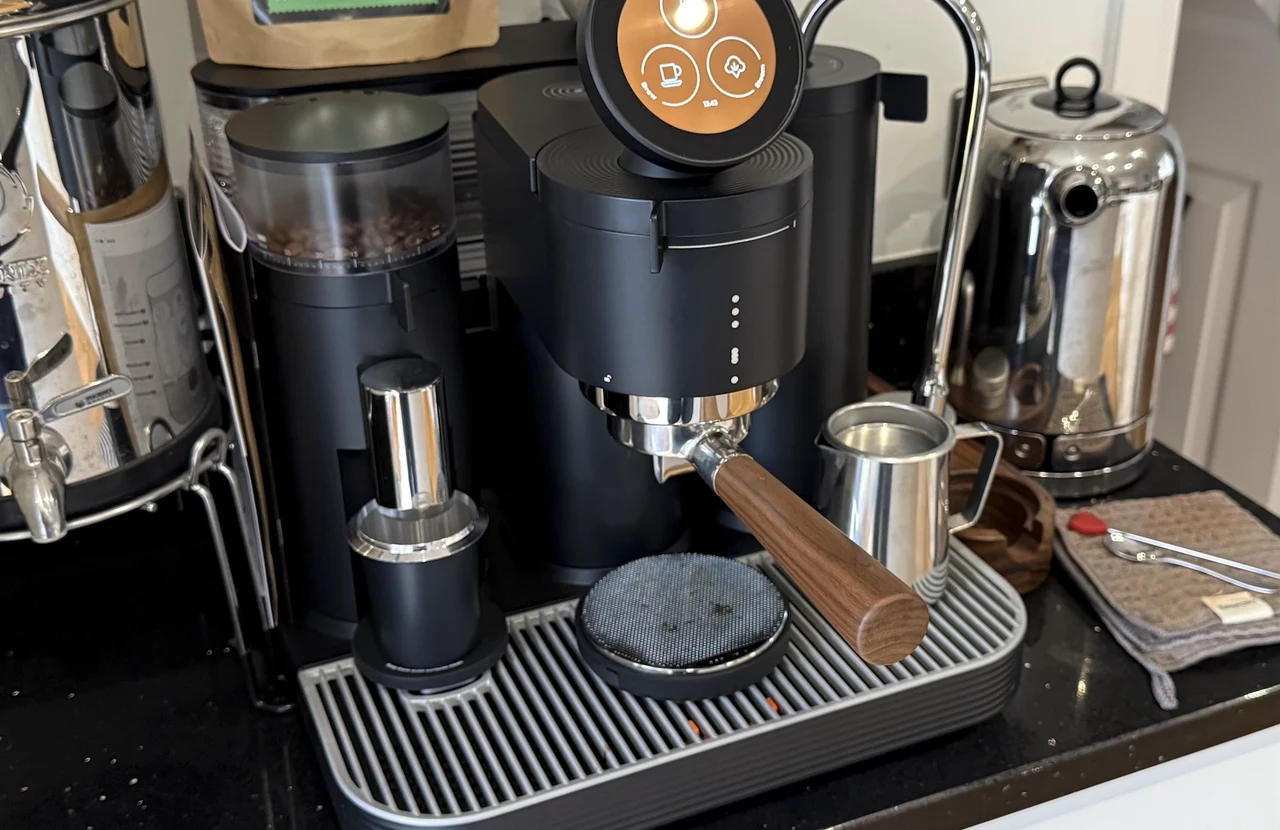
The grinder is the heart of any all-in-one espresso machine and the Meraki’s integrated approach is clearly built around weighing everything. The dosing cup has a magnetic bottom that triggers the grind scale and that small integration detail mattered more than I expected. I had fewer “did I place the cup correctly?” moments and I spent less time nudging a container around to get the system to register it. That helped the whole experience feel like a connected workflow rather than separate gadgets stacked together.
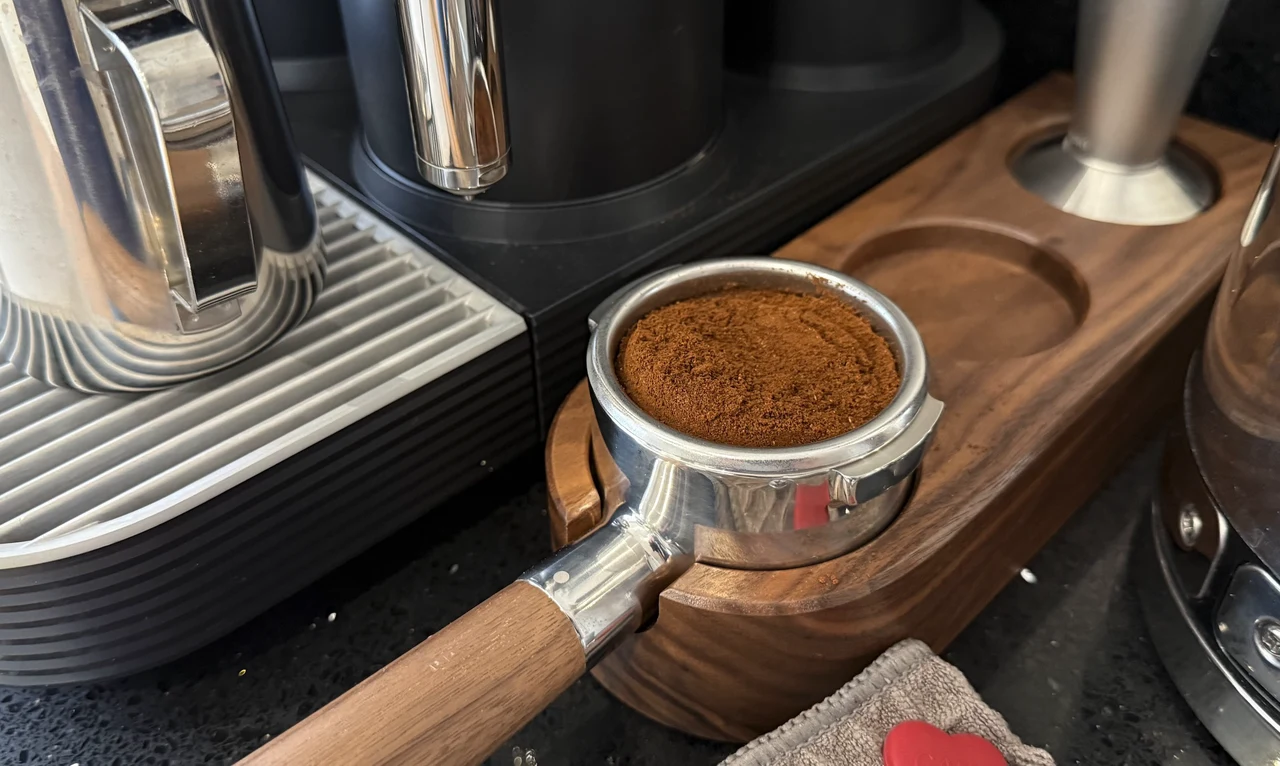
With the hopper removable via a counter-clockwise twist, grinder maintenance and bean changes are more practical than you might first believe. If you like to rotate coffees frequently, being able to detach the hopper simplifies emptying it and reduces the sense that you’re locked into one bag until it’s finished.
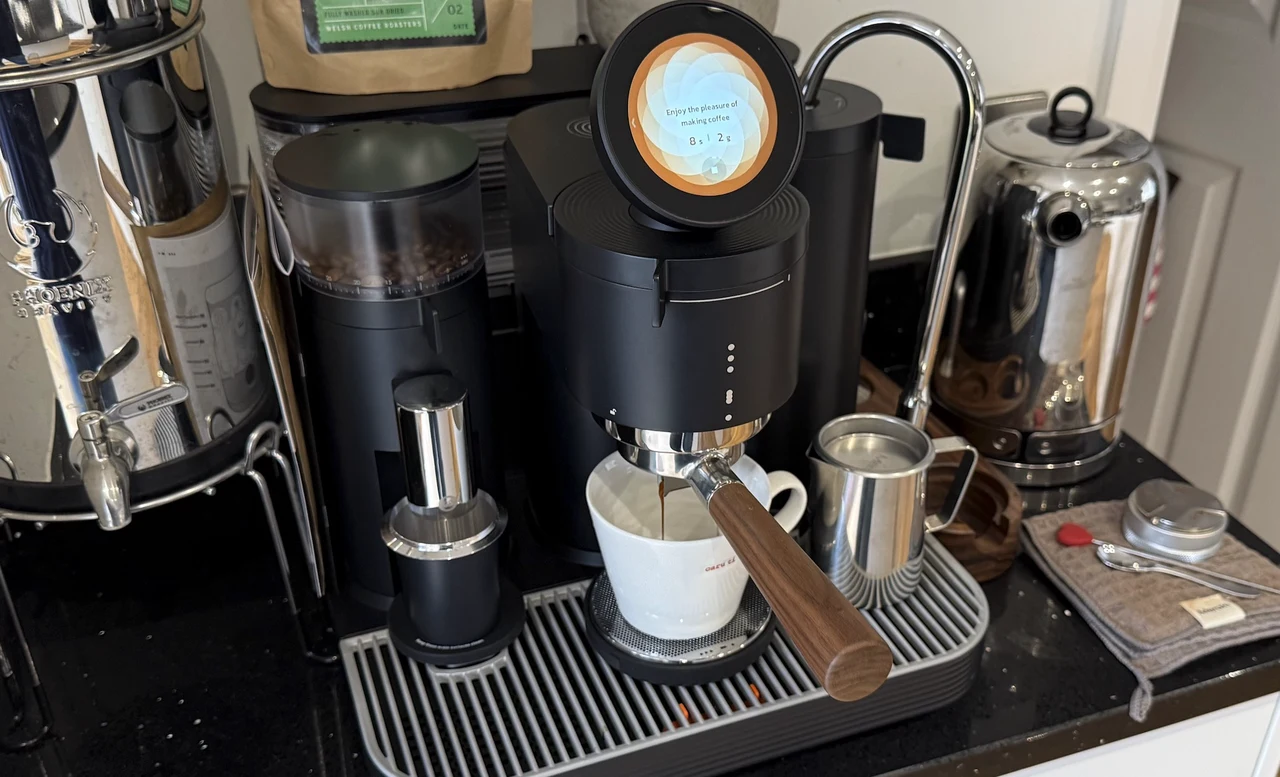
Where the Meraki really differentiated itself for me was the end-to-end weight targets. The machine can grind to a target dose and stop, then brew to a target yield and stop. Using grind-by-weight and brew-by-weight didn’t magically make every shot great, but it did reduce one of the most annoying home-espresso variables: me getting distracted and stopping a grind or shot slightly early or late. When I was half-awake, that mattered.
Dialing in felt more structured than my usual timer-based routine. Once I landed on a recipe I liked, repeating it was less fragile. I wasn’t trying to recreate the same output with a reflexive button press; I was repeating weight targets and then focusing on taste. The result was fewer “what happened?” shots and more incremental progress.
This repeatability was most obvious when I made multiple drinks. On back-to-back rounds, the weighing kept the espresso portion more consistent even as my attention shifted to milk. It’s not a flashy advantage in the first cup; it becomes obvious by the second.
CoffeeSense™ sits on top as a convenience layer. The concept is simple: scan an NFC-equipped Meraki coffee bag and the machine surfaces suggested grinding and extraction parameters for that coffee. When I rotated beans, it was a useful “starting point memory” so I wasn’t constantly guessing where I left off. The trade-off is ecosystem pull. If you already buy coffee that supports the NFC workflow, it’s a tidy feature; if you don’t, CoffeeSense™ becomes less central and more like a capability you might ignore.
There’s also a practical ceiling to how much any suggested profile can do. Bean age, humidity and my own taste still dictated the final adjustments. I treated NFC suggestions as guidance, not a promise.
Milk Steaming & Drink Pacing
Milk drinks were a core part of my test because they stress the machine’s pace: can it pull espresso and steam without feeling like I’m waiting around? The dual-boiler setup supported that kind of workflow. I could brew and then move straight into steaming without the machine acting like it needed a breather.

The steam wand’s physical usability mattered too. I found the steam wand range helpful in a tight kitchen because it let me find a comfortable pitcher angle without rearranging my whole setup. When I’m making a cappuccino quickly, I’m not looking for a perfect choreography; I just want enough freedom of movement to get consistent microfoam without banging into the machine.
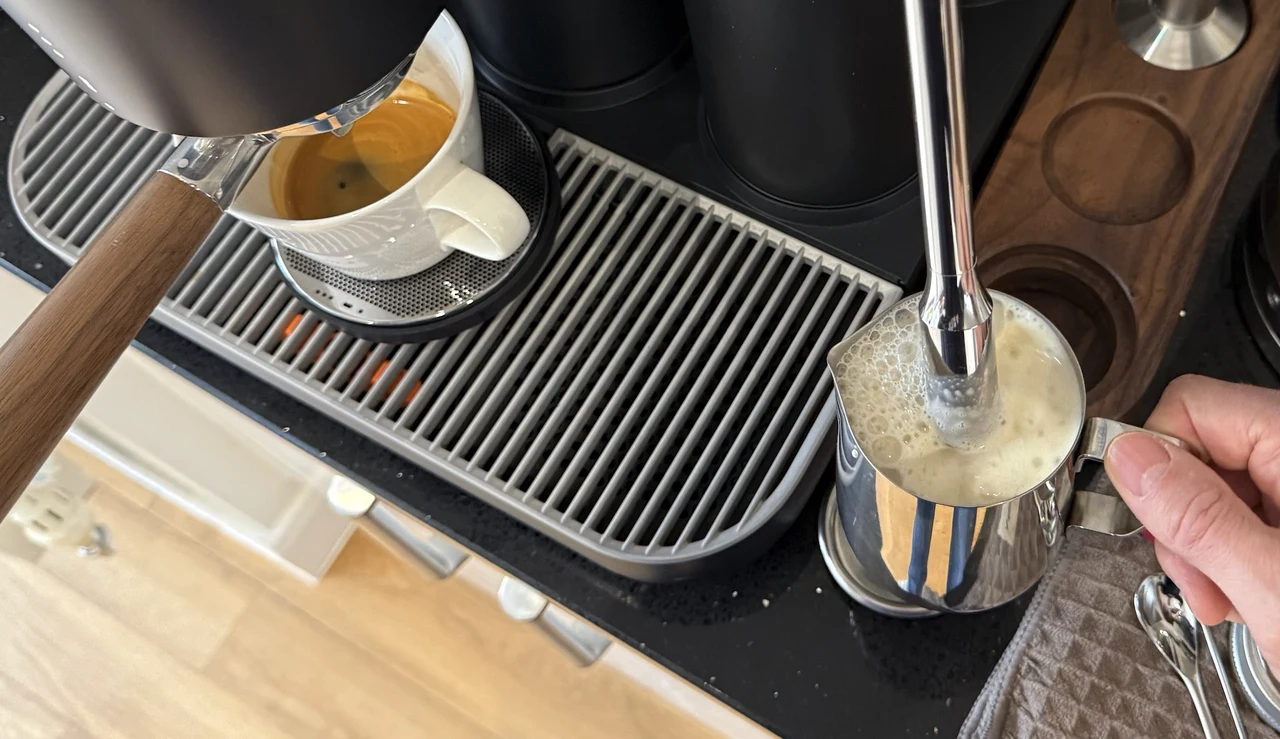
I used different milks across the weeks and the biggest takeaway wasn’t that the Meraki made every milk identical, but that it made my results more repeatable once I found a technique. During rushed mornings, that repeatability kept me from “oversteaming by accident” as often.
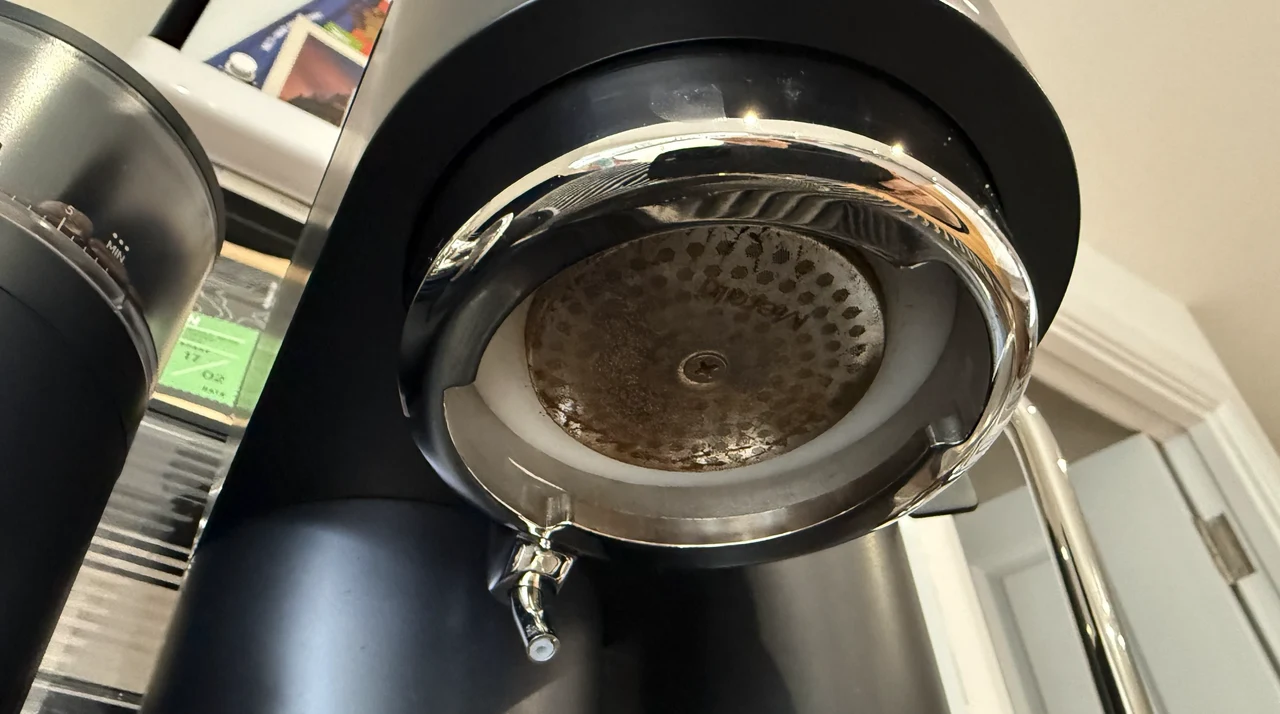
Cleanup after milk drinks is also part of real life. Purging and wiping the wand fit naturally into the flow, and with the hopper removable, overall cleaning is less daunting than I initially thought. Even so, ownership still involves regular hand-washing of certain parts and a monthly back wash to keep the system in tiptop condition.
Final Assessment
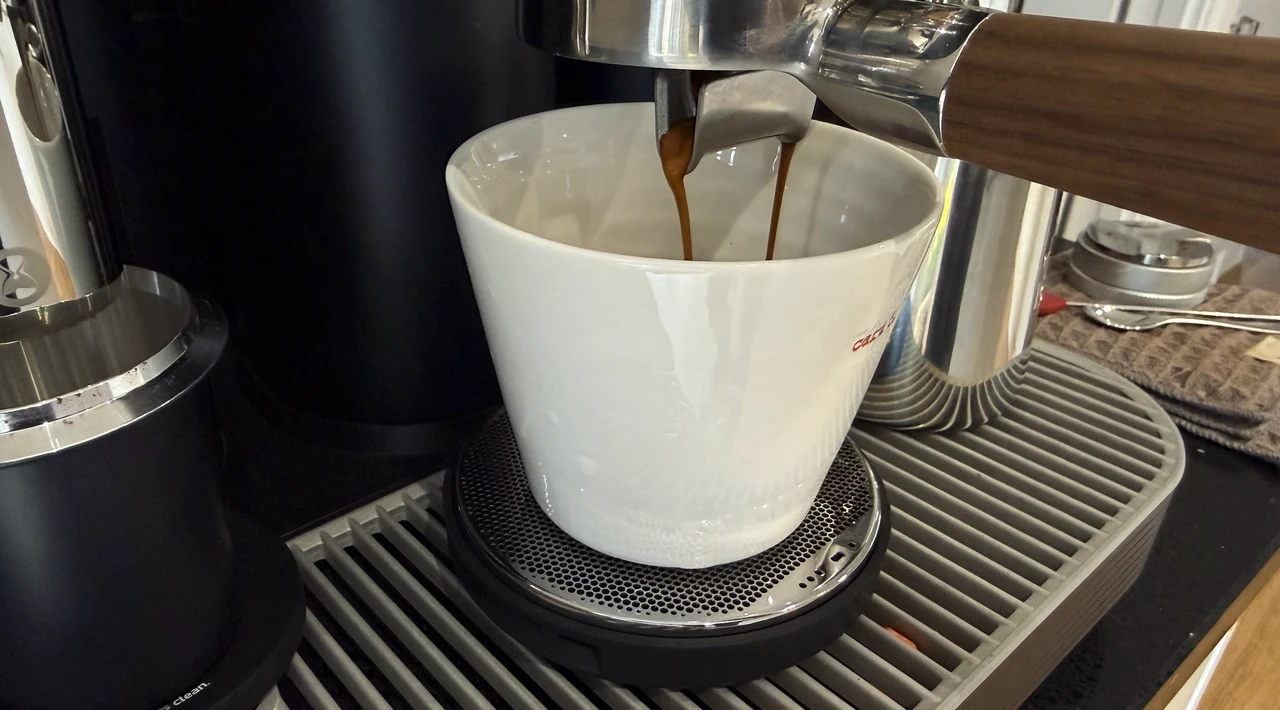
The Meraki Espresso Machine was beautiful when making multiple cups of coffee quickly, allowing you to use all three workstations simultaneously and in harmony to prepare a variety of different orders in the shortest amount of time. This meant everyone could enjoy their coffees together rather than waiting every three or four minutes as each one rolled off the production line, all thanks to its weight-based workflow. The integrated scales and the grind-and-brew targets made my mornings more consistent, especially when I was making multiple drinks and didn’t want to babysit timing.
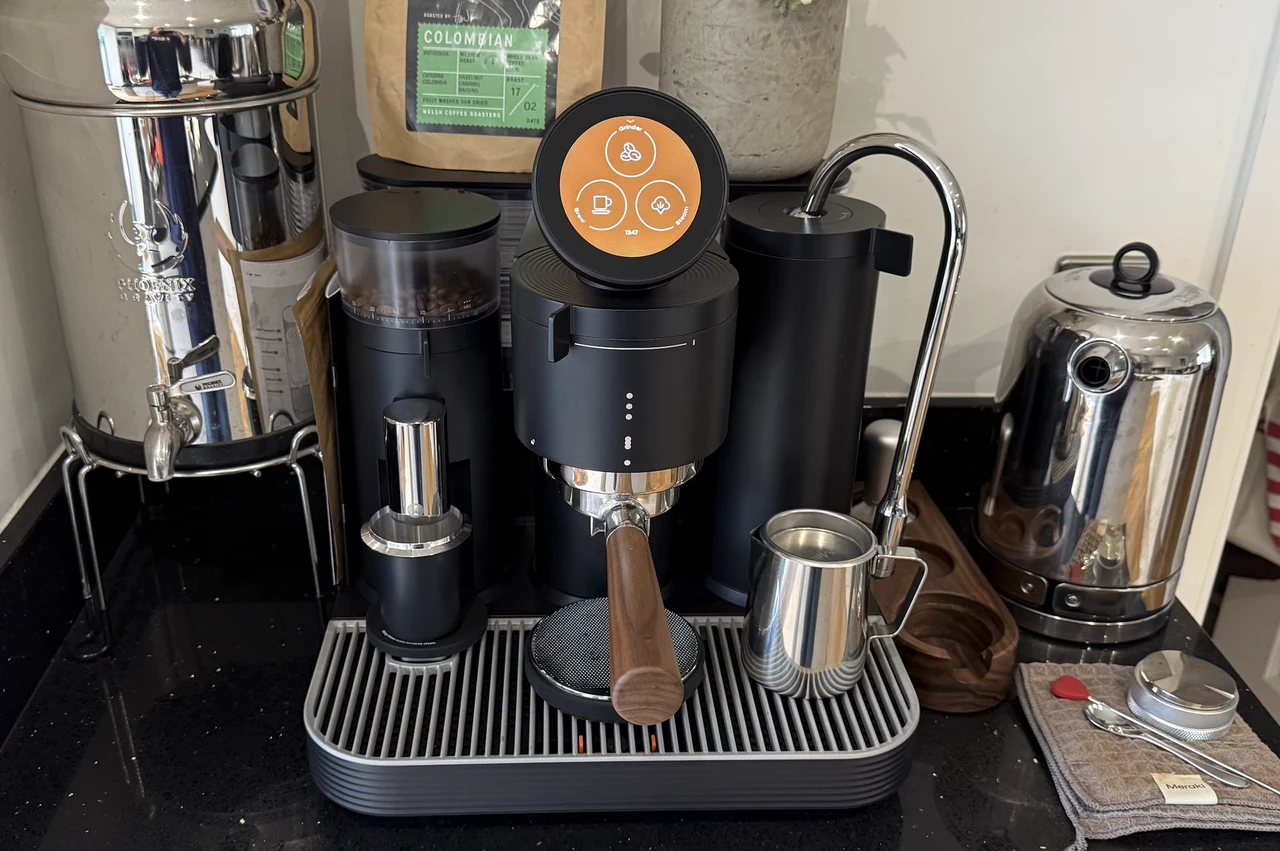
I also liked the balance of a guided touchscreen flow with the ability to take manual control when I wanted to trust sight and sound. The trade-offs are real: the machine’s 14.5kg body discourages moving it around, and the accessory cleaning burden is slightly higher because several parts aren’t dishwasher-safe. However, I truly enjoy making coffee on this machine, and it brings a smile to my face as I’m doing it. Hardly any mess, three distinct stations, solid professional construction, and a removable hopper make this coffee machine as practical as it is stylish. For me, function trumps style. Yet this coffee machine puts functionality first and still maintains a classic look. It’s a strong daily tool if you value repeatability and can live with hands-on upkeep.
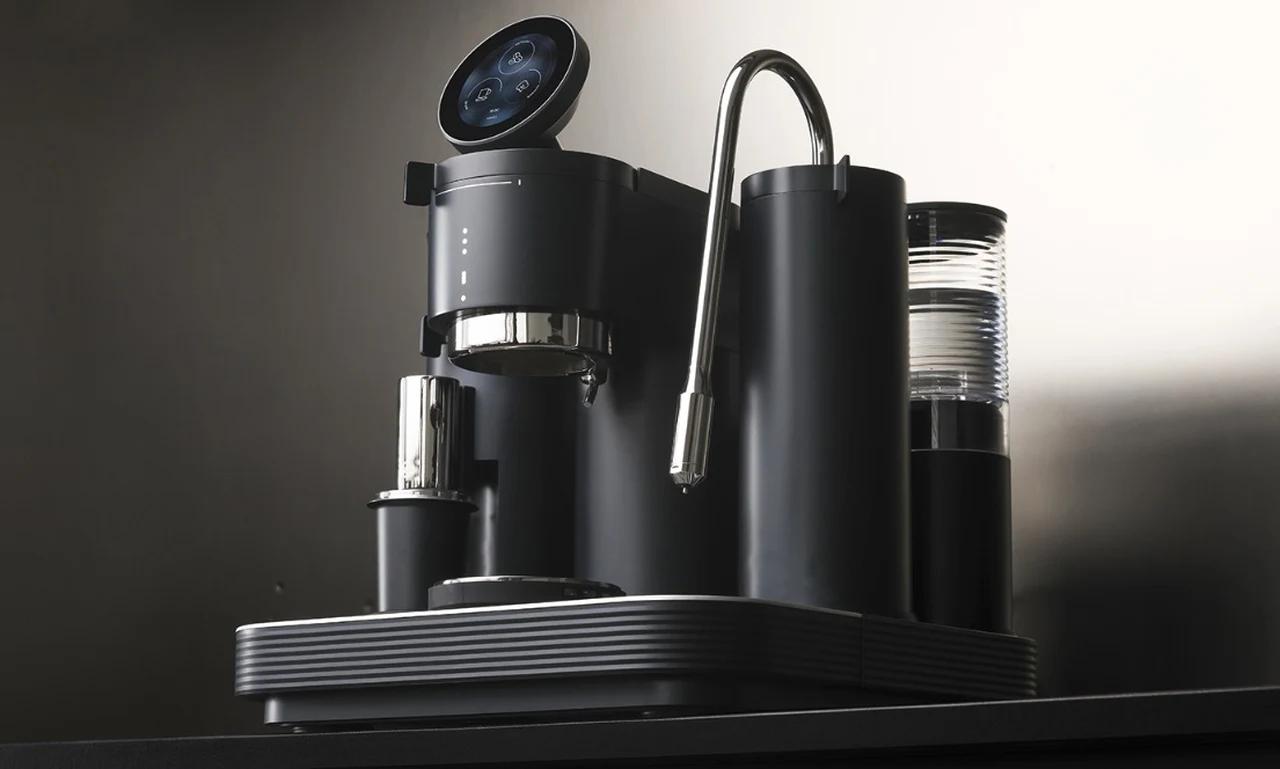
Technical Specifications
- Dimensions: 370 x 370 x 415 mm
- Weight: 14.5kg
- Voltage (ships according to destination region): 100-120V 50/60Hz (default for US, CA)
- Rated power: 1600W (100-120V 50/60Hz)
- Pump type: Rotary pump
- Line pressure: 9 bar
- Water tank capacity: 2000ml
- Drip tray capacity: 650ml
- Grind scale: 1 kg max capacity ±0.2g scale accuracy
- Brew scale: 1 kg max capacity ±0.2g scale accuracy
- Brew boiler capacity: 350ml
- Steam boiler capacity: 550ml
Official Product Page : Meraki
Filed Under: Gadgets News, Reviews
Disclosure: Some of our articles include affiliate links. If you buy something through one of these links, Geeky Gadgets may earn an affiliate commission. Learn about our Disclosure Policy.