

Developers are talking about more than just the latest AI coding assistant this week. An industry conversation that began with the question, “What happens when AI can write useful code in minutes?” has now shifted to a “what happens when that code breaks production?”
In the past few days, software builders have been debating two big stories. One suggests that new AI tools could quietly change how developers build small apps and utilities. The other shows how relying too much on AI code can lead to costly errors, even job losses.
Taken together, these stories reflect a change in how developers work and how engineering practices must adapt.
AI tools may upend tiny utility apps
Not long ago, developers built small, single-purpose apps by hand. Those apps were often offered under freemium or low-cost models on app stores, supported by ads or optional paid upgrades.
Recently, however, some developers and analysts have suggested that the rise of AI coding tools like OpenAI’s Codex and Anthropic’s Claude Agent might change that market. According to 9To5Mac, tools like these are now capable of assembling small applications very quickly, sometimes in minutes, and that could cut into the demand for standalone, single-use apps that developers used to build manually.
The argument is simple: if someone can generate a tailored utility on the fly with an AI assistant, why go download a tiny freemium app from a marketplace at all? In that model, the economics of app stores change. Instead of searching for the “best timer app” or “custom spreadsheet exporter,” a user might prompt an AI tool to write the tool they want. That kind of shift, while still early, could reduce the value of apps built around narrow utility.
Idle speculation? In the 1990s and early 2000s, small apps flourished because they filled very specific gaps that big platforms didn’t cover. When AI accelerates the creation of custom tools, it could make many of those small, single-use apps less necessary or appealing.
Tools that solve business-critical problems, are maintained over time, or integrate with complex systems are still beyond what AI can fully replace today. Simple, disposable apps are the ones that feel most at risk.
When AI code breaks production
Almost at the same time this week, a cautionary note came from inside the developer community. A story circulating on Reddit and picked up by several news outlets tells of a developer at a startup who was fired after AI-generated code caused a production outage.
According to posts from people claiming to be involved, the engineer initially tried to write code by hand. But as deadlines tightened, he increasingly relied on an AI coding assistant to generate large parts of his changes. That allowed him to meet deadlines, but it also meant he didn’t understand all of the code that the tool produced. Eventually, a production issue triggered a late-night alert, and the team spent the next day tracking down the bug. It wasn’t the developer’s first production incident, and the company terminated his employment after this latest problem.
It’s important to note that the underlying news reports link back to social media posts and aren’t official statements from the company involved. Users on Reddit pointed out that the manager had even reviewed the code with AI before it was merged, underscoring how AI was part of the workflow at multiple steps.
The anecdote has stirred strong reactions from other developers online. Some argue that the real problem was not the AI itself but poor code review and testing practices. Others say that engineering teams must be careful not to outsource their judgement to tools they don’t fully understand.
Either way, the core lesson is that AI code output can carry hidden risk if it isn’t evaluated with the same rigour as human-written code.
What this means for developers
When you pull the bigger picture together, both stories point toward the same set of questions:
1. How do teams use AI without losing control of code quality?
AI assistants can write code quickly, but quality still depends on the engineer’s ability to test, review and understand what the tool produced.
2. How do developers adapt to changes in software economics?
If basic utilities can be generated on demand, developers might change focus toward more complex applications with long-term value.
3. How should engineering practices evolve with AI?
Incidents like production outages highlight that traditional guardrails, from code reviews to testing pipelines, still matter, perhaps more.
To navigate this future, many developers are already talking about clear standards for when AI assistance is appropriate, how to structure tests for generated code, and how to integrate tool output into team review systems.
A new normal for developer workflows
On one hand, developers have more power than ever to generate working code in minutes. On the other hand, that power can be misused if the basics of engineering discipline are ignored.
The tension between speed and responsibility may define how AI tools are used in professional settings over the next few years. For developers, the invitation is to learn how to use AI tools well, but never let them replace the fundamentals of code quality and human judgement. That balance may be the biggest real change AI brings to how code gets built.
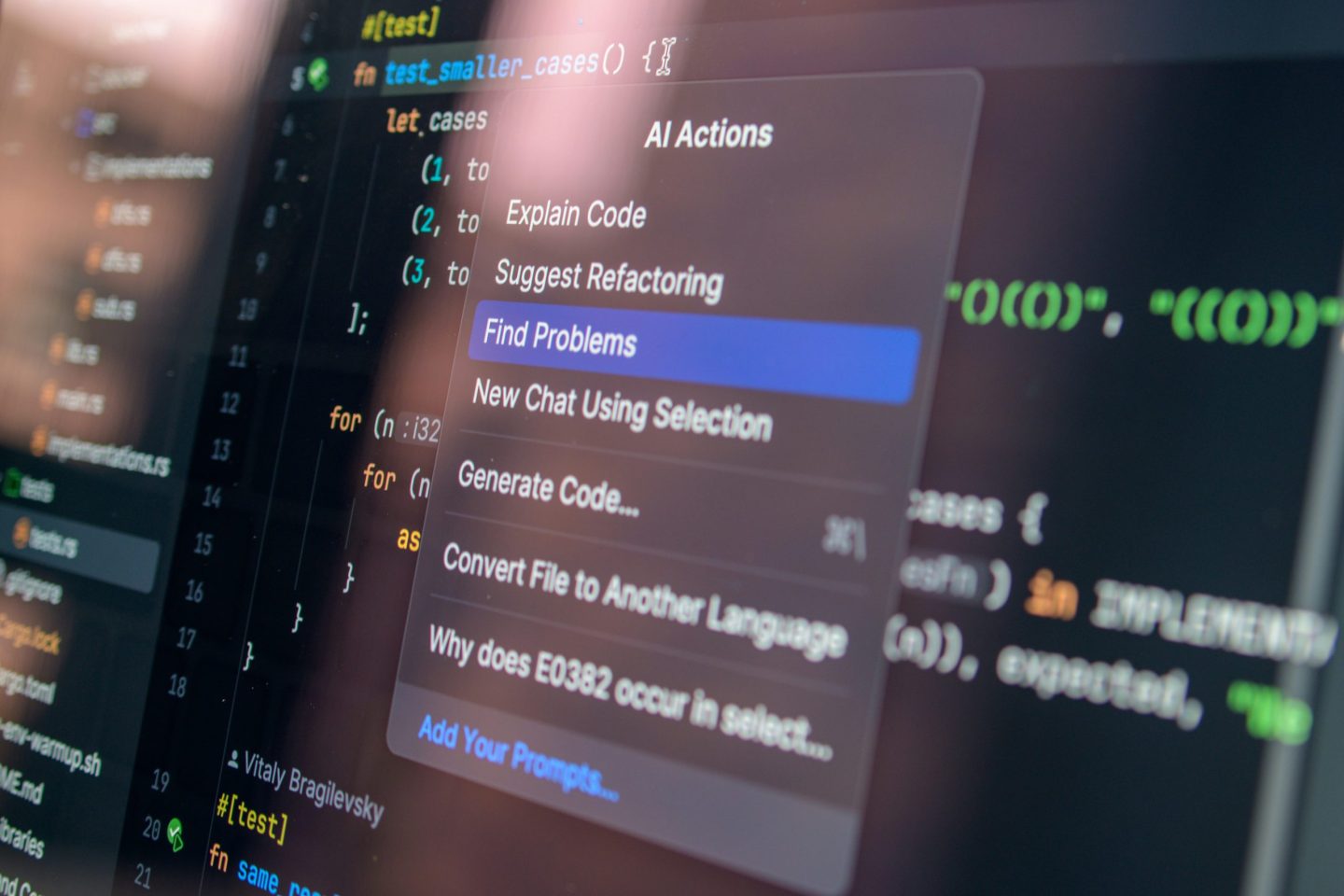
(Photo by Daniil Komov)
See also: Black Duck: AI coding demands modern supply chain governance
Want to learn more about AI and big data from industry leaders? Check out AI & Big Data Expo taking place in Amsterdam, California, and London. The comprehensive event is part of TechEx and is co-located with other leading technology events, click here for more information.
AI News is powered by TechForge Media. Explore other upcoming enterprise technology events and webinars here.