

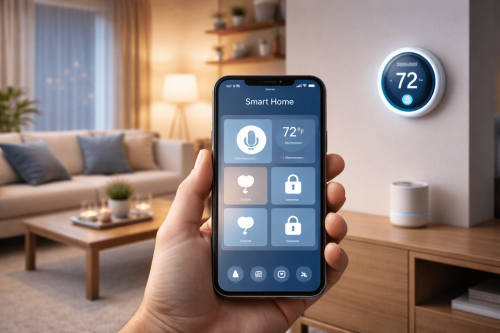
Your next smart light or door lock may not work unless it carries the right certification badge. Smart home platforms now tighten compatibility rules, and that shift could simplify setup while limiting flexibility.
This change affects homeowners, renters, installers, and device makers. If you rely on Alexa, Google Home, Apple Home, or Samsung SmartThings, you may soon find fewer unofficial integrations and more certified-only accessories. Companies say this move improves security and reliability. Critics warn it increases ecosystem lock-in.
Smart home platform control has become more strategic than ever.
What Happened
Over the past year, major smart home platforms refined their integration policies. Apple expanded stricter certification pathways for devices that connect to Apple Home. Google reduced support for some legacy Works with Google Assistant programs. Amazon reorganized its Works with Alexa program to focus on verified integrations. Samsung emphasized SmartThings-certified hardware.
At the same time, the Matter standard continued to roll out across brands. Matter aims to create universal compatibility, but platforms still control how deeply devices integrate into their apps and voice systems.
Smart home platform control now centers on certification, security compliance, and tighter API access.
Why It Matters Now
Smart homes moved from novelty to infrastructure. People now depend on connected thermostats, security cameras, locks, garage doors, and lighting systems.
As adoption grows, so do risks. Poorly secured third-party devices can expose home networks. Weak firmware can create entry points for hackers. Platforms want to reduce these vulnerabilities.
Stricter smart home platform control promises:
-
Fewer connection failures
-
More stable firmware updates
-
Better encryption standards
-
Improved cross-device automation
However, this shift also limits experimentation. Hobbyists who once connected unsupported devices through open APIs may lose that freedom.
The timing also aligns with growing regulatory scrutiny. Governments across North America and Europe now push for stronger cybersecurity standards for connected devices.
How Smart Home Platform Control Works
Platforms enforce control in several ways.
First, certification programs require device makers to meet specific hardware and software standards. These standards often include:
Second, platforms restrict API access. Instead of allowing broad third-party control, they offer limited developer kits with defined permissions.
Third, platforms prioritize Matter-certified devices. Matter creates a shared language for devices across ecosystems. But each platform still determines how advanced features function inside its own app.
For example, a smart bulb may turn on and off across all platforms through Matter. But advanced automations or energy tracking may work best inside one ecosystem.
Smart home platform control ensures consistency, but it shapes feature depth.
The Role of Matter
Matter launched with backing from Apple, Google, Amazon, and other major players. It promises easier setup through QR codes and local network communication.
In theory, Matter reduces fragmentation. In practice, smart home platform control still influences user experience.
Each company integrates Matter differently. Some limit which device categories support full automation. Others require firmware updates or specific hubs.
Matter improves baseline compatibility. It does not eliminate ecosystem strategy.
Benefits for Consumers
Stronger smart home platform control can improve reliability. Fewer unsupported devices mean fewer broken automations after software updates.
Security also improves. Certified devices must meet stricter standards. That reduces risk of outdated firmware lingering on networks.
Setup becomes easier too. Instead of complex third-party apps, users scan a code and connect devices directly inside their preferred ecosystem.
For mainstream consumers, convenience often outweighs flexibility.
Trade-Offs and Concerns
Tighter control introduces several trade-offs.
First, ecosystem lock-in grows stronger. If you invest heavily in one platform’s certified devices, switching becomes expensive.
Second, smaller startups may struggle with certification costs. That could reduce innovation. Large manufacturers can afford compliance processes more easily.
Third, advanced users lose customization freedom. Many enthusiasts rely on open-source platforms like Home Assistant to integrate niche devices. Stricter API rules complicate those setups.
Smart home platform control may protect average users while frustrating power users.
Market Implications
The smart home market continues steady growth. According to Statista, global smart home revenue continues to rise year over year as adoption expands. You can explore market data here:
As the market matures, platform owners focus on retention. Devices create recurring engagement through subscriptions, cloud storage, and ecosystem services.
Smart home platform control strengthens that retention strategy. The more certified devices you own within one ecosystem, the less likely you switch.
Retailers also adapt. Product listings now highlight certification badges prominently. Consumers increasingly check compatibility before purchase.
Comparison to Smartphone Ecosystems
The shift mirrors smartphone history. Apple and Google once allowed broader app and accessory experimentation. Over time, both tightened rules to improve security and consistency.
Smart home platform control follows the same arc. Early chaos fueled creativity. Maturity demands stability.
The difference lies in stakes. A faulty phone app rarely unlocks your front door. Smart home failures affect physical safety and privacy.
That reality justifies stricter oversight from platform owners.
Privacy Considerations
Stronger certification can improve data handling standards. Platforms now require clearer disclosures about what data devices collect.
However, centralized control also means more data flows through major tech companies. Voice commands, camera feeds, and automation logs often route through platform servers.
Consumers must weigh security improvements against data concentration.
Review privacy settings carefully. Disable features you do not need. Choose devices that offer local processing when possible.
Practical Advice Before You Buy
Before adding new devices:
-
Check official compatibility lists
-
Confirm Matter support where available
-
Review firmware update policies
-
Consider long-term ecosystem commitment
Avoid mixing too many ecosystems unless you rely on a strong hub that supports cross-platform integration.
Smart home platform control makes planning more important than ever.
The Bigger Picture
Smart homes no longer represent experimental tech. They form part of daily life. Lights, locks, thermostats, and cameras now operate as essential infrastructure.
As a result, platform owners prioritize reliability, safety, and brand trust. Smart home platform control reflects that shift.
The next phase of connected living will likely feature:
-
Fewer unofficial integrations
-
Stronger encryption standards
-
Deeper ecosystem loyalty
-
Greater emphasis on certified devices
Consumers gain smoother experiences but sacrifice some flexibility.
The smart home industry now enters its consolidation era. Control tightens. Standards solidify. Buyers must think strategically before expanding their setups.
Convenience may improve. Choice may narrow. That balance will define the next chapter of the connected home.