

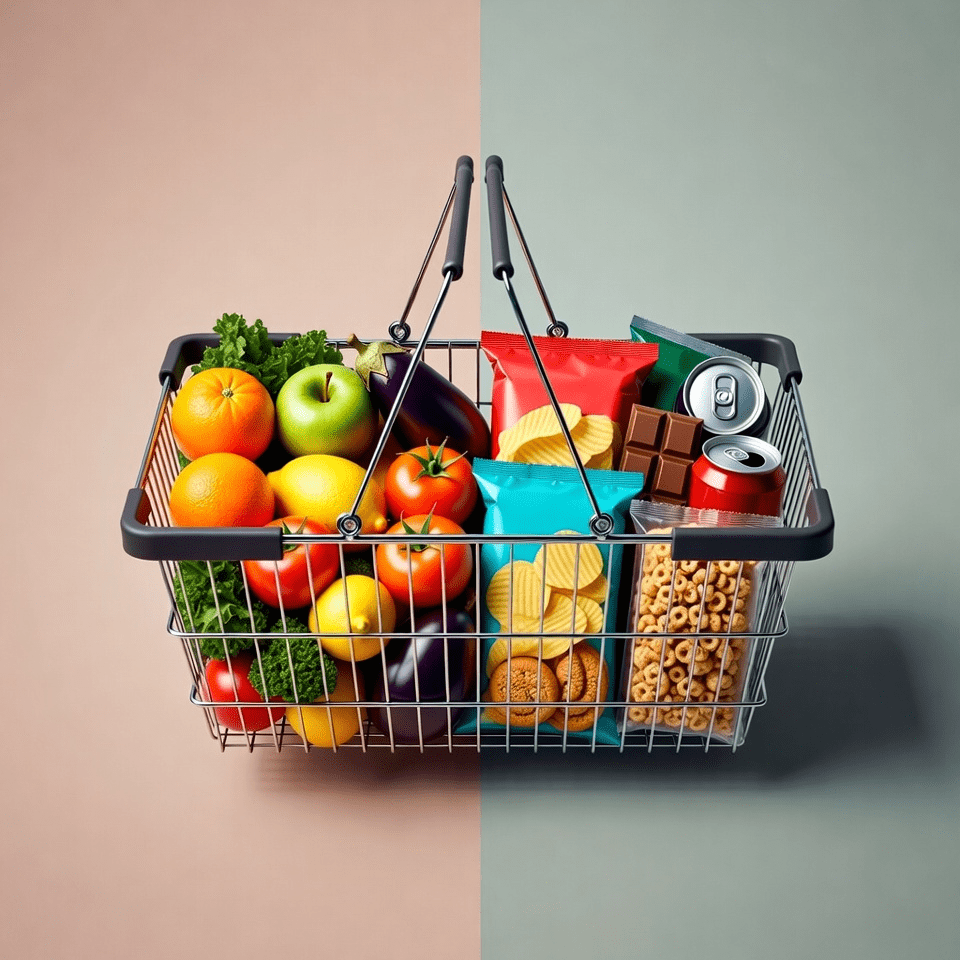
The bottom line: New research shows that food choices are driven by time preferences rather than just nutritional knowledge. While patient individuals naturally gravitate towards healthier diets, those focused on immediate gratification respond best to price subsidies. This suggests that lowering the cost of fruit and vegetables is more effective than health advice for improving long-term public health.
Every trip to the supermarket involves a quiet battle between what we want now and what we know is better for us later. That tension helps explain why many people leave with crisps and cakes instead of fruit and vegetables, even when they intend to eat more healthily. New research, published in the Journal of Public Economics, suggests that this everyday struggle is strongly shaped by how individuals think about the future.
Dr Kezia Joy, a registered dietitian nutritionist and medical advisor at Welzo, explained: “Healthier food is expensive compared to unhealthy food; therefore, education alone cannot provide enough support to help consumers overcome their daily pressures of time and money, as consumers’ decisions are influenced by their current economic conditions and environment.”
The study examined how people’s time preferences influence real-world food choices, linking financial decision-making styles to what ends up in the shopping basket and on the plate. Rather than relying on surveys alone, the researchers tracked actual grocery purchases and eating habits among low-income shoppers across the US.
Participants completed a short set of tasks that measured two traits. The first was general patience, meaning how willing someone is to wait for larger future rewards. The second was present focus, meaning how strongly someone is pulled towards immediate gratification when a reward is available right now. These traits were then compared with months of real shopping receipts and food diaries.
The pattern was clear. More patient individuals consistently bought and ate more fruit and vegetables. They also tended to have healthier overall diets, not just fewer unhealthy foods, but a stronger tilt towards nutritious choices in general.
By contrast, people who were more present focused showed the opposite pattern. They bought and consumed fewer fruit and vegetables and had less healthy diets overall. The pull of immediate pleasure appeared to outweigh longer-term health benefits at the moment of choice, particularly in the supermarket aisle.
The research went further by testing how these tendencies change when healthy food becomes cheaper. Some shoppers were given discounts on fruit and vegetables during their normal shopping trips. These subsidies substantially increased healthy purchases across the board.
Crucially, the biggest improvements were seen among the most present focused shoppers. The same group that usually struggled to choose healthier options responded most strongly when the immediate cost was reduced. Lower prices helped neutralise their tendency to prioritise short-term rewards, making healthier choices easier in the moment.
This matters for public health policy. Governments often assume that people simply need more information about nutrition. But this research suggests that decision timing and self-control are just as important. For many households, unhealthy eating is not about ignorance, but about how the brain weighs now versus later under pressure.
The findings also help explain why blanket health advice often has limited impact. Telling people to plan ahead works better for those who are already future oriented. For present focused individuals, practical changes to the environment, such as targeted food subsidies, may be far more effective.
The study focused on low-income shoppers, a group that faces higher rates of diet-related illness and greater financial pressure at the checkout. By linking economic psychology with real food behaviour, it highlights why nutritional inequality persists even when healthier options are available.
The message is not that people lack willpower, but that human decision-making is uneven across time. Policies that acknowledge this reality, rather than assuming perfect self-control, may stand a better chance of improving diets and reducing long-term health costs.