

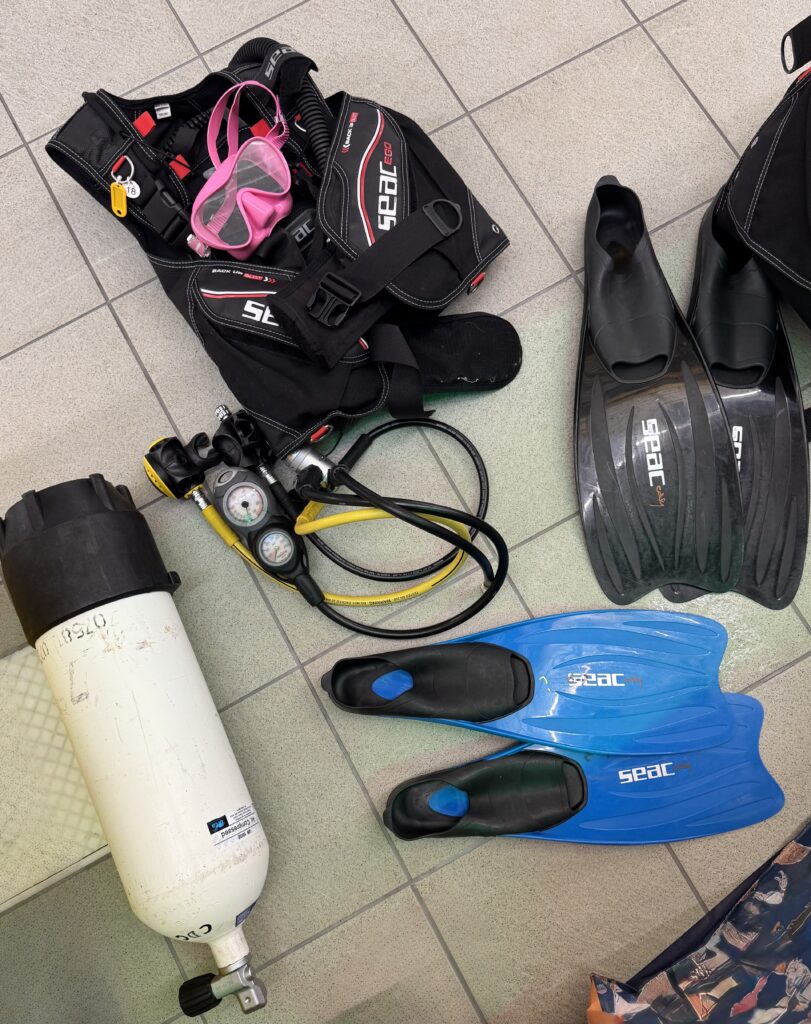

So I recently started taking scuba diving lessons, and one thing that really struck me was how little information there is out there for ostomates who want to dive. When I was researching before my lessons began, I spoke to my stoma nurses for advice and even they said they’d never had a patient take up scuba diving before!
So that meant starting completely from scratch. Which is exactly why I wanted to share my experience, in case scuba diving is something you’ve always wanted to try but have always been held back by worries about your stoma.
Preparation: getting signed off
Before I could even start lessons, I needed a medical certificate because of my stoma to confirm I was fit to dive. I met with a specialist doctor who was also an avid diver. We went through my medical history in detail, discussing my ulcerative colitis, two surgeries and what all of that might mean when diving with a stoma. He declared me otherwise fit and healthy, but sent me away to do some research of my own, particularly around how my ModaVi bag would react to the pressure changes underwater.
That’s when I reached out to the Eakin Healthcare team and honestly, they went above and beyond to help me. They explained the mechanics of the bag and exactly how it responds to pressure changes while diving. Essentially, my bag will flatten on descent and expand on ascent due to pressure differentials. Because I’ll only be diving to a maximum of 20 metres initially, with a safety stop at 6 metres, the filter in my ModaVi bag allows any excess gas to be released safely during that stop. Meaning providing I empty my bag before a dive I shouldn’t have to worry about any bag explosions!
Practical prep: getting ready for a dive
Once I was medically signed off and reassured by the product team, it was time to think about the practical side of actually diving. Before each session, I put on a fresh bag and use Respond COMFORT flange extenders for a bit of extra security and peace of mind. Then comes the kit which is a weight belt that sits just above my waist (not on top of my bag), followed by the BCD vest, which is essentially an inflatable jacket with the oxygen cylinder attached. One thing I noticed when putting this on for the first time is how heavy this feels, but as soon as you get in the water you don’t even notice it!
My first scuba diving lesson
There’s nothing quite like that first moment of jumping into the pool fully kitted up after weeks of preparation. It’s nerve-wracking and exciting all at once! I spent the next hour practising buoyancy, swimming around the bottom of the pool and getting comfortable with how everything felt. Since then, I’ve been working through rescues, mask clearing and buoyancy control. I’m now coming towards the end of my training, with only a few lessons left. With the next step being an open water dive in the freezing UK waters (wish me luck)! Hopefully I’ll be diving in tropical conditions in no time!
Wow I’m so glad I did that
I keep coming back to the same thought – I’m so glad I gave this a go. Scuba diving has been such a fun and interesting hobby to take up, and it would have been incredibly easy to say, “I can’t do that because I have a stoma.” But I didn’t, and I’m so grateful I didn’t let that stop me.
If you’re reading this and there’s something you’ve been putting off because of your stoma, take this as your sign – your stoma shouldn’t stop you from doing anything, certainly not scuba diving!
Want to join our ambassador community?
If you’re passionate about making a difference and sharing your story, we’d love to hear from you!
Looking for more advice and real-life experiences?
Keep the conversation going on our podcast, Beyond the Pouch! Hear real stories and honest chats all about life with a stoma.