

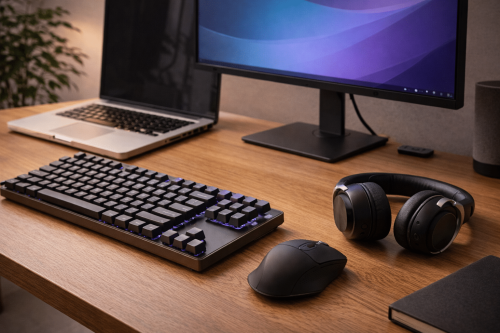
Better tools now extend the life of everyday devices
Premium peripherals now deliver more value than budget gear for many consumers. Instead of replacing laptops, tablets, or desktops, people upgrade the tools around them. High-quality keyboards, mice, monitors, and headphones improve daily use without the cost of new core hardware.
This shift matters now because device upgrade cycles keep stretching longer. Performance gains feel smaller each year. Meanwhile, accessories still deliver immediate improvements. As a result, buyers see better return on investment from peripherals than from full device replacements.
Why premium peripherals matter right now
People keep devices longer than ever. Laptops last five to seven years. Phones stretch past upgrade schedules. Because of that, frustration builds around comfort, speed, and reliability.
Premium peripherals solve those problems quickly. A better keyboard reduces fatigue. A precise mouse improves accuracy. A high-quality monitor boosts productivity and eye comfort.
At the same time, inflation pressures budgets. Replacing a laptop costs far more than upgrading accessories. For many buyers, peripherals offer the smartest path to improvement.
What changed in consumer upgrade behavior
In the past, people upgraded devices frequently. New processors and features justified replacements. That pace slowed.
Today, performance gains arrive incrementally. Most users never hit hardware limits. Software runs well enough on older machines.
However, peripherals still age visibly. Cheap accessories wear out. Cables fail. Switches loosen. Screens look dull.
Because of this contrast, consumers invest where improvements feel immediate. Premium peripherals deliver that impact.
How premium peripherals improve ROI
Return on investment depends on daily use.
Premium peripherals last longer. Better materials resist wear. Higher-quality components maintain performance over time.
They also improve comfort and efficiency. Ergonomic designs reduce strain. Accurate sensors reduce errors. Better displays reduce eye fatigue.
Over years of daily use, these gains add up. A $200 keyboard used for five years often costs less per day than a budget model replaced annually.
That math drives buying decisions.
Examples where premium gear wins
Several categories highlight this trend clearly.
Keyboards and mice
Mechanical keyboards last millions of keystrokes. High-end mice offer better tracking and durability. Budget versions often fail early.
Monitors
Premium monitors deliver better color accuracy, brightness, and refresh rates. These improvements benefit work, gaming, and content creation.
Audio gear
Quality headphones and microphones improve calls and media consumption. Clear audio reduces fatigue during long sessions.
In each case, premium peripherals upgrade the experience without touching core hardware.
The technology behind higher-quality peripherals
Premium gear relies on better engineering.
Manufacturers use stronger materials like aluminum and reinforced plastics. Switches and sensors meet higher tolerance standards.
Firmware also improves performance. Better polling rates, calibration, and power management enhance reliability.
Although budget gear copies features, execution differs. Small quality gaps compound over time.
That difference explains the performance gap.
Trade-offs and limitations to consider
Premium peripherals cost more upfront. Not every user needs top-tier gear.
Some features cater to specific workflows. Gamers value refresh rates. Creatives value color accuracy. Office users value ergonomics.
Compatibility also matters. Older devices may not support advanced features fully.
Despite these limits, the value proposition remains strong when usage stays high.
How this trend fits the broader market
Manufacturers notice this shift. Peripheral brands now compete on build quality and longevity instead of flashy features.
Marketing emphasizes durability, comfort, and long-term value. Subscription models fade in favor of one-time purchases.
Culturally, this trend reflects practicality. People want upgrades they feel every day.
Premium peripherals align with that mindset.
What this means for buyers
Evaluate accessories before replacing devices.
If your computer still performs well, upgrade the tools around it first. Focus on items you touch or see constantly.
Avoid the cheapest options when usage stays high. Durability matters more than features.
High-quality peripherals often deliver better ROI than replacing core hardware.
For long-term product testing, Consumer Reports evaluates durability and reliability across accessory categories.
What comes next for peripherals
This trend will continue.
As devices plateau, accessories will drive differentiation. Expect better ergonomics, longer lifespans, and repairable designs.
Premium peripherals will define everyday computing experiences more than processors or specs.
That shift already feels underway.