

Absence of scientific breakthroughs attributed to “mindset” over talent and hardware
Life
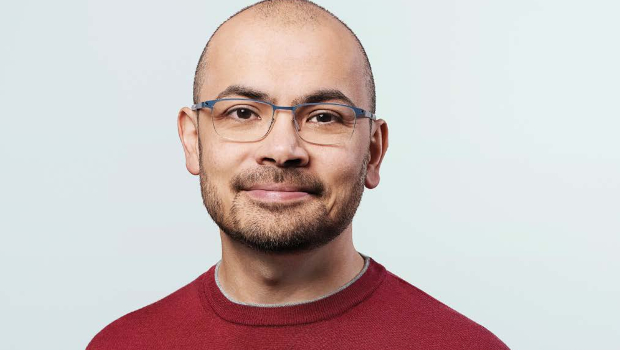
Demis Hassabis. Image: Google
Chinese artificial intelligence models are rapidly catching up with their American and Western counterparts, according to DeepMind CEO Demis Hassabis. In a conversation with CNBC, he suggests that it is a matter of months rather than years before that gap is closed. This view contrasts with opinions that point to a significant technological lag for China.
Hassabis highlighted the rise of capable AI models from Chinese tech giants such as Alibaba and start-ups such as Moonshot AI and Zhipu as evidence of this progress. While he acknowledged that China is capable of closing the gap, he questioned its ability to achieve groundbreaking innovations that push beyond existing boundaries. He pointed to the lack of new breakthroughs comparable to the “transformer” model, a scientific advance developed by Google researchers that underpins many of today’s large language models.
Other market leaders have also acknowledged China’s progress in AI. Jensen Huang, CEO of Nvidia, previously stated that the US lead in the AI race is not substantial, and recognised China’s strengths in energy infrastructure and the development of AI models.

Despite this progress, Chinese technology companies face challenges, particularly when it comes to access to advanced semiconductor technology as a result of US export restrictions. Although the White House has indicated it agrees to the sale of Nvidia’s H200 chip to China, a more advanced option than was previously available, it still does not match Nvidia’s top-of-the-range offering.
Analysts predict that this limited access to advanced chips could widen the gap between American and Chinese AI models over time. Even Chinese companies acknowledge these difficulties. Lin Junyang, technical lead of Alibaba’s Qwen team, estimated the likelihood that a Chinese company will surpass the American tech giants in AI in the next three to five years at less than 20%, given the substantial differences in computing infrastructure.
Hassabis attributed the lack of groundbreaking advances in China more to a “mindset” than to technological constraints. He recognised that while China has world-class technical talent, scientific breakthroughs are significantly more challenging.
Hassabis is a prominent figure in the field of AI and founded DeepMind more than a decade ago. DeepMind was acquired by Google in 2014 and has played a key role in Google’s recent success with AI products such as Gemini. Gemini 3, their latest model, has been well received and eases concerns that Google is falling behind competitors such as OpenAI.
Business AM