

Pendragon programme aims to integrate AI-powered robots into future warfare in order to improve tactical effectiveness
Life
Image: French Ministry of Defence
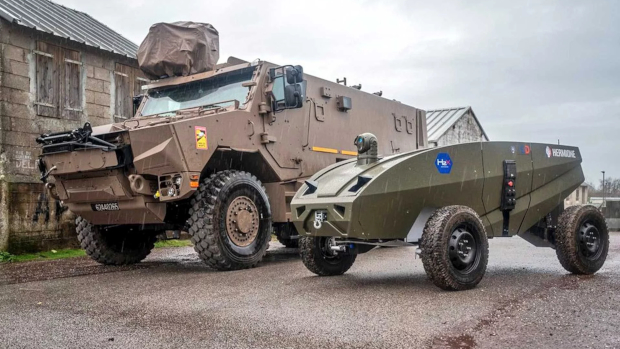
The French army is currently actively testing an advanced robotic vehicle called Hermione at the Saint-Cyr Coëtquidan military academy. This initiative falls under the Pendragon programme, which aims to integrate artificial intelligence (AI) seamlessly into future military operations. The overarching goal of the programme is to improve tactical effectiveness and accelerate decision-making in the battles of tomorrow.
Hermione has been developed by the Polish company PHU Lechmar and the French company H2X-Defense and is a versatile, wheeled unmanned ground vehicle designed for adaptability. The modular platform can easily be configured for a variety of missions, including logistics, drone transport, reconnaissance and potentially armed support roles. The hydrogen fuel cell technology that powers Hermione, combined with a 25 kWh battery, delivers impressive endurance of up to 20 hours and allows for rapid refuelling in the field.
The tests at Saint-Cyr Coëtquidan are closely evaluating Hermione’s autonomy, mobility, energy performance and compatibility with command-and-control networks. They are also assessing its use in combination with additional systems such as hydrogen generators and tethered drones to extend its operational reach. The French army has selected Hermione for evaluation as part of a broader initiative to integrate AI-driven robotics into manoeuvre units.

The Pendragon programme is experimenting with AI-assisted decision-support tools, manned-unmanned teaming, and the integration of robotic platforms into both dismounted and motorised formations. Ultimately, the programme aims to enhance units’ ability to conduct dispersed, rapid operations while maintaining situational awareness in complex environments. The ongoing trials are expected to deliver crucial data that will underpin the requirements for the first operational robotics unit, which is scheduled to be deployed in 2027.
Business AM