

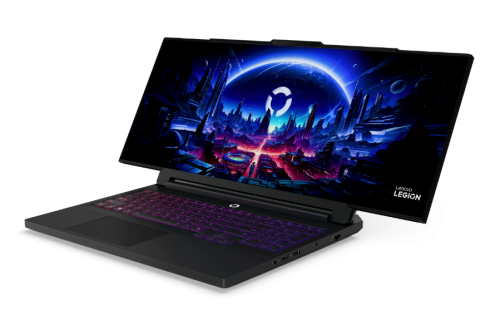
Your gaming laptop screen may soon grow while you play
Gaming immersion often stops at the edge of a laptop display. At CES 2026, Lenovo showed a new way to push past that limit. The company introduced a rollable gaming display concept for its Legion laptops that expands vertically on demand. As a result, the screen grows from a standard 16-inch panel into an ultrawide OLED display reaching 21.5 or even 24 inches.
This rollable gaming display targets players who want a bigger view without carrying an external monitor. Right now, many gamers juggle portability and immersion. Lenovo aims to remove that trade-off. However, the concept also introduces questions about durability, cost, and long-term reliability.
Lenovo Pushes Gaming Screens Beyond Fixed Sizes
Lenovo revealed the rollable gaming display concept during its CES 2026 hardware showcase. Instead of launching a finished product, the company framed the device as an exploration of future gaming laptops. For now, Lenovo has not shared pricing or a release date.
At its core, the laptop starts as a familiar 16-inch Legion system. With a single command, the display rises upward from the chassis. Consequently, the screen transforms into an ultrawide format designed for immersive games and multitasking.
Unlike external monitors, this rollable gaming display remains built into the laptop. Therefore, users can expand the screen anywhere without cables or stands. Lenovo designed the concept to fit into a backpack when collapsed while still delivering a desktop-like experience when extended.
This approach reflects a broader shift in laptop design. Instead of making devices larger, manufacturers now focus on adaptability. In that sense, Lenovo treats screen size as something flexible rather than fixed.
How Rollable OLED Displays Actually Work
The rollable gaming display relies on flexible OLED technology. Because OLED pixels emit their own light, the panel does not need a rigid backlight. That structure allows the screen to bend and roll without cracking.
Inside the laptop, the OLED panel likely wraps around a motorized spool. As the screen extends, guided rails keep tension even across the surface. At the same time, sensors control speed and alignment to prevent creases or uneven motion.
OLED suits gaming for several reasons. First, it delivers fast response times. Second, it offers deep blacks and high contrast. Together, these traits matter more as displays grow larger. In contrast, traditional LCD panels struggle with uniformity when stretched.
This rollable gaming display also supports ultrawide aspect ratios. As a result, supported games can show a wider field of view without splitting the image across multiple screens.
For a deeper technical breakdown of OLED performance, DisplayMate explains these advantages in detail here:
Why Rollable Gaming Displays Matter Right Now
Gaming hardware gains have slowed in recent years. While CPUs and GPUs still improve, the jumps feel smaller. Because of this, display innovation now plays a bigger role in how games feel.
A rollable gaming display increases immersion without boosting frame rates. By expanding the visible area, players gain better situational awareness in strategy, simulation, and open-world games. Meanwhile, streamers benefit from extra space for chat windows and control panels.
Hybrid work also shapes this timing. Many users rely on one laptop for work and gaming. Therefore, a rollable screen can act as a productivity monitor during the day and an immersive gaming display at night.
Portability still matters. External monitors add weight, cables, and setup time. In comparison, a built-in rollable gaming display removes friction and simplifies travel setups.
Limits, Risks, and Real Trade-Offs
Despite its appeal, the rollable gaming display concept carries clear risks. Mechanical parts fail more often than solid panels. Over time, dust, heat, and repeated motion can strain motors and rails.
OLED burn-in also remains a concern. Static UI elements from games or productivity apps can cause image retention. Although OLED makers use mitigation techniques, Lenovo has not detailed those safeguards for this concept.
Cost presents another hurdle. Flexible OLED panels already cost more than standard displays. In addition, motors and reinforced chassis components raise manufacturing expenses. Early versions would likely target premium buyers only.
Software support matters as well. Not all games handle ultrawide resolutions properly. Some titles stretch menus or block expanded ratios entirely. As a result, the feature may not benefit every player equally.
Repairability raises further questions. If the roll mechanism fails, the entire display could become unusable. That risk may concern buyers who value long-term reliability.
Comparisons to Other Display Experiments
Rollable gaming display concepts do not exist in isolation. LG has shown rollable televisions. Samsung has teased sliding and foldable laptop screens. ASUS has experimented with dual-screen designs like the ZenBook Duo.
Foldable displays often show visible creases. Dual-screen laptops introduce bezels and hinge gaps. In contrast, rollable displays keep a single continuous panel, which improves visual consistency.
However, rollable systems depend heavily on motors. Foldable laptops rely on hinges, which manufacturers understand well. Because of that, rollable designs still need extensive real-world testing.
Lenovo has explored screen innovation before. The ThinkBook Plus series added secondary displays. Now, the Legion brand pushes that experimentation into gaming-focused hardware.
Market and Cultural Impact
If Lenovo ships a rollable gaming display, competitors will follow. Gaming laptops already compete on refresh rates, brightness, and mini-LED zones. Screen adaptability could soon become a new spec category.
Esports adoption would likely remain limited. Competitive players prefer consistent setups. Casual and enthusiast gamers, however, would drive early interest.
Content creators stand to gain the most. A rollable gaming display provides extra timeline space for editing and layered tools for streaming.
Culturally, the concept reinforces a shift toward devices that adapt to users. Instead of fixed roles, hardware now changes shape based on need.
Practical Takeaways for Gamers
Do not expect rollable gaming display laptops to launch immediately. For now, this concept signals direction rather than availability.
Watch for durability testing and warranty coverage if Lenovo moves forward. Mechanical reliability will define success.
Expect premium pricing at launch. Early adopters will pay more for flexibility and novelty.
Check ultrawide support in your favorite games. Proper scaling determines real-world value.
Finally, consider how you play. Desk-bound gamers may still prefer external monitors. Travelers and hybrid workers stand to benefit the most.
The bigger picture
Lenovo’s rollable gaming display concept shows how portable gaming may evolve next. Screen size no longer needs to stay fixed. Flexibility can deliver immersion without sacrificing mobility.
The idea brings real risks. Still, it addresses a real problem. Gamers want bigger views without bigger bags. If Lenovo turns this concept into a durable product, rollable gaming display technology could reshape laptop gaming for years to come.