

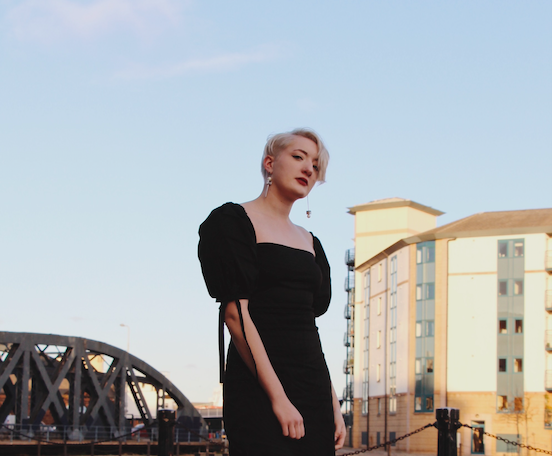

The problem is, an average fashion consumer has no idea what it actually takes to make a garment; there is a shocking level of disconnect between the clothes we wear and the knowledge of the hands that make them, as well as the costs involved in production. Remember that small brands like Olivia Rose the Label cannot get bulk discounts on fabrics; for example Olivia’s stunning new woven purple silk for her Greta dress costs over £40 a metre plus customs and shipping. “That’s what you have to be prepared to pay to ensure you know how and where something is made,” she says. “ Not to mention my own labour, labels, tags, packaging, zips – everything has a cost.”
Transparency has a vital role to play in educating the consumer on the justification for this cost. “In every design I do, I show my sketches, I show me sewing the first sample, I show behind-the-scenes of all the photography. I had so much good feedback about the purple silk, and I knew the factory the fabric came from- an independent girl’s business. It took me 3 months to get it because it was hand-woven, so I want to give the backstory.”
I often direct shoppers to Fashion Revolution’s campaign #whomademyclothes as a method for encouraging brands to be transparent in their communications, and accountable for their supply chain. But do brands ever actually answer this question? In my experience, the good ones do, and the bad ones either ignore you or send a vague CSR policy. Luckily, Olivia is one of the good ones. “Every question that someone asks me, even if it’s like ‘where is your packaging from’, I let them know within seconds, because I’m not ashamed. If you’re not 100% sure about a brand, just email them and ask them – I get that all the time and I’m always happy to answer any questions. If a brand’s not happy to answer it, that’s not a good sign.”
As a small independent label, the best Olivia can do to fight back against any criticism and copycats is to keep communicating her craft, openly, to people that look beyond the price tag. “I’ve got nothing to hide,” she says.
Before we leave, I throw in a cliché question about her future goals for the brand, secretly wondering if this utopian made-order model could really withstand any further growth. I was pleasantly surprised at her nonchalance to this capitalist ideal. “I just want to keep improving on my sustainability. I’ve never thought about wanting to be the best, biggest brand in the UK,” she says. “My only goal is just to make good clothes.”