


Apple kept the MacBook Air looking the same and changed almost everything that matters underneath. The M5 update went on sale March 11, 2026, just eight days after Apple announced it, and while the aluminum shell is identical to last year in all four finishes (Sky Blue, Starlight, Midnight, and Silver), the internal spec sheet tells a different story. Faster silicon, doubled base storage, a new wireless chip, and genuine AI capabilities create a combination that shifts what this laptop can handle. If you’re still undecided on whether to buy, here are seven features that make the MacBook Air M5 worth a closer look.
Price: From $1,099
Where to Buy: Apple, Amazon
Add The Gadgeteer on Google Add The Gadgeteer as a preferred source to see more of our coverage on Google.
ADD US ON GOOGLE
1. The M5 chip turns the Air into an AI-capable machine
Apple built the M5 on TSMC’s 3nm process, carrying over the architecture that first appeared in the MacBook Pro and iPad Pro in late 2025. The chip packs a 10-core CPU and up to a 10-core GPU, with a Neural Accelerator in every GPU core designed specifically for machine learning workloads. The base model ships with an 8-core GPU, while upgraded storage or memory configurations bump that to the full 10-core version. That architectural choice means AI tasks like large language model processing, image upscaling, and on-device inference run significantly faster than they did on the M4.
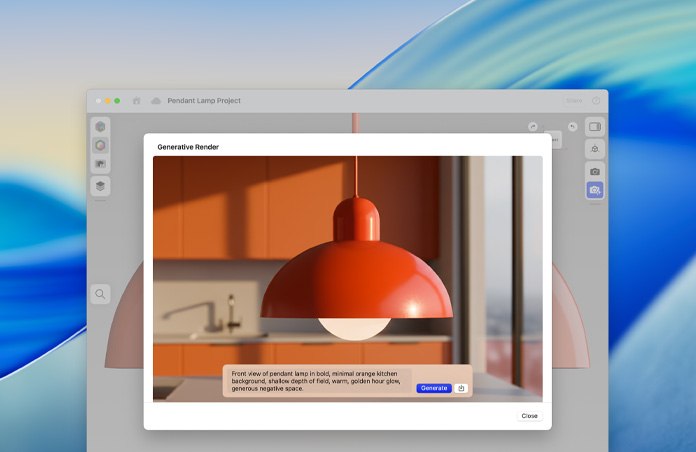
Apple claims up to 9.5x faster AI task performance compared to the M1 MacBook Air and up to 4x faster than the M4, and early reviews confirm the M5 handles local LLM workloads and creative AI tools with surprising competence for a fanless laptop. The gap between the Air and the Pro has never been this narrow when it comes to everyday AI workflows. For anyone who wants to experiment with tools like LM Studio, Msty, or Topaz without paying MacBook Pro prices, the M5 Air opens that door.
2. Base storage doubled to 512GB
The M4 MacBook Air shipped with 256GB of storage at its $999 starting price. The M5 model starts at 512GB for $1,099, a $100 bump that still works out cheaper than the $200 Apple previously charged to upgrade the MacBook Air M4‘s storage. That math eliminates the most common criticism of the previous generation and removes the pressure to immediately upgrade at checkout. Apple also expanded the ceiling, with configurations now reaching 4TB for users who need deep local storage for video projects or large datasets.
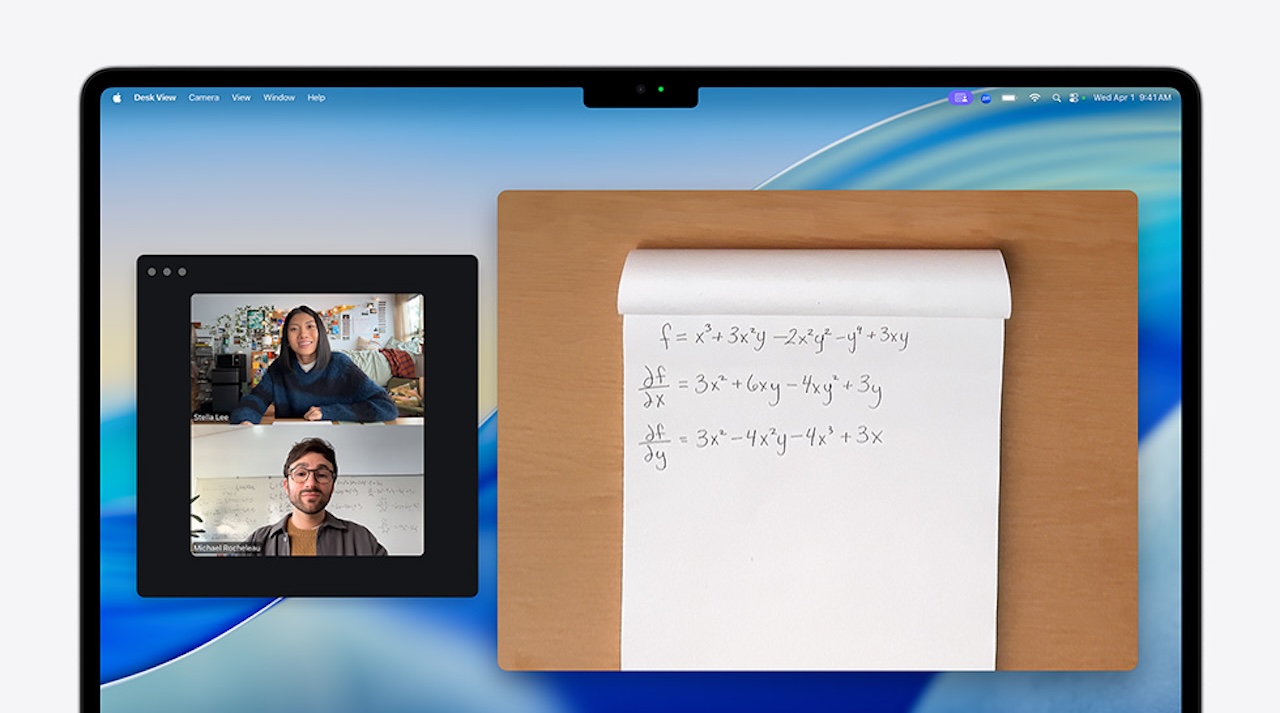
Reviewers called the storage bump a major upgrade, and it is. A 512GB base means the machine ships ready to handle a real photo library, several large applications, and a healthy chunk of working files without the constant storage anxiety that plagued the 256GB models. The net savings on storage, even with the $100 price increase, makes the value proposition noticeably stronger than it was twelve months ago.
3. Wi-Fi 7 and Bluetooth 6 arrive through the Apple N1 chip
Apple designed a dedicated wireless chip for the M5 Air, and it carries actual performance implications. The N1 chip delivers Wi-Fi 7 connectivity with faster throughput and lower latency, which matters for anyone working with cloud-based tools, streaming high-resolution content, or transferring large files over a network. Bluetooth 6 improves connection reliability for peripherals and AirPods, reducing the small annoyances that add up over a full workday.
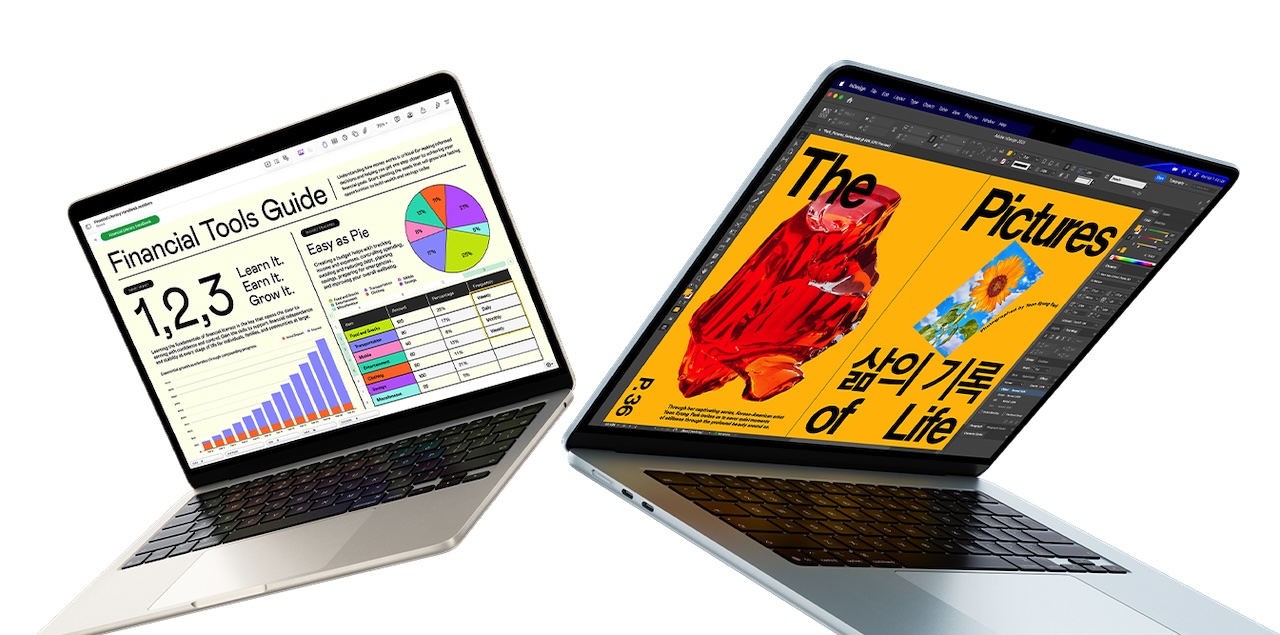
This is the kind of upgrade that doesn’t grab headlines but changes the daily experience of using the laptop. Wi-Fi 7 support means the Air is ready for the faster routers and mesh systems rolling out across 2026, and it won’t need a dongle or adapter to take advantage of them. The previous generation topped out at Wi-Fi 6E, which was already fast, but the jump to Wi-Fi 7 future-proofs the machine in a way the M4 couldn’t.
4. Eighteen hours of battery life closes the endurance gap
Apple rates the MacBook Air M5 at up to 18 hours of battery life for video streaming, with up to 15 hours for wireless web browsing. Apple’s marketing claims up to six additional hours over Intel-era MacBook Air models, though the M5’s rated battery life matches the M1 Air’s 18-hour ceiling almost exactly. Independent real-world testing confirms the M5 tracks closely with recent M-series Airs in typical use, so the gains here are about maintaining efficiency at higher performance, not extending runtime. Early reviewers consistently report full-day usage with room to spare, with one noting the battery comfortably outlasted a demanding mixed-use day.

That 18-hour ceiling puts the Air within striking distance of the MacBook Pro’s 24-hour rating, which is remarkable for a fanless machine that weighs 2.7 pounds and measures less than half an inch thick. The efficiency gains from the M5’s 3nm architecture contribute here, allowing the chip to deliver more performance per watt than the M4 could manage. For students, remote workers, and frequent travelers, the battery life alone changes the calculus on whether a charger needs to come along.
5. Two external displays work without workarounds
The MacBook Air M5 supports up to two external displays natively, including Apple’s Studio Display. That capability arrived with the M4 generation but remains one of the most underappreciated features in the Air’s spec sheet. Previous models required clamshell mode or third-party adapter workarounds to drive more than one screen, which frustrated anyone trying to build a proper desktop setup around their laptop.

Two Thunderbolt 4 ports handle the connectivity, and they support high-speed accessories alongside display output. Combined with MagSafe charging, which keeps one Thunderbolt port free even while plugged in, the Air can function as a legitimate desktop replacement when docked. The port situation isn’t as generous as the MacBook Pro’s lineup, but for a machine this thin and light, having two Thunderbolt 4 ports and MagSafe covers the essentials without compromise.
6. More laptop for $100 more
The 13-inch MacBook Air M5 starts at $1,099, a $100 increase over the M4’s $999 entry point. The 15-inch version starts at $1,299. Education pricing drops the 13-inch to $999, and retailers like Amazon have already started listing the M5 at $50 off, bringing the street price to $1,049 within the first week of availability.
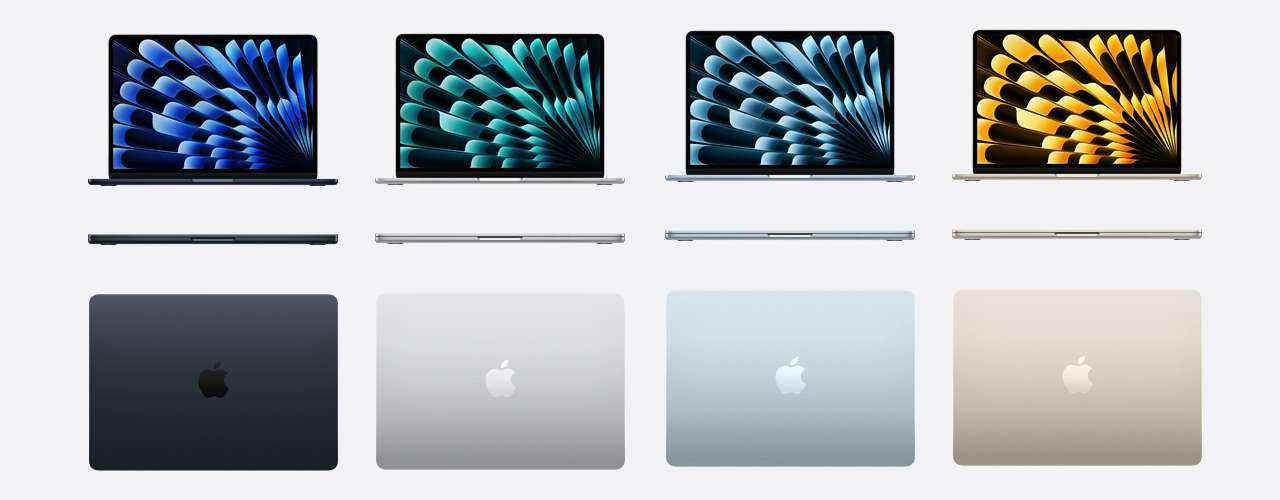
Doubling the base storage and adding a new wireless chip while only raising the price by $100 is a stronger value play than Apple typically makes with the Air line. The MacBook Air M5 doesn’t compete on price with budget Windows laptops, but it doesn’t try to. At this tier, the combination of build quality, battery life, display, and now the M5’s AI capabilities creates a package that most Windows competitors at the same price point struggle to match across every category simultaneously.
7. macOS Tahoe and Apple Intelligence reshape the software layer
The M5 Air ships with macOS Tahoe, which brings the Liquid Glass design language, a reimagined Spotlight, and deeper integration with Apple Intelligence. The AI features include writing tools across apps, image generation, a smarter Siri, and on-device processing that keeps personal data private. Apple Intelligence runs locally on the M5’s Neural Engine for most tasks, with more demanding requests handled through Private Cloud Compute on Apple silicon servers.
The software story matters because it ties directly to the hardware. The M5’s Neural Accelerators are purpose-built to run Apple Intelligence features efficiently, which means the Air handles these tasks without the performance dips or thermal throttling that older chips might experience. Tahoe also adds practical quality-of-life features like improved window tiling, on-device live translation, and tighter Continuity integration between iPhone and Mac.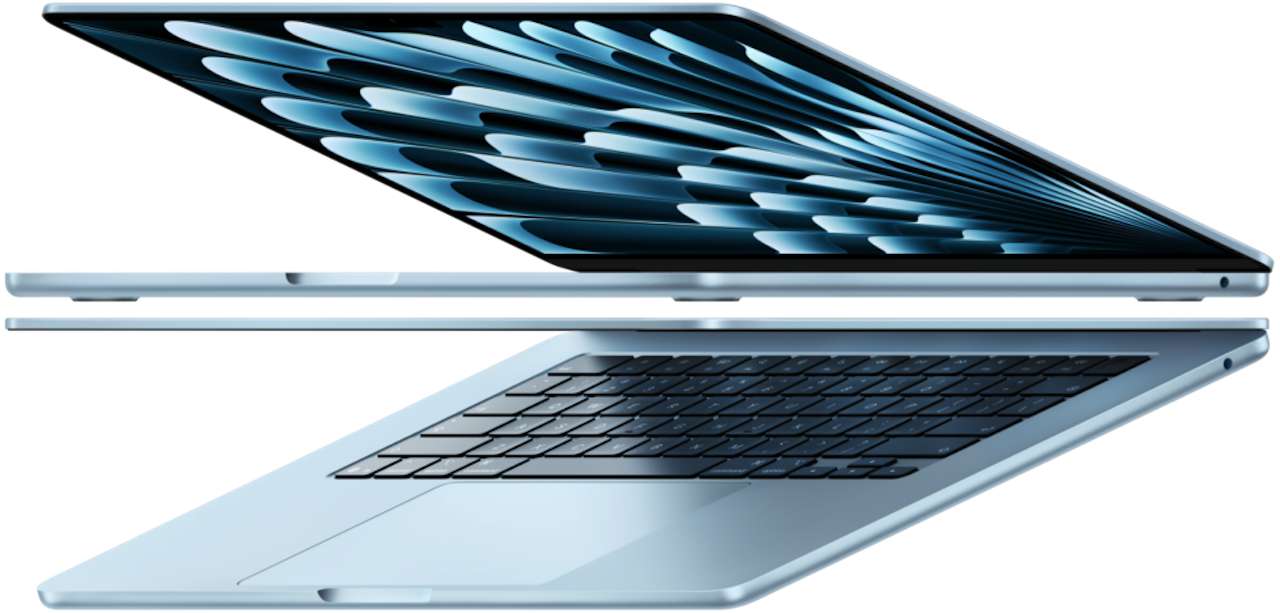
Price: From $1,099
Where to Buy: Apple, Amazon
One thing macOS Tahoe and Apple Intelligence can’t change is the display panel itself. The M5 Air still uses a Liquid Retina (IPS LCD) screen, not OLED, so you won’t get the per-pixel contrast or deep blacks that OLED laptops from competing brands now offer at similar price points. For most buyers that trade-off won’t matter, but if display quality sits at the top of your list, it’s worth noting. The hardware and software sides of this update are designed to reinforce each other, and that alignment is where the MacBook Air M5 pulls ahead of simply being a spec bump.
Love our content?
Sign up for our newsletter today.
No ads, no spam, just links to our latest articles!