

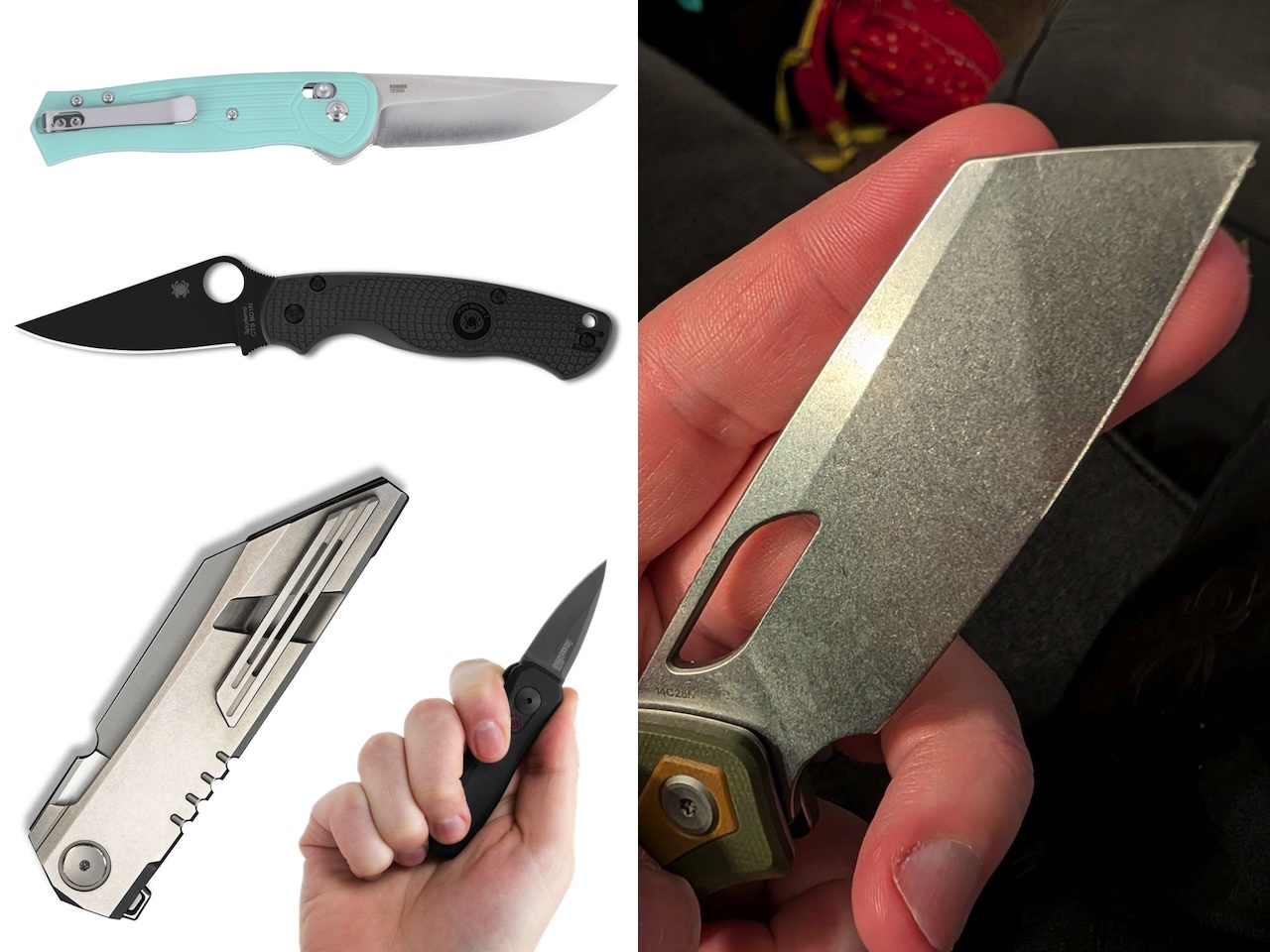
Thumbstuds became default because they worked across every lock type Benchmade and Spyderco tested in the 1990s, not because they’re fastest or most intuitive. That inheritance stuck around long enough that most people assume it’s the only reliable way to open a folder one-handed. It isn’t. Crossbar mechanisms deploy from two grip positions, front flippers work when your thumb’s occupied, rear flippers deliver snappy action, automatic buttons fire instantly, and Spyderco’s round hole works better in heavy gloves. These five knives prove deployment can be rethought without sacrificing reliability.
Add The Gadgeteer on Google Add The Gadgeteer as a preferred source to see more of our coverage on Google.
ADD US ON GOOGLE
CRKT Sero Crossbar: Dual Deployment Engineering
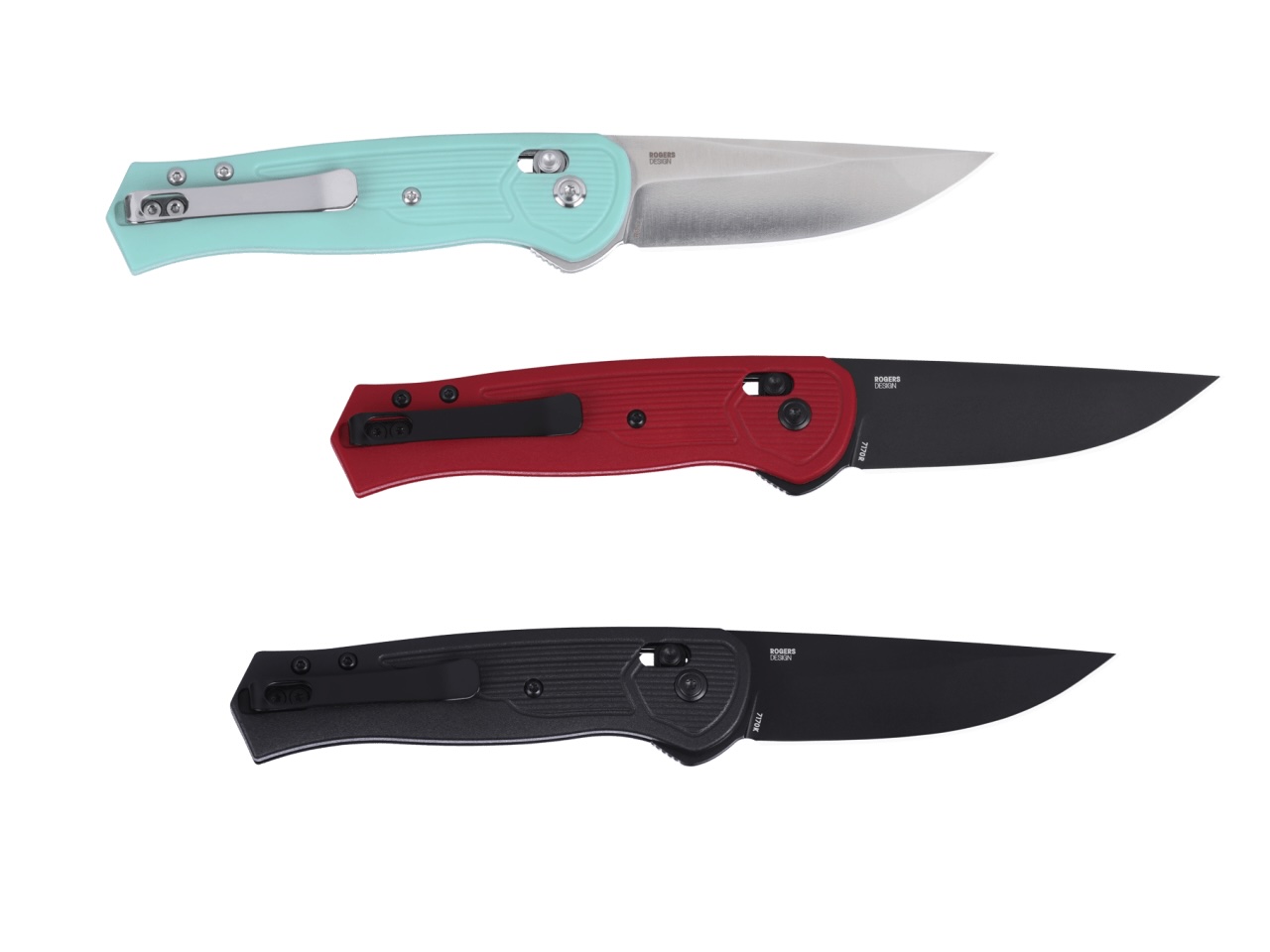
Richard Rogers designed the Sero around one knife deploying two ways depending on grip position. The crossbar lock enables both without compromise. Flip it open with the rear flipper tab on IKBS ball bearings, or pull the crossbar down while flicking your wrist. Both work one-handed from awkward positions or when your hand’s holding something.
The flipper works like any bearing flipper, quick with minimal effort. The crossbar deployment requires practice against spring tension, but once it clicks, it’s faster than hunting for a flipper when your grip sits high. You’ll notice immediately when holding a package and needing the knife ready without repositioning.
The 3.02-inch straight-back blade uses S35VN steel, balancing edge retention, toughness, and corrosion resistance without exotic sharpening equipment. The blade geometry creates a long, straight cutting edge for slicing, and the short length stays legal in most jurisdictions while maintaining enough cutting surface. That straight-back profile might look plain compared to drop-points or tantos, but it’s optimized for utility.
The art deco groove pattern machined into the glass-reinforced nylon handle provides grip security without aggressive texturing that snags fabric. The contouring creates natural finger indexing. At 2.3 ounces, the Sero’s light enough to forget you’re carrying it. CRKT offers four colorways including satin and titanium nitride finishes. The titanium nitride coating adds hardness and friction reduction, though it’ll show wear where your thumb rests. The reversible tip-up clip works for both hands.
Price: $99
Where to Buy: CRKT
Vosteed Kroc: Front Flipper Sheepsfoot Logic
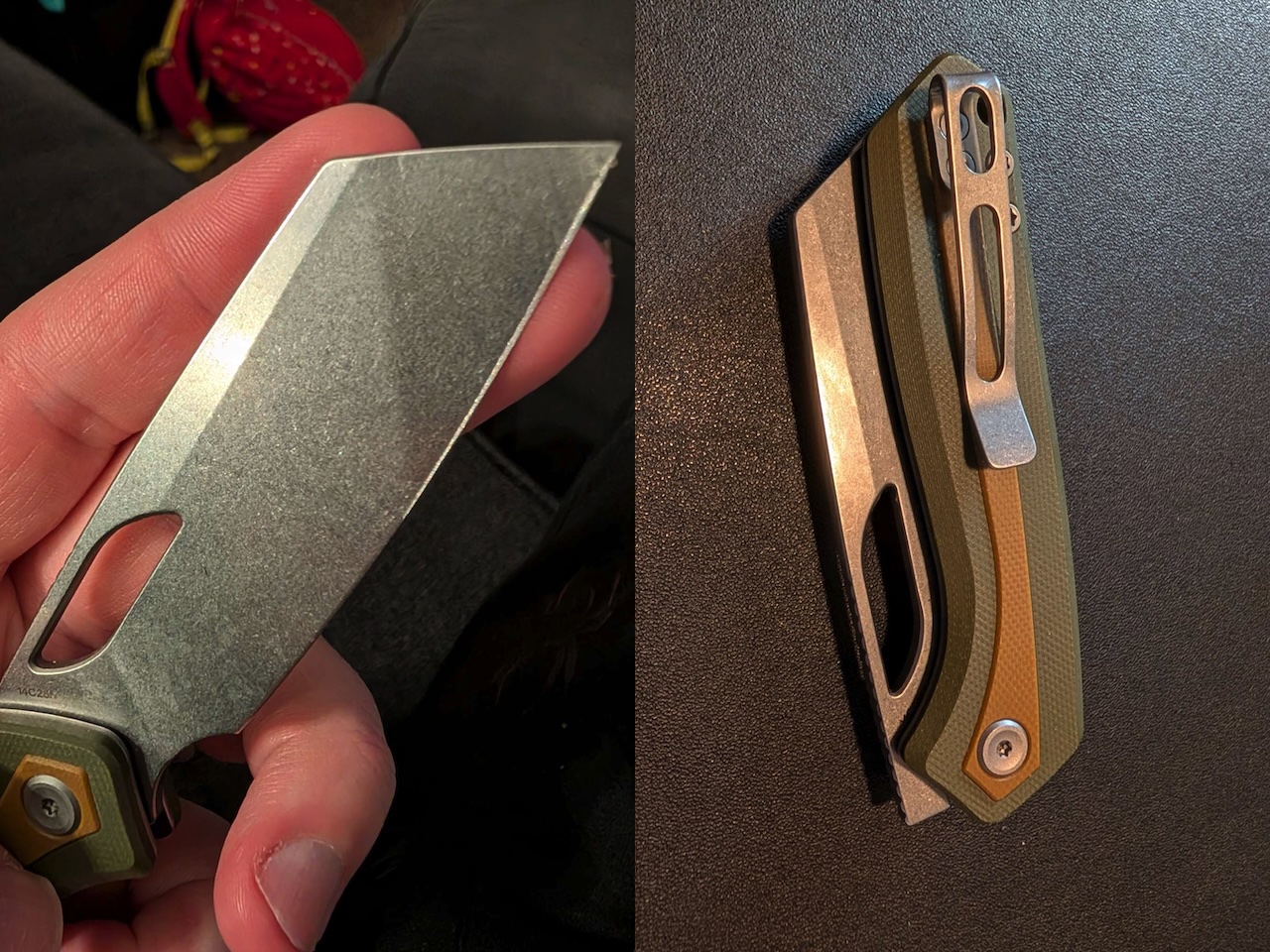
Front flippers sit at the handle front rather than rear, so deployment happens by pushing forward with your index finger. You deploy while maintaining a forward grip, useful when you’re already holding something or need the knife ready from an awkward position. The Vosteed Kroc Knife uses this on a sheepsfoot blade, creating a knife that looks unconventional but performs intuitively.
Sheepsfoot profiles are uncommon in EDC folders, but the straight edge creates maximum slicing surface for cardboard, rope, and fabric while the blunt tip eliminates puncture risk. The front flipper requires practice, but once muscle memory clicks, it’s faster when your thumb’s occupied or positioned wrong. The Kroc also has a long, eye-shaped thumbhole for ambidextrous opening, giving you two deployment options.
The thumbhole’s shape ensures deployment without finger pinching, and with ceramic ball bearings, the blade flicks open effortlessly. Vosteed built jimping on both blade spine and front flipper, creating multiple control points for cutting angles. The blade flies open without wrist flick assistance, so you can deploy from cramped positions. Deep-carry pocket clip keeps the profile low, and ergonomics work whether you’re gripping high for precision or low for leverage. Vosteed used 14C28N steel, a high-carbon stainless holding an edge well while remaining easy to sharpen.
Price: $69
Where to Buy: Amazon
WE Knife Anglex: Titanium Flipper Precision
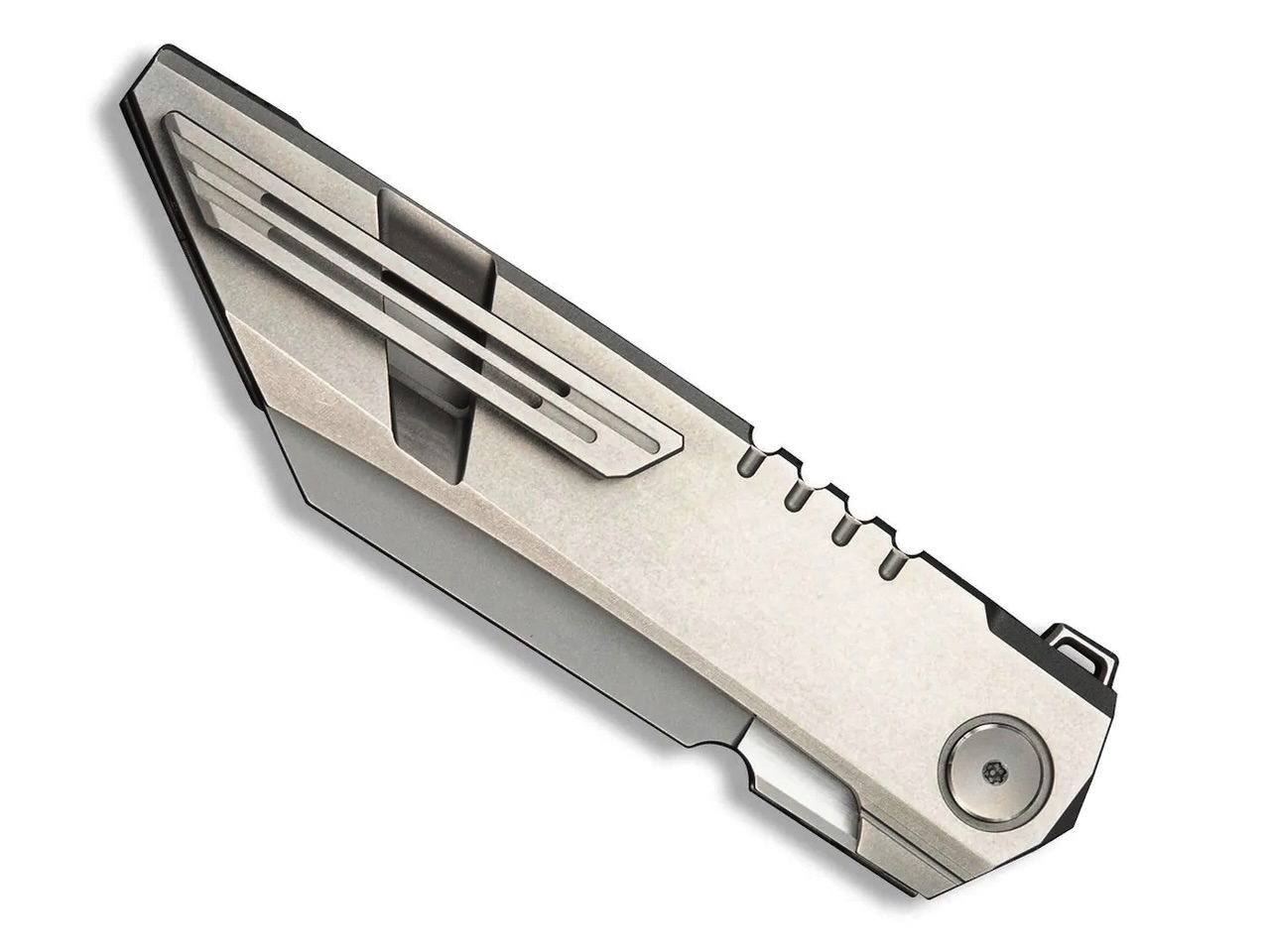
WE Knife designed the Anglex around geometric precision, where every surface change happens at a defined angle rather than flowing smoothly. The M390 blade delivers excellent edge retention, high corrosion resistance, and the ability to take a very fine edge lasting through extended use. This is proper super steel justifying higher prices through performance rather than marketing. The bearing system deploys smoothly without grit, staying consistent through thousands of cycles.
Full titanium construction means the frame lock of the WE Knife Anglex Flipper Knife won’t corrode, handles feel lighter than steel while maintaining strength, and the material warms to hand temperature fast enough that you’ll notice in cold weather. The angular design creates visual interest through geometry instead of decoration, with every surface transition reading as deliberate. Jimping and contouring provide grip without texture wearing through fabric, and the deep-carry clip sits ambidextrously for tip-up carry.
At 4.65 ounces, the knife maintains a low profile despite its substantial presence, which matters when carrying all day in dress pants or thin pockets. Premium pricing means the Anglex won’t appeal to everyone, but if you want to see what precision bearings and super steels deliver, this shows the performance gap between budget and high-end manufacturing. You’re paying for measurable improvements in materials and tolerances, not brand prestige. WE Knife earned their reputation delivering tight tolerances and smooth action, and the Anglex maintains that while adding geometric design reading as modern without feeling overly tactical. This is premium EDC when engineering drives the aesthetic.
Price: $357
Where to Buy: WE Knife
Spyderco Para Military 2 Lightweight: Compression Lock Accessibility
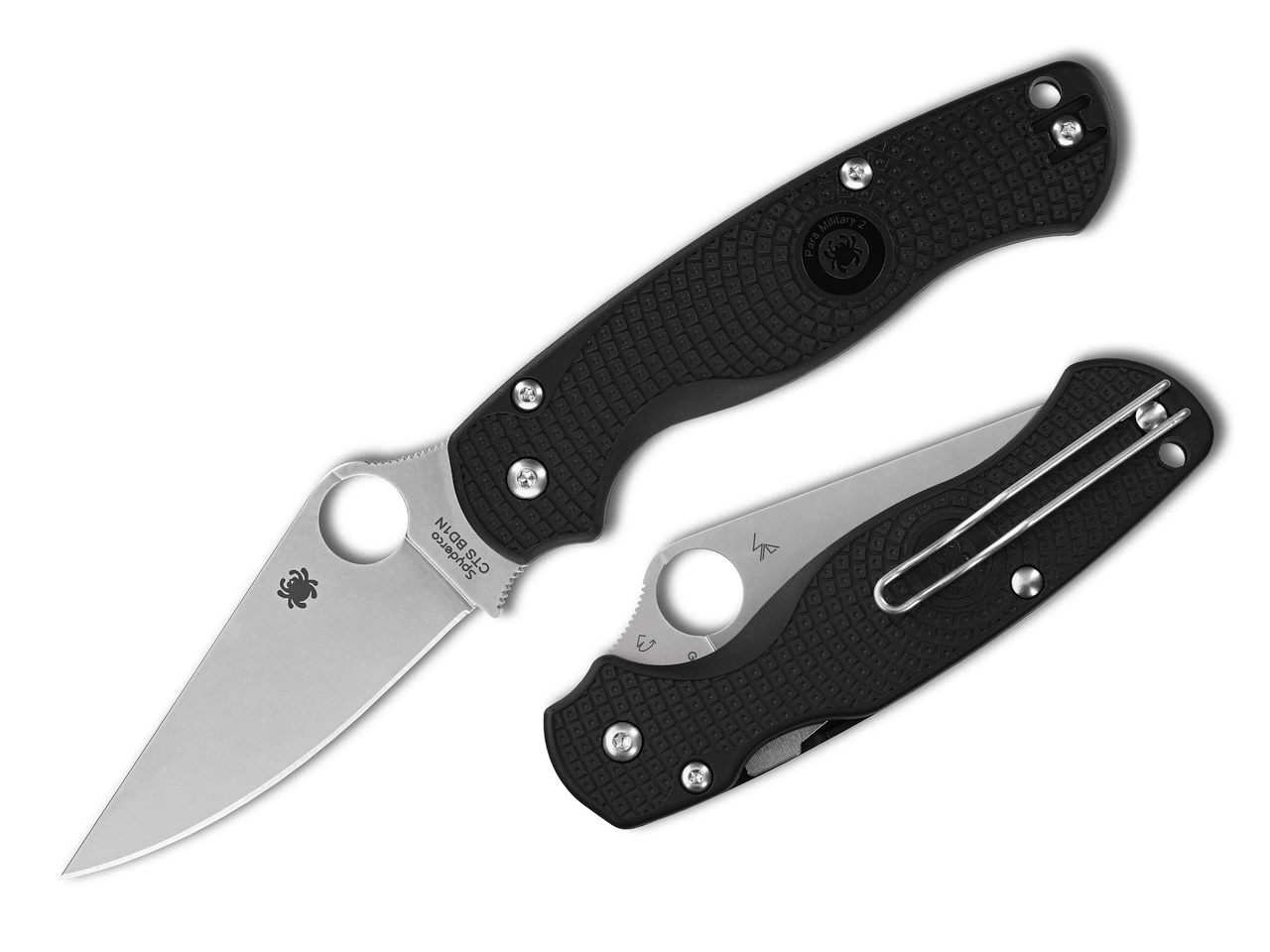
The Spyderco Para Military 2 Lightweight drops price and weight while keeping the Compression Lock intact. The mechanism wedges a compressed leaf spring against the blade tang, preventing closure under pressure without liner lock stress points. It disengages faster than frame locks and maintains lockup that won’t degrade. The compression lock creates mechanical advantage getting stronger under load, which is why users who beat on folders trust this design.
BD1N steel replaces S45VN, sacrificing some edge retention under sustained heavy use. For typical EDC the difference is negligible, and BD1N sharpens faster. You can restore the edge with a ceramic rod in under a minute, which beats chasing maximum edge retention requiring diamond stones. The FRN handle with Bi-Directional Texture grips without biting, feeling warmer and less rigid than G10 while weighing significantly less. You lose solid heft but gain a knife disappearing when clipped inside your waistband. A knife that’s too heavy gets left at home.
The 3.47-inch clip-point blade keeps Spyderco’s signature Round Hole for ambidextrous deployment, with a textured finger groove and thumb ramp for control during precision cuts. The Round Hole works better than modern flippers in certain scenarios: you can open it wearing heavy gloves, deploy from unconventional positions, and access the hole with either hand without reconfiguring the reversible wire clip. If you found the standard PM2 too heavy or expensive, this removes both barriers while maintaining core functionality. It’s optimized for reliable deployment and proven lock strength at a weight actually encouraging daily carry.
Price: $202
Where to Buy: Spyderco
Kershaw Launch 4: California-Legal Automatic
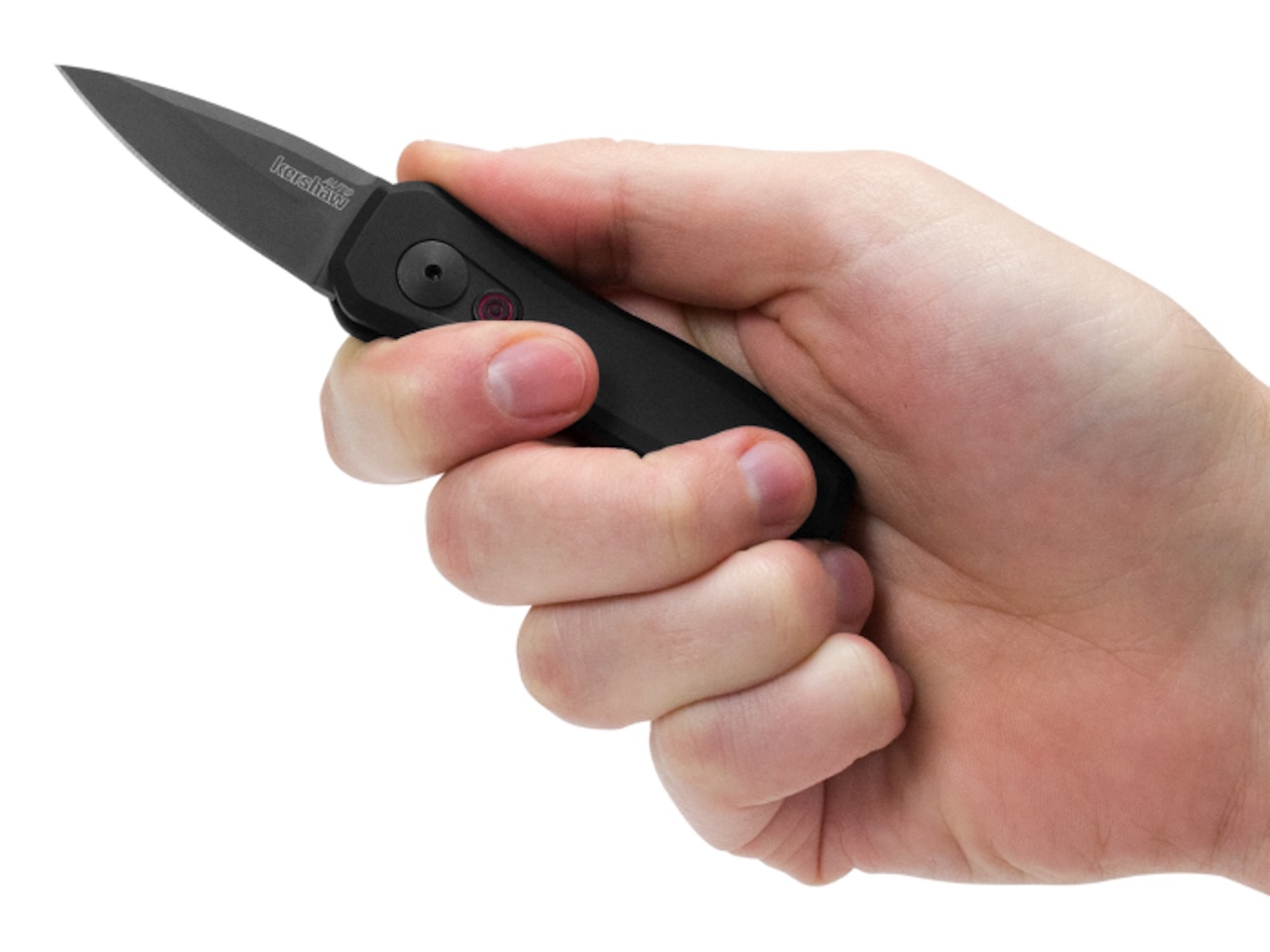
Automatic knives solve a problem most people don’t think about until they need a knife while their other hand’s occupied. The Kershaw Launch 4 uses a push-button mechanism firing the blade open with spring assistance, eliminating thumb studs, flippers, or holes. Press the button and the blade snaps into position. The 1.9-inch CPM-154 spear-point blade stays under the 2-inch threshold making this legal in California and other jurisdictions with restrictive automatic laws.
That compact size makes the Launch 4 more practical for EDC than larger automatics, fitting comfortably in a pocket without printing or snagging. The spear point provides a centered tip for precision work while maintaining enough belly for slicing. CPM-154 is high-carbon stainless holding an edge well while remaining easy to sharpen. It sits between budget steels needing constant maintenance and exotic super steels requiring diamond stones. For a knife you’ll actually use daily, CPM-154 makes more sense than chasing maximum edge retention.
The 6061-T6 aluminum handle keeps weight at 1.8 ounces while providing solid grip. The button lock doubles as deployment mechanism, so there’s no separate lock bar. Press to open, press to close. The symmetrical handle works in either hand, and the tip-up clip keeps the knife oriented for fast access. Automatic deployment isn’t just about speed. It’s about deploying when holding something in one hand, wearing gloves too thick to manipulate a flipper, or needing the blade open immediately without fumbling.
Kershaw builds the Launch series in the USA, which matters when quality control affects whether a spring-loaded mechanism works reliably after thousands of cycles. Tight tolerances and consistent action separate American-made automatics from budget imports feeling loose after a few months.
Price: $147.99 (From $184.99)
Where to Buy: Kershaw
Pick What Works for You
Thumbstuds work fine, but treating them as the only solution ignores better options that already exist. These five knives show what happens when designers prioritize actual use over inherited convention. The deployment method matters less than whether it works when your hands are wet, gloved, or holding something else. Pick the mechanism that solves your specific carry scenario rather than defaulting to what everyone else uses.
Love our content?
Sign up for our newsletter today.
No ads, no spam, just links to our latest articles!