

Storage hasn’t had a genuine form factor shake-up in years. M.2 drives got faster, portable SSDs got slimmer, and microSD cards quietly hit their ceiling. Nobody was asking for an NVMe SSD the size of a SIM card, mostly because nobody thought it was possible. Biwin built one anyway, and it showed up at MWC 2026 in Barcelona looking almost absurdly small next to everything else on the show floor.
Price: From $85
Where to Buy: Biwin
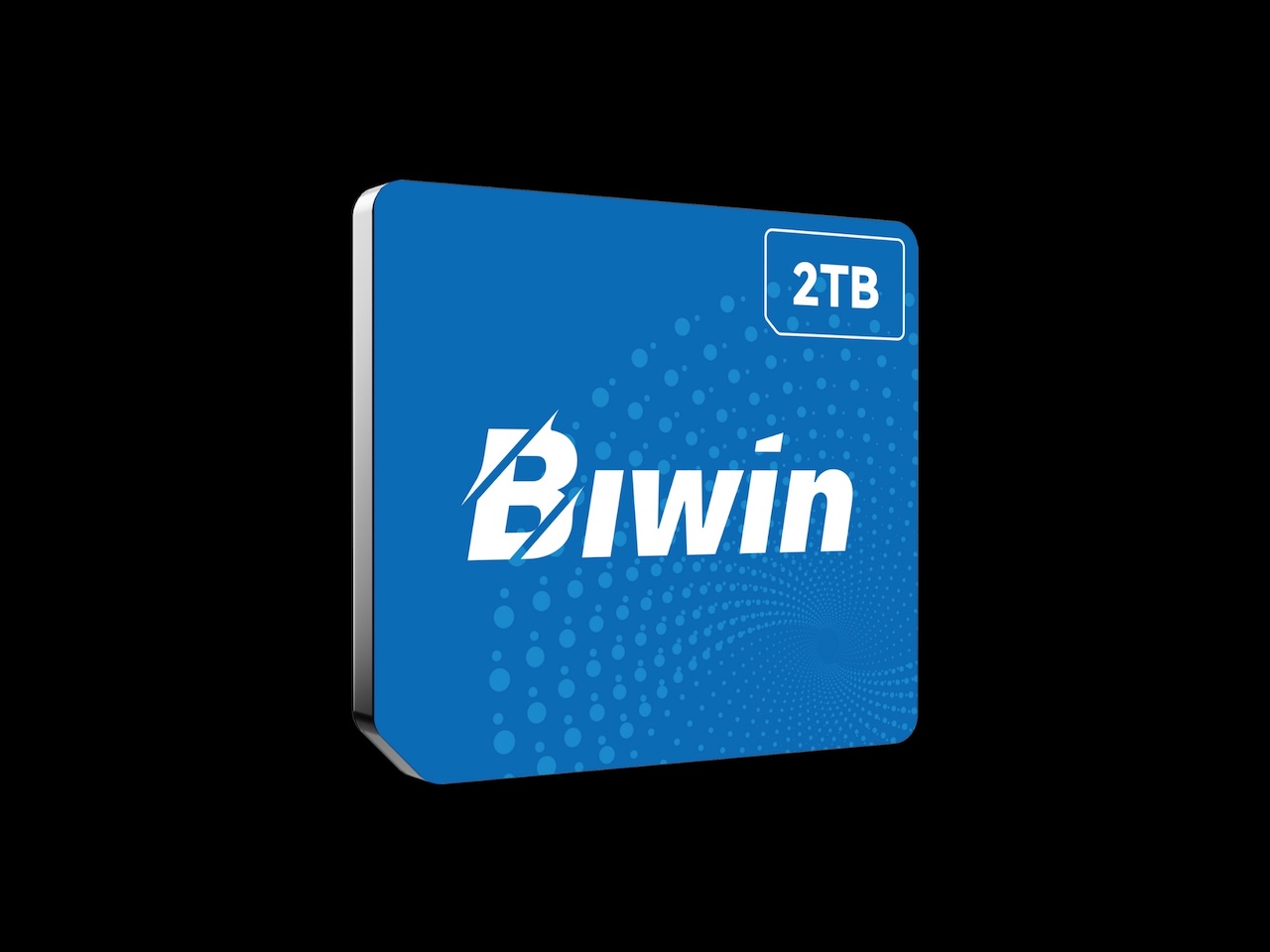
The Biwin CL100 Mini SSD measures 15 by 17 by 1.4 millimeters. That’s roughly the footprint of a microSD card, just a few millimeters wider in each direction. It weighs about one gram. Pick it up and there’s a genuine moment of confusion, because nothing this small should hold two terabytes of NVMe storage and move data at 3,700 megabytes per second.
Add The Gadgeteer on Google Add The Gadgeteer as a preferred source to see more of our coverage on Google.
ADD US ON GOOGLE
What the CL100 actually is
Biwin isn’t calling this a portable SSD or a memory card. It’s a Mini SSD, a new category the company created around advanced LGA packaging technology that integrates the controller and flash memory into a single, coin-sized module. The interface runs PCIe 4.0 x2 with NVMe 1.4, which puts it comfortably ahead of microSD Express cards in raw throughput while occupying nearly identical physical space.
Three capacities ship today: 512GB, 1TB, and 2TB. The 1TB and 2TB models hit sequential read speeds up to 3,700 MB/s and sequential write speeds up to 3,400 MB/s. The 512GB version writes a bit slower at 2,400 MB/s but matches the read figure. Random performance scales with capacity too, topping out at 550K IOPS read and 650K IOPS write on the larger models.
Pricing starts around $85 for the 512GB, roughly $155 for the 1TB, and approximately $311 for the 2TB. Those numbers come from the initial Chinese retail launch in late 2025, and some international retailers appear to have started carrying it, though wider global availability remains limited. For context, a standard 2TB M.2 NVMe drive costs less, but it also can’t fit inside a SIM tray.
The engineering that makes it work
Shrinking an NVMe drive to SIM card dimensions creates problems that don’t exist at normal scales. Biwin solved the physical challenge with LGA (Land Grid Array) packaging, which integrates the controller and flash into a single compact module and eliminates the need for a traditional M.2 connector entirely. The CL100 slots into a proprietary SIM-like tray instead of sliding into an M.2 slot, which is both its cleverest trick and its biggest limitation right now.
The durability specs stand out for something this small. The CL100 carries an IP68 rating for dust and water resistance and can survive drops from three meters. A standard M.2 SSD would crack its PCB or snap its edge connector long before surviving a similar fall. If you look at the operating range, it runs from 0 to 70 degrees Celsius, with storage tolerance stretching from negative 40 to 85 degrees.
On the firmware side, the CL100 runs without dedicated DRAM cache. It borrows system RAM through Host Memory Buffer instead. Wear leveling, TRIM support, garbage collection, dynamic SLC caching, and thermal throttling fill out the rest of the spec sheet, all packed into something you could accidentally swallow.
Where it works and where it doesn’t
This is the honest tension with the Biwin Mini SSD right now. No mainstream laptop, tablet, or desktop currently ships with a Mini SSD slot. The format has found its first real homes inside niche Windows gaming handhelds like the GPD Win 5, OneXPlayer Super X, OneXPlayer X1 Air, and ONEXFLY APEX, where internal space is so tight that every millimeter counts. Those devices use the CL100 as upgradeable internal storage, slotting it into a dedicated tray the way phones once accepted SIM cards.

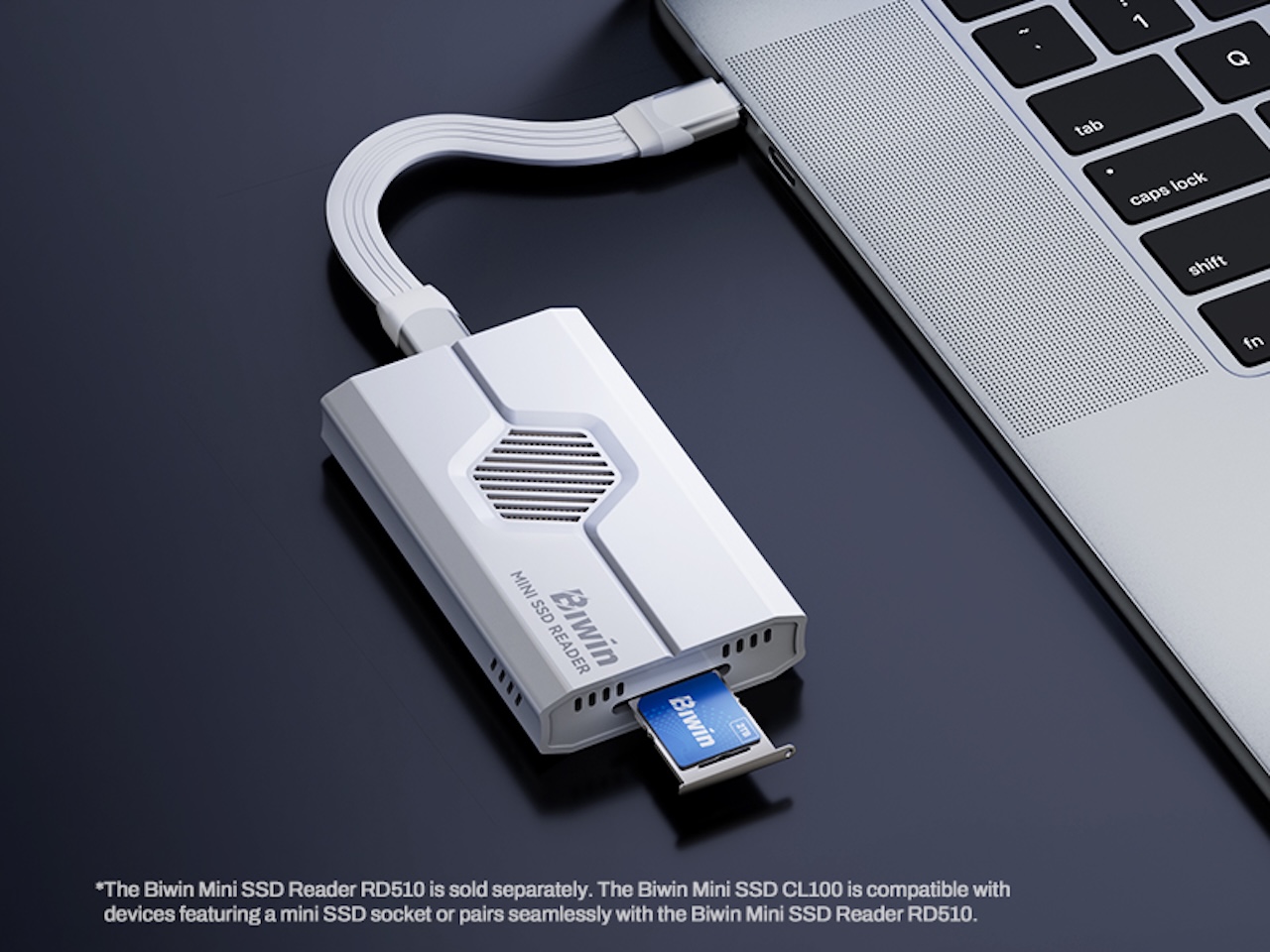
For everyone else, Biwin sells the RD510 Mini SSD Reader, a USB 4 adapter that turns the CL100 into an external drive. It’s a clean workaround that preserves most of the speed advantage, but it also highlights the chicken-and-egg problem facing any new storage format. The CL100 needs device makers to design slots for it, and device makers need consumer demand before they’ll commit to a proprietary connector.
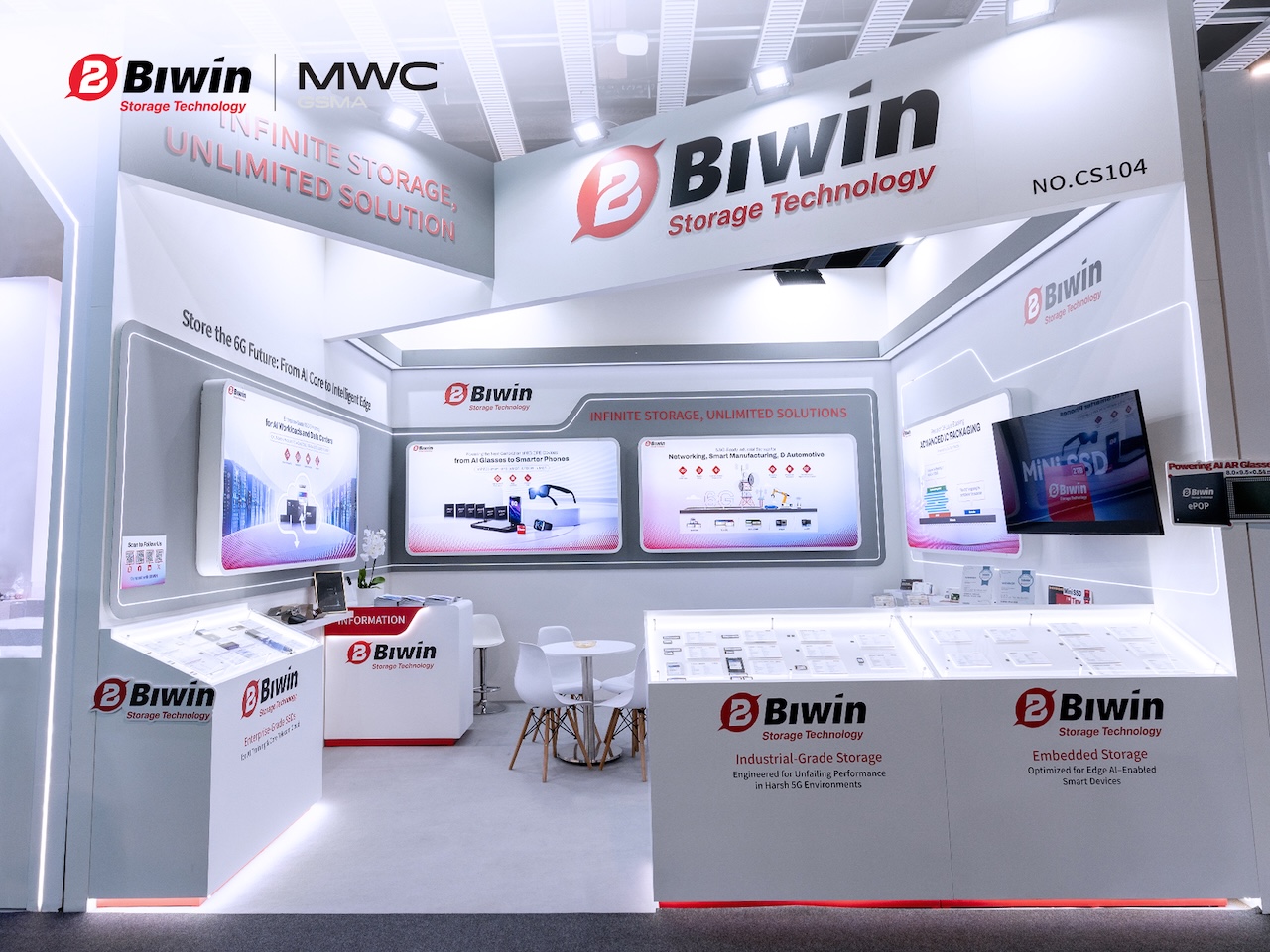
Biwin isn’t naive about this. The company’s stated targets are ultra-thin laptops, gaming handhelds, and mini PCs, all categories where traditional M.2 drives force design compromises that a SIM-sized alternative could eliminate. The MWC 2026 showing felt less like a product launch and more like an open invitation to hardware partners.
Why MWC and why now
The Mini SSD format first surfaced at trade shows in mid-2025, and the CL100 drew significant attention at CES 2026 in January, where it won a CES Picks Award. Barcelona adds a different audience. MWC skews toward mobile, connectivity, and the kind of ultra-compact computing that the Mini SSD format is designed to serve. Showing the CL100 alongside 5G handhelds, foldables, and wearables makes the size argument visceral in a way that a storage-focused trade show can’t.

There’s also a timing element that works in Biwin’s favor. Flash memory pricing has been volatile, and the broader industry conversation around storage increasingly focuses on where drives can physically fit rather than just how fast they can go. A format that delivers genuine NVMe performance in a footprint smaller than a thumbnail enters that conversation from an angle nobody else is attempting.
Price: From $85
Where to Buy: Biwin
The CL100 won’t replace your laptop’s M.2 drive tomorrow. It doesn’t need to. What it does is prove that the mini SSD concept isn’t a trade show curiosity anymore. It’s a shipping product with real speeds, real capacities, and a growing list of devices that accept it. The next step depends entirely on whether hardware makers decide the Mini SSD slot is worth designing around, and the Best in Show award it picked up at MWC 2026 suggests the industry is paying attention.
Love our content?
Sign up for our newsletter today.
No ads, no spam, just links to our latest articles!