

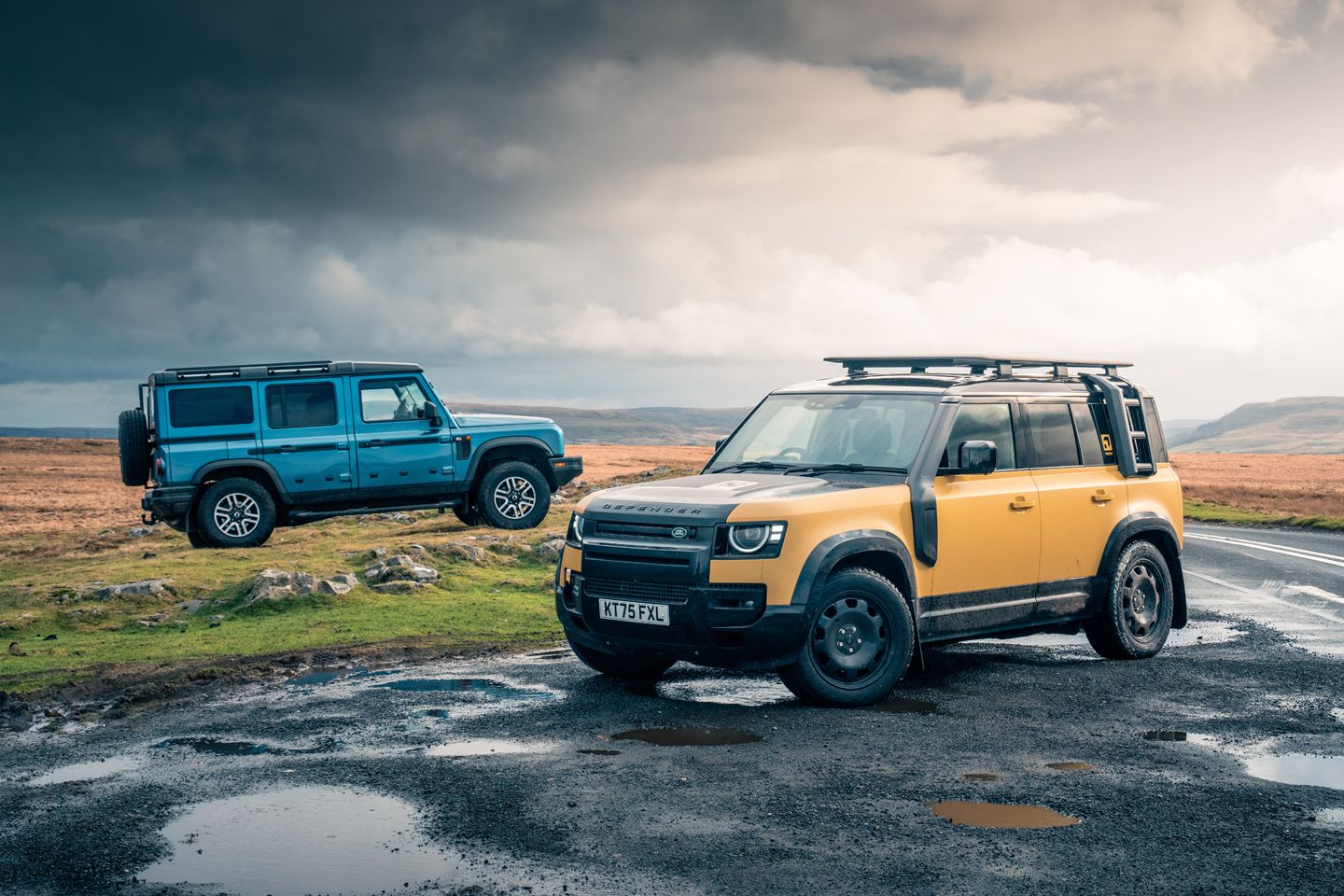
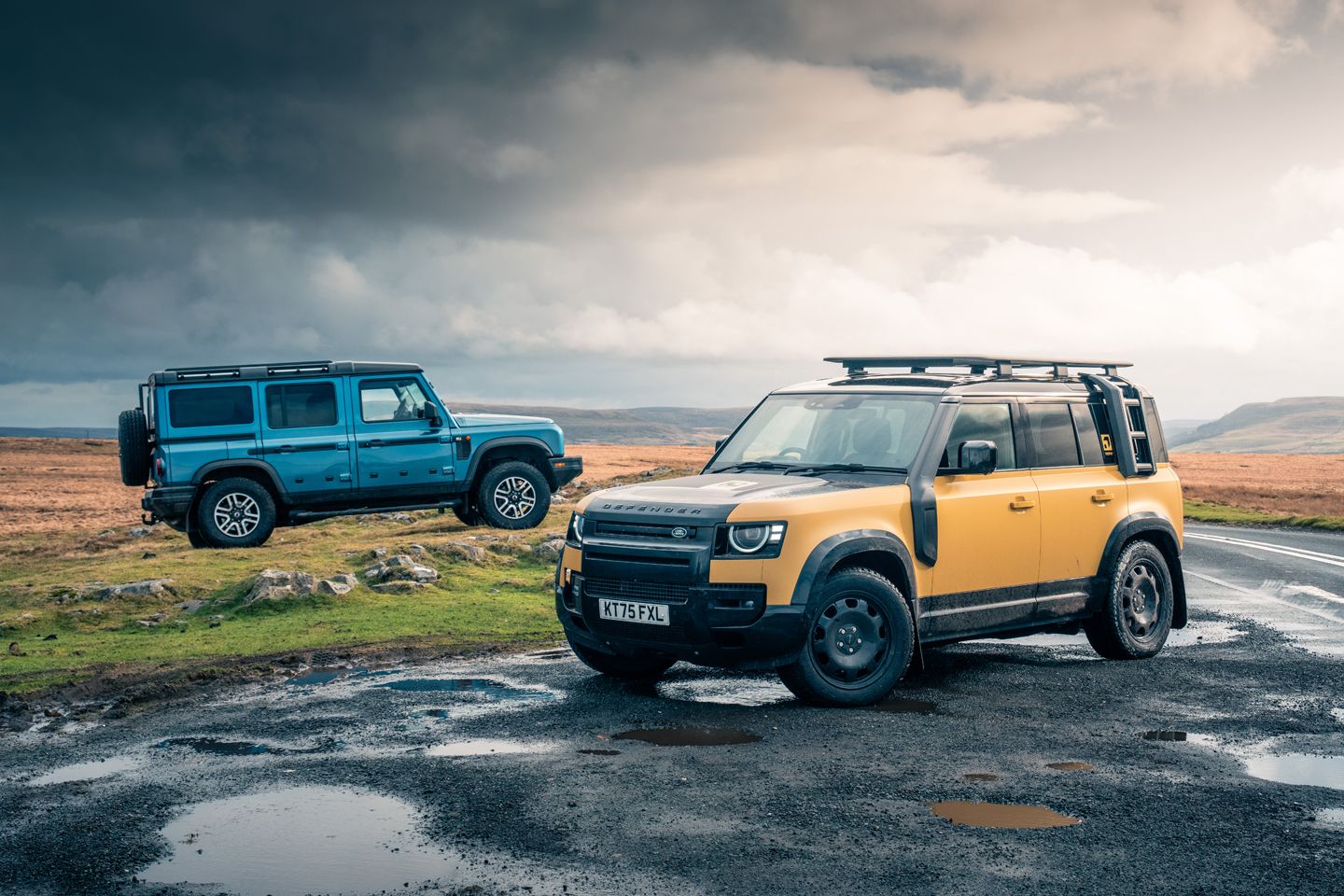
When even the Toyota Aygo can be sold in X spec, complete with arch cladding and slightly raised ride height, it can feel like the SUV-ification of the car world has gone a bit far. These days more than half of AMG sales are classed as sport utility vehicles, seemingly every electric vehicle launched is family-focused and crossover-y, and BMW M’s first bespoke car since the M1 was a 2.5-tonne 4×4-style vehicle. (In case you hadn’t guessed, we’re still not over that.) All this for customers who’ll never venture further from the tarmac than the nearest National Trust car park.
Certainly the Ineos Grenadier could never be accused of shamelessly following trends or solely appealing to lifestyle-conscious customers. It’s an off-road vehicle in the truest sense of the term, complete with a ladder frame chassis tough enough to withstand a seismic event, twice as many gearlevers as most cars, and a range of accessories – think Cyclone Pre-Cleaner for dust, a 5.5-tonne winch, a £42 zinc-plated spade – that reads like Andy McNab’s Christmas list. It’s a 4×4 first and foremost, as dedicated to and equipped for its purpose as the most downforce-fettled track cars. Which, in a world of SUVs that look a lot more capable than they are – or which attempt to do everything and excel at nothing – is quite refreshing.
The latest generation impressed on initial experience, more agreeable on the road without impacting on the rough and tough ability one jot. Perhaps a more appropriate twin test would be with something built by Twisted and also shaped like this car, or maybe a Land Cruiser (or some kind of light military vehicle), yet the Land Rover link remains irresistible. Sir Jim Ratcliffe (first and last time he’s mentioned, promise) had a view of what the Defender could become, and so did Land Rover; with the two so closely aligned on price – the Grenadier range starts at £70k, a six-cylinder 110 Defender is from £67k – the pairing had to happen.

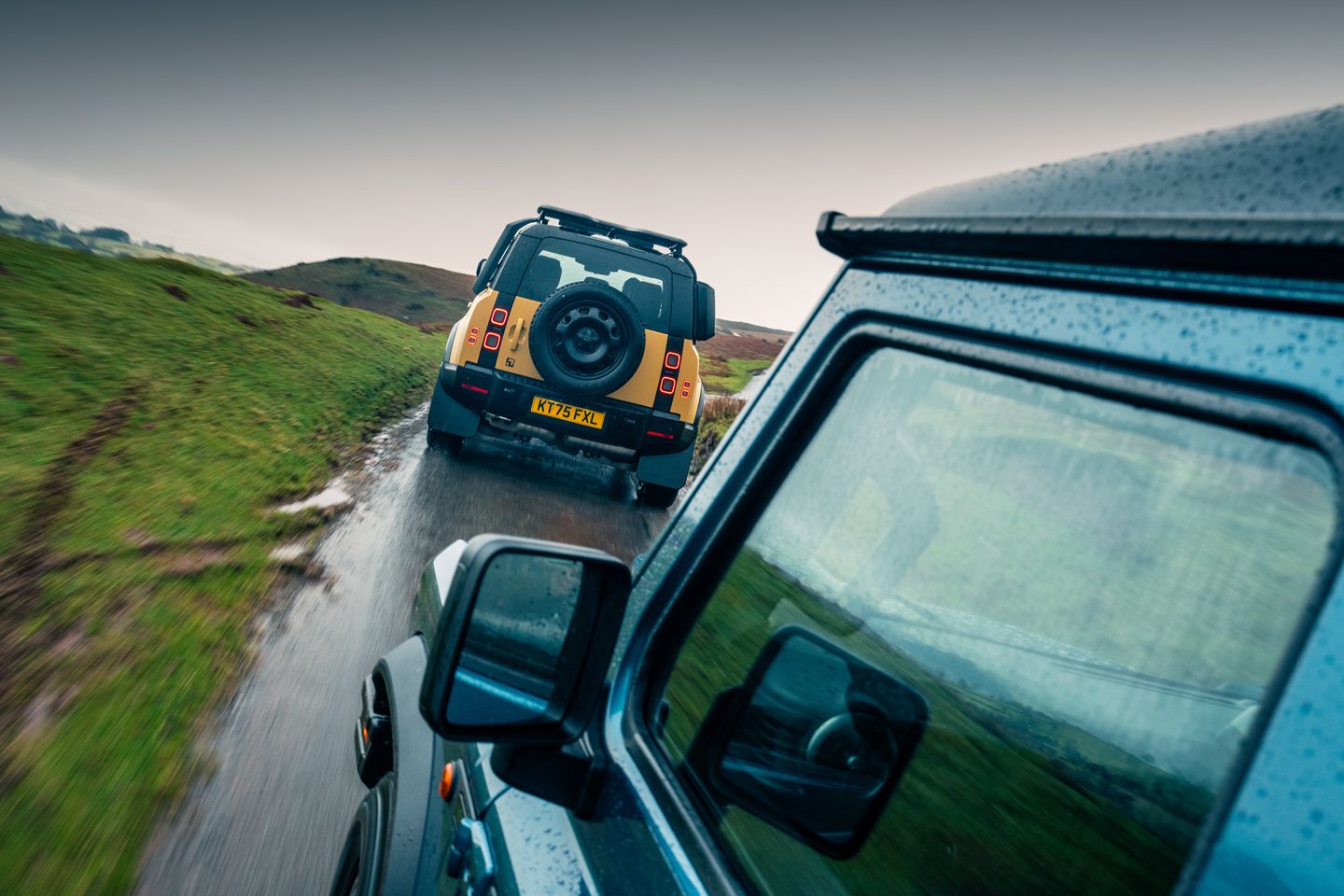
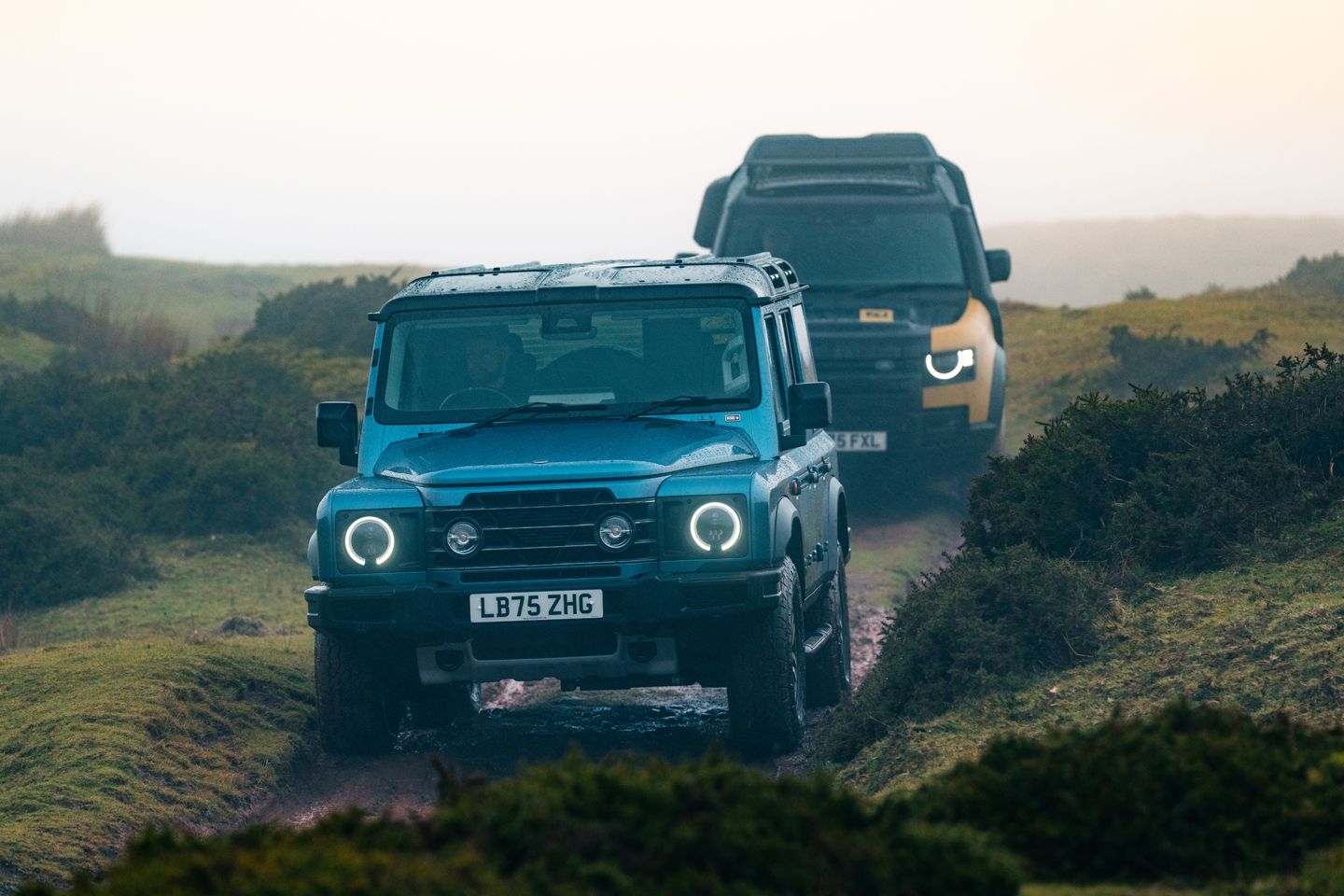
It doesn’t take long on the road to establish where the money has been spent on a Grenadier. Some of the buttons may feel flaky, and the leather isn’t exactly plush, but seldom has a car ever felt this unburstably tough. Normally the tarmac wouldn’t highlight that sort of strength, but then tarmac isn’t full of the craters we now encounter. Which are overflowing with rain at the moment. It doesn’t matter what the Grenadier hits at what speed, it’s totally unperturbed by the impact, dutifully waiting for a proper test that never, ever comes. As the roads turn ever more apocalyptic, it’s hugely confidence-inspiring. If anything, it’s the little intrusions that upset it more than those that would write off a normal car.
And while this test was far from an exhaustive off-road assessment, when the Ineos did veer off the beaten track it did so with consummate ease. There was always traction, clearance and articulation to spare, without ever having to trouble the low-range or dedicated off-road mode. It’s an immense thing, totally unfazed by increasingly grotty conditions; you feel safe and secure the moment the door is whacked shut, because no rolling hill or muddy obstacle poses even the remotest impediment to progress. We all like to joke about cars for the end of the world, but as that day seems to draw closer (sorry to be bleak), you could surely do a lot worse than heading for salvation in a Grenadier. It won’t get stuck; nobody’s going to catch you, either.
That would definitely be the recommended route over a long road drive. While improved over long distances compared to the original Grenadier thanks to the steering revisions (and with an interior that makes sense sooner than you’d think), the Ineos still imposes some compromises that’ll be unfamiliar to the average SUV driver. The footwell intrusion remains the big one, only afflicting RHD cars and meaning it’s hard to get legs comfy at a cruise. The bluff shape also means a fair amount of wind noise, and fuel economy that rivals a super-saloon. But in much the same way that you might suck up motorway miles in a Caterham for the track day at the end, the invincibility of a Grenadier in the rough would probably be deemed adequate compensation. It isn’t bad on the road; you just know it would rather be somewhere else.
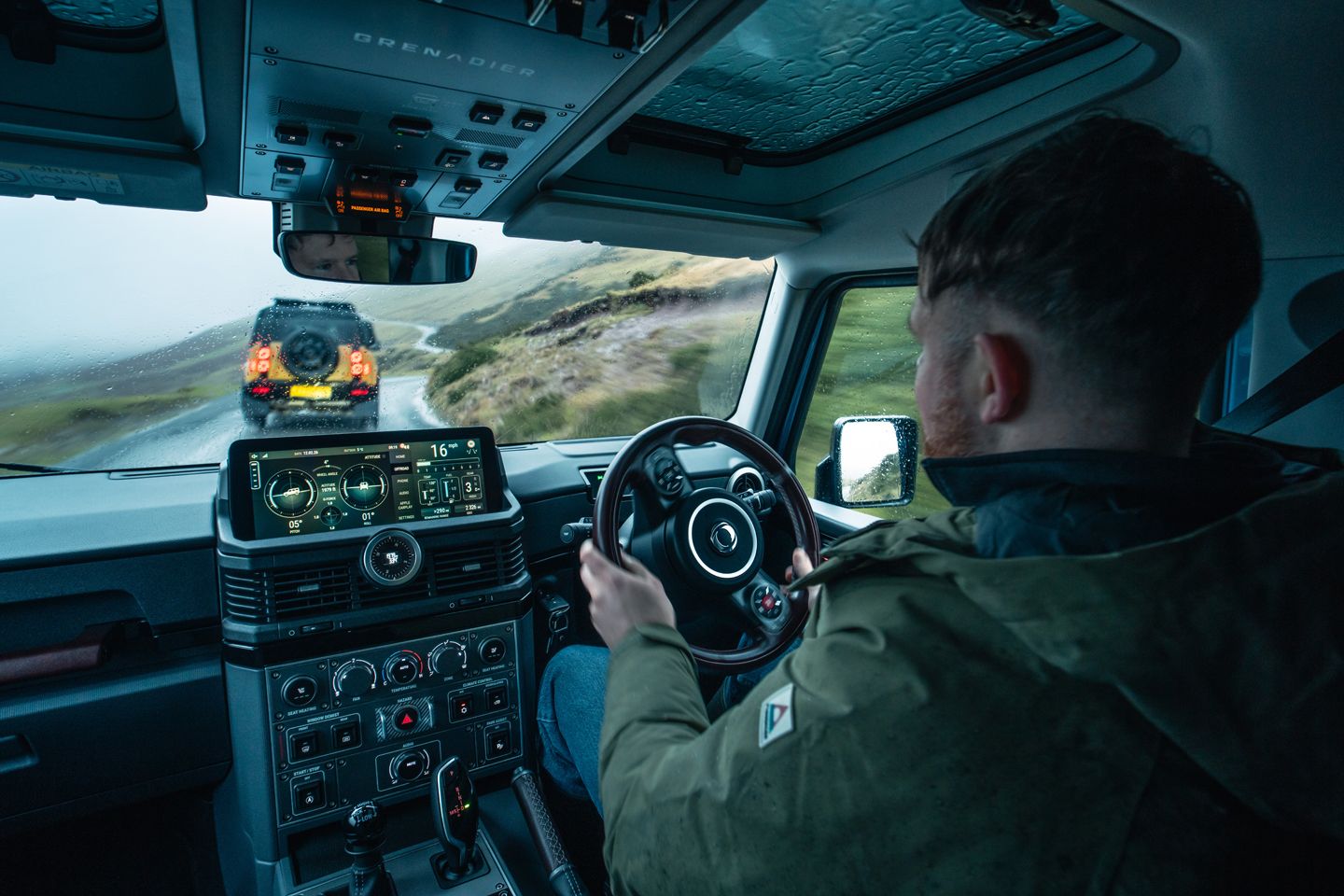
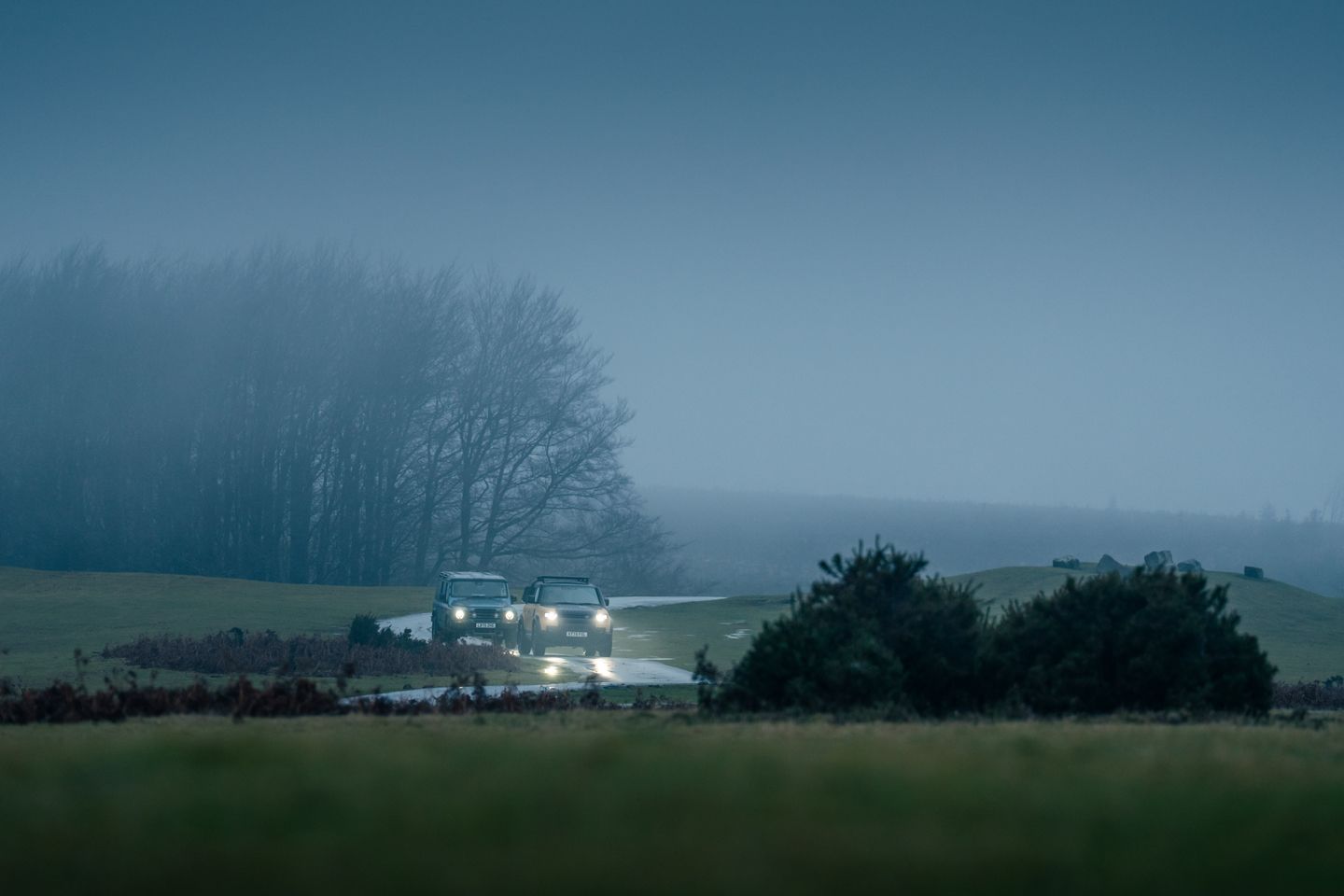
After the unashamed ruggedness of the Grenadier, a Defender is a little confusing. Because while it hopes to portray a certain image, with its (optional) Trophy Pack featuring ladder and whatnot that’ll never be used, the driving environment feels a lot more like a car. Yet the steering wheel from a bus. You’re sat lower, the screen and controls are immediately familiar, and the yellow cross car beam is only just about enough for marking out a Trophy Edition. It’s all fine and slick in the modern JLR away, but it misses out on that same sense of fun and adventure you get clambering into the cockpit of a Grenadier. To some extent, it could be any Land Rover interior, slick and nicely assembled; for better and for worse, that’s obviously not something that could be said about a Grenadier.
On the road, the Defender takes more getting used to than might be expected. The (relative) heaving and hoeing required to get a Grenadier along is entirely in keeping with the aesthetic; the Defender also has that slight remoteness straight ahead (so as not to do anything unexpected off road), but because you’re sat lower, the brake is firmer and throttle keener, those signals convince you that it should feel like more of a car.
It doesn’t take too long to become accustomed, however, and the dynamic panache of a Defender becomes patently obvious not long after. As with the interior, it could easily be said that this car drives an awful lot like many other JLR products, though that’s like complaining that there’s not much variety on a Hawksmoor menu. It’s all still pretty fabulous. There’s the flow and sophistication of a saloon, the Defender able to carry speed in a fashion alien to the Ineos while also suppressing more of the unwanted interference. A Grenadier will pummel the surface into submission, be that terra firma or anything else, while the Land Rover is more accommodating and easier going. Brass tacks, (unsurprisingly) it remains far more suited to road use, with its air suspension and monocoque construction, comfier at a cruise and much more capable in the corners.
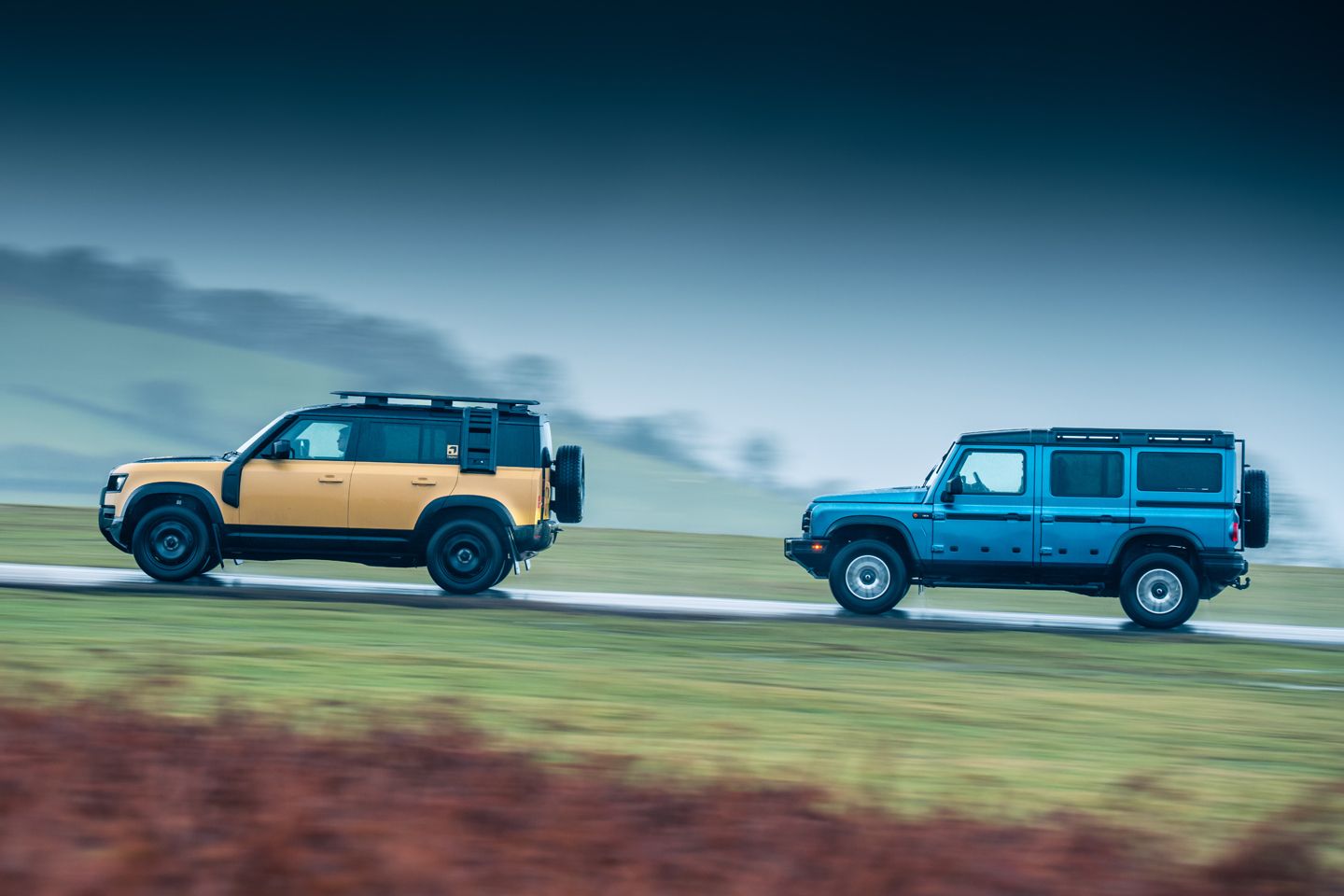
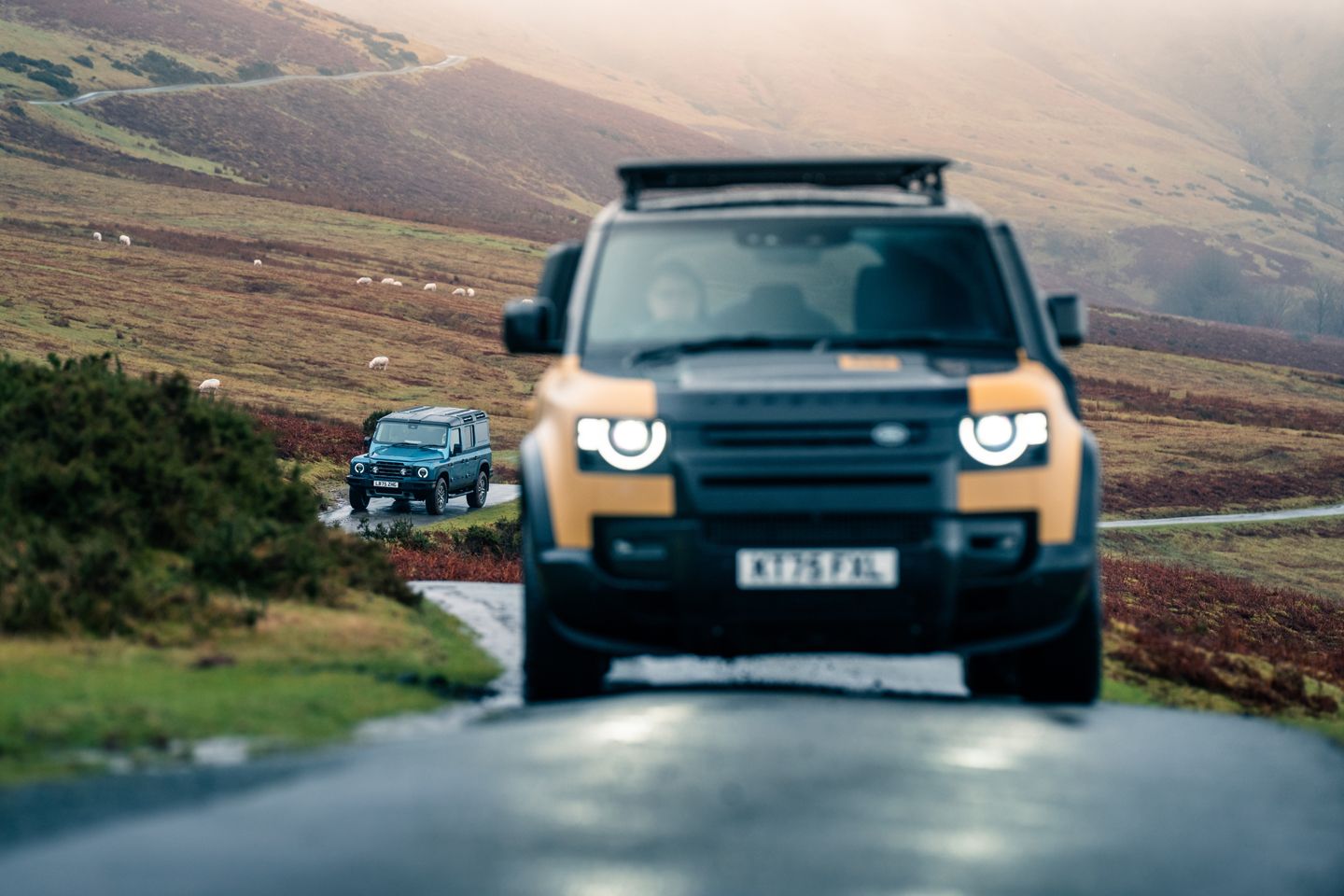
Which would be fine for the Grenadier if there was some penalty to pay in terms of the Defender’s off-road ability. And maybe, many miles from civilisation and phone service, there is. Given the investment made in the D7-X architecture, and the displays already put on by the Defender, it would be a surprise – especially in car with adjustable ride height and formidable wading ability. Regardless, for those of us who see going without a duvet for a couple of nights as a wild weekend away, a Defender is going to be wildly over-engineered for the task. By any standard, it’s a mightily good off-road car; they both are – anyone who needs more ability than these two offer is surely looking at a dedicated off-road truck that does nothing but plug the mud.
It isn’t often that petrol is pitched against diesel in 2026, and certainly not when the two are so closely comparable otherwise: 3.0-litres, six cylinders, hooked up to an eight-speed auto. As in every other installation from Z4 to Supersport, the BMW B58 is very likeable in the Grenadier, well synced to the transmission, pleasant to listen to and boasting ample performance. Nevertheless, a diesel must be a better fit for the intended use, and it doesn’t take many miles in a Defender to prove the point. While a D300 would have been a better match-up in terms of spec, the effortlessness of a relatively large capacity turbodiesel is irresistible in a car like this. In D350 guise the Trophy is actually a genuinely quick car, yet never at the expense of its chassis’ poise. Experience of the 3.0-litre B57 in a Grenadier would be another vote for diesel power; what it loses in stats it more than makes up for in real-world usefulness. And sometimes doing more than 19mpg.
Put it this way: the Grenadier is a pair of Hunter wellies, reassuringly expensive because it’s so sturdy, perfectly suited to its intended role, and not without a certain style. Out in the sticks, there’s really nothing better to be seen in. But for around-town use or longer journeys, quite a lot of effort is required. It’s going to be a bit uncomfortable. The Defender, on the other hand, is a Patagonia coat; its ability to weather any storm isn’t in any doubt by now, but the reputation seems reduced somewhat by everyone just using them to go to an office. Hard not to, because it’s so well-suited to every possible environment. Plus it lets people know that you have money, and might do vaguely interesting things at the weekend.
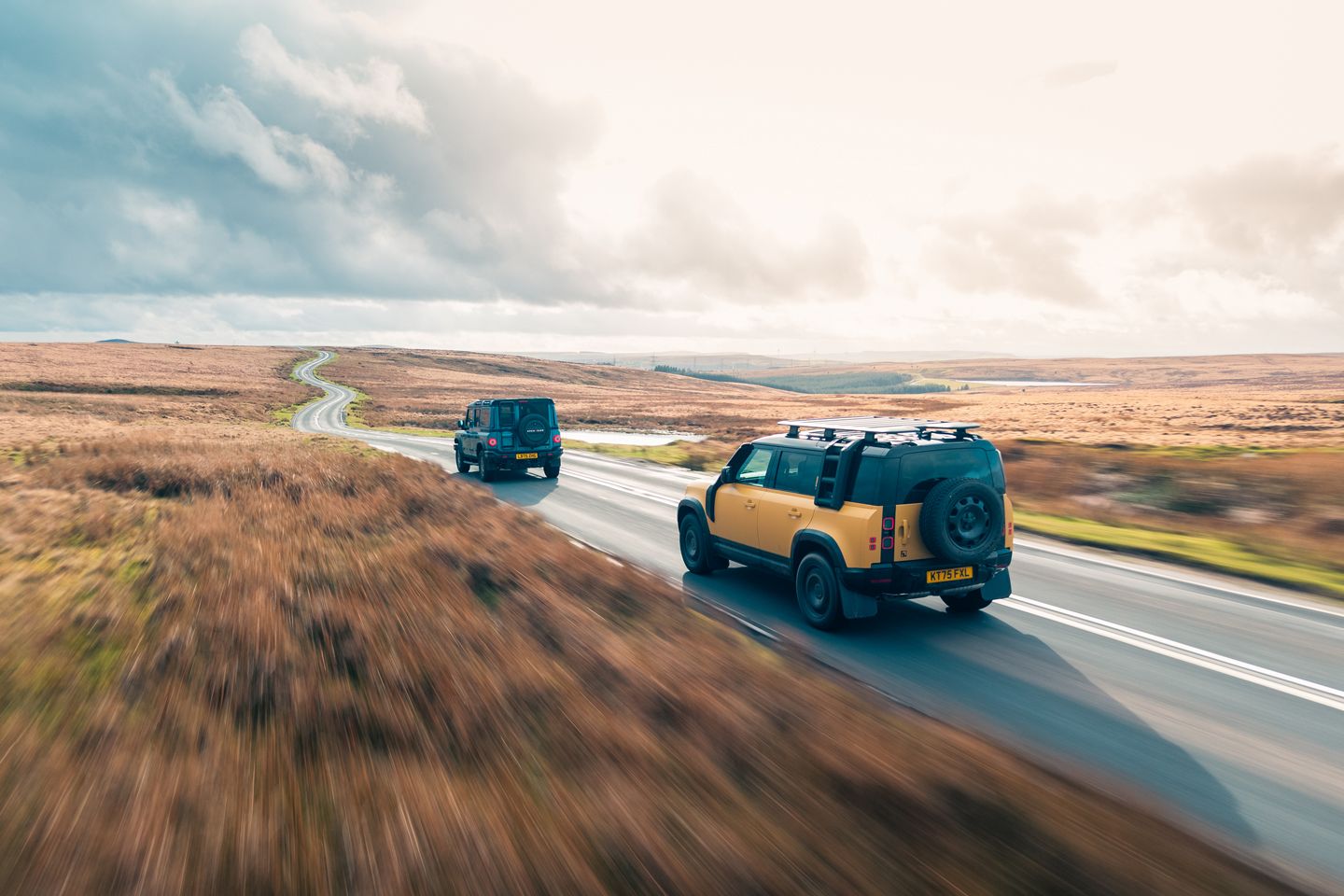
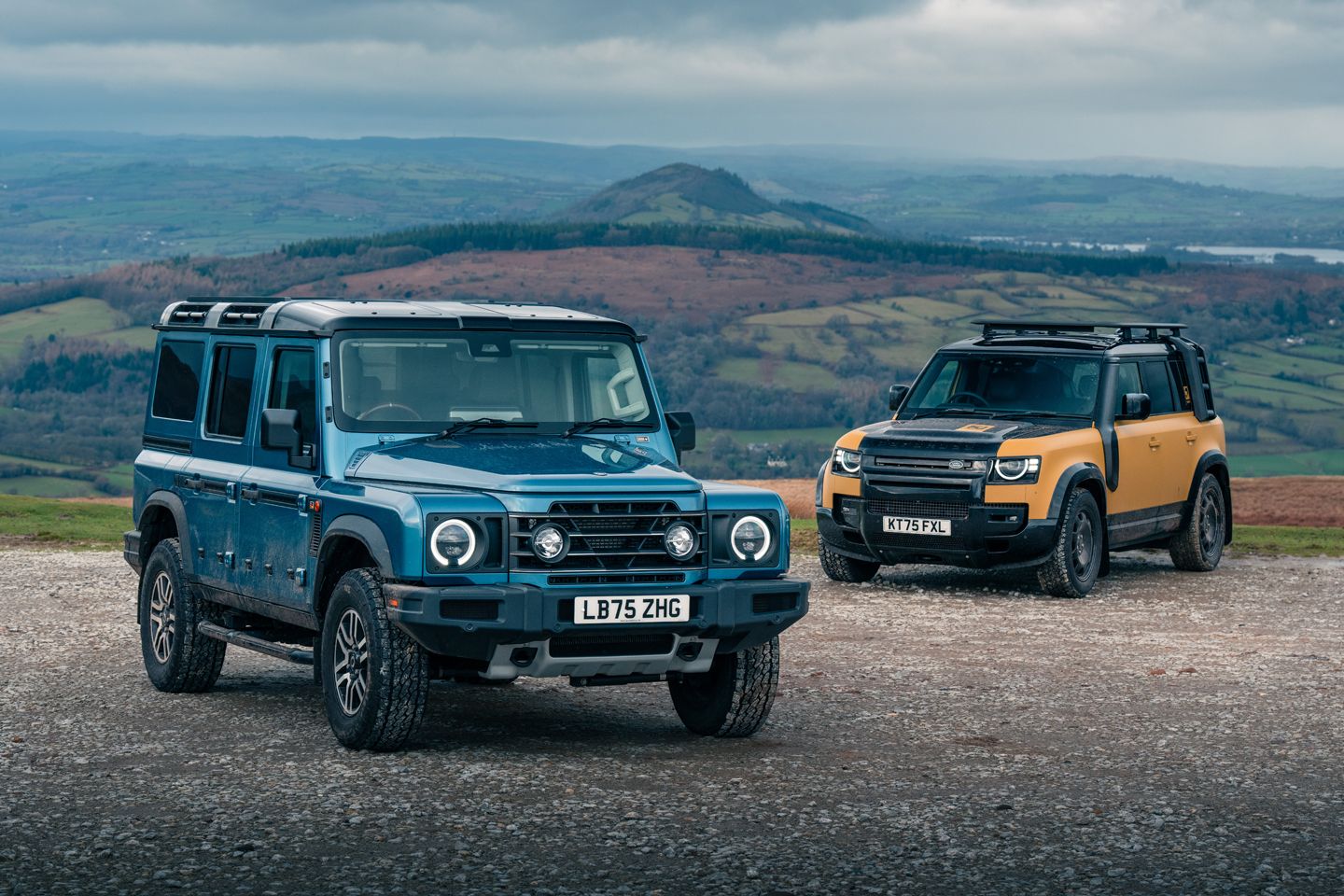
If the Grenadier was significantly cheaper than the Defender – still the glaring flaw in Ineos’s strategy – it would undoubtedly make for an intriguing alternative; there’s considerable charm to its unapologetic nature and indomitable feel. The latest revisions make it more amenable than ever, too. It really is very likeable. But, objectively speaking, once you’re asking more than £70,000 for a car, it really needs to offer a more comprehensive array of abilities. Unless you’re merely filling yet another space in the collection, you’d never spend this much money solely on an off-road vehicle; the Defender, developed with a vastly larger budget to deliver considerably more bandwidth, is at least as good in the rough stuff and ultimately much nicer on the road. The gap between the two is closer perhaps, yet undeniably present.
What makes the discrepancy more interesting is if you step back from the difference in usability and consider the extent to which either model successfully continues the original Defender’s legacy. The one that seems beholden to a bygone rustic charm and looks just like it? Or the superbly swish and acutely well-judged car that Land Rover can hardly build enough of? That is an open question, of course. We’ll answer a more straightforward one: if you want a new 4×4 that feels like a modernised Defender, by all means buy the Grenadier. If you just want the best modern SUV period, regardless of cost, off-road or on, we’re convinced Land Rover still makes it.
SPECIFICATION | 2026 LAND ROVER DEFENDER 110 TROPHY EDITION
Engine: 2,997cc, straight-six, diesel
Transmission: 8-speed automatic, four-wheel drive
Power (hp): 350@4,000rpm
Torque (lb ft): 516@1,500-2,500rpm
0-62mph: 6.4secs
Top speed: 119mph
Weight: 2,361kg (DIN)
MPG: 31.2
CO2: 237g/km
Price: £84,815 (price as standard; price as tested £98,385 comprising Trophy Pack (Raised Air Intake, Black Expedition Roof Rack, Black Deployable Roof Ladder, Classic Mudflaps Pack, Gloss Black Exterior and Side-Mounted Gear Carrier) for £4,995, Matte Protective Film for £4,500, Matrix LED lights for £1,055, Front centre console refrigerator compartment for £470, Air quality sensor for £60, Cabin Air Purification Plus for £455, Three-zone climate control for £355, ClearSight interior rear view mirror for £630, Electronic Active Differential with Torque Vectoring by Braking for £1,050)
SPECIFICATION | 2026 INEOS GRENADIER TRIALMASTER
Engine: 2,998cc, turbo straight six
Transmission: 8-speed automatic with two-speed transfer case, four-wheel drive
Power (hp): 286@4,750rpm
Torque (lb ft): 332@1,750-4,000rpm
0-62mph: 8.6
Top speed: 99mph (limited)
Weight: 2,678kg
MPG: 18.9-19.6
CO2: 325-336g/km
Price: £69,995 (as standard; price as tested £77,463 comprising Shale Blue paint for £1,070, Inky Black Contrast Roof for £1,950, Exterior Utility Belt for £495, Privacy Glass for £455, 17-inch alloy wheels for £635, Fixed Tow Ball and electrics for £630, Spare Wheel lockable storage box for £345, Saddles Leather Driver’s Pack – Brown for £685, Carpet flooring for £245, Side Runners for £958)