

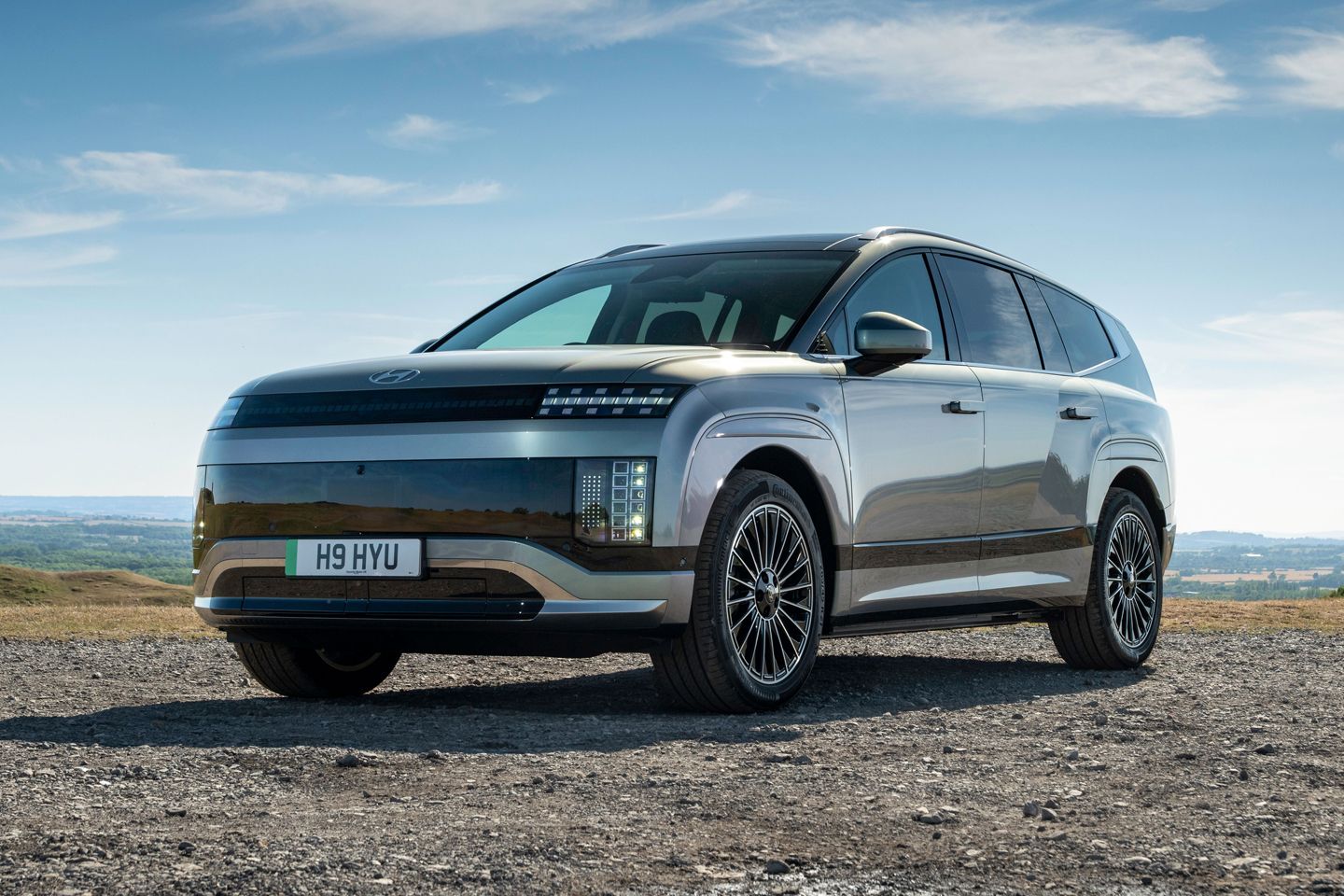
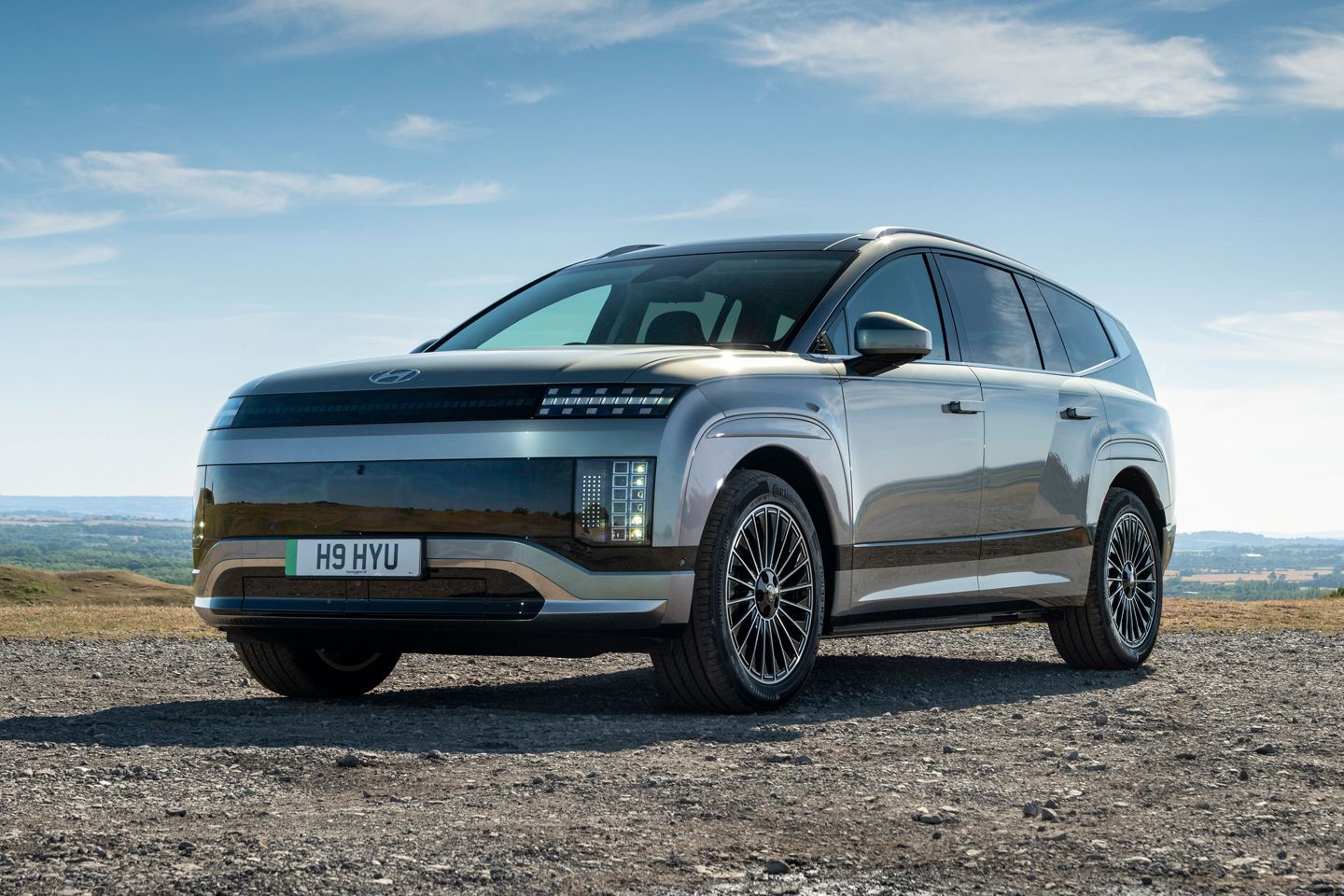
Cards on the table, this is not immediately obvious PH subject matter. It’s a five-metre-long, softly sprung SUV with six or seven seats. It weighs over 2.6 tonnes and can command almost eighty grand. But Hyundai’s on such a roll right now, and its Kia EV9 sibling impressed us so much, that turning a blind eye to the existence of the Hyundai Ioniq 9 would be cruel.
There’s also the small matter of its topmost version (for now…) offering 427hp and a 5.2-second sprint from 0-62mph. Quite what anyone sat in the back row of seats will make of you attempting to explore that performance, I don’t know. From the driver’s seat, it’s all surprisingly… chilled. This is a car that puts comfort and luxury at the top of its agenda, and despite the obvious, whipcrack potential of this top-rung Performance AWD car, its pace is easy to moderate with a prudent right foot to make it a thoroughly pleasant thing in which to potter around.
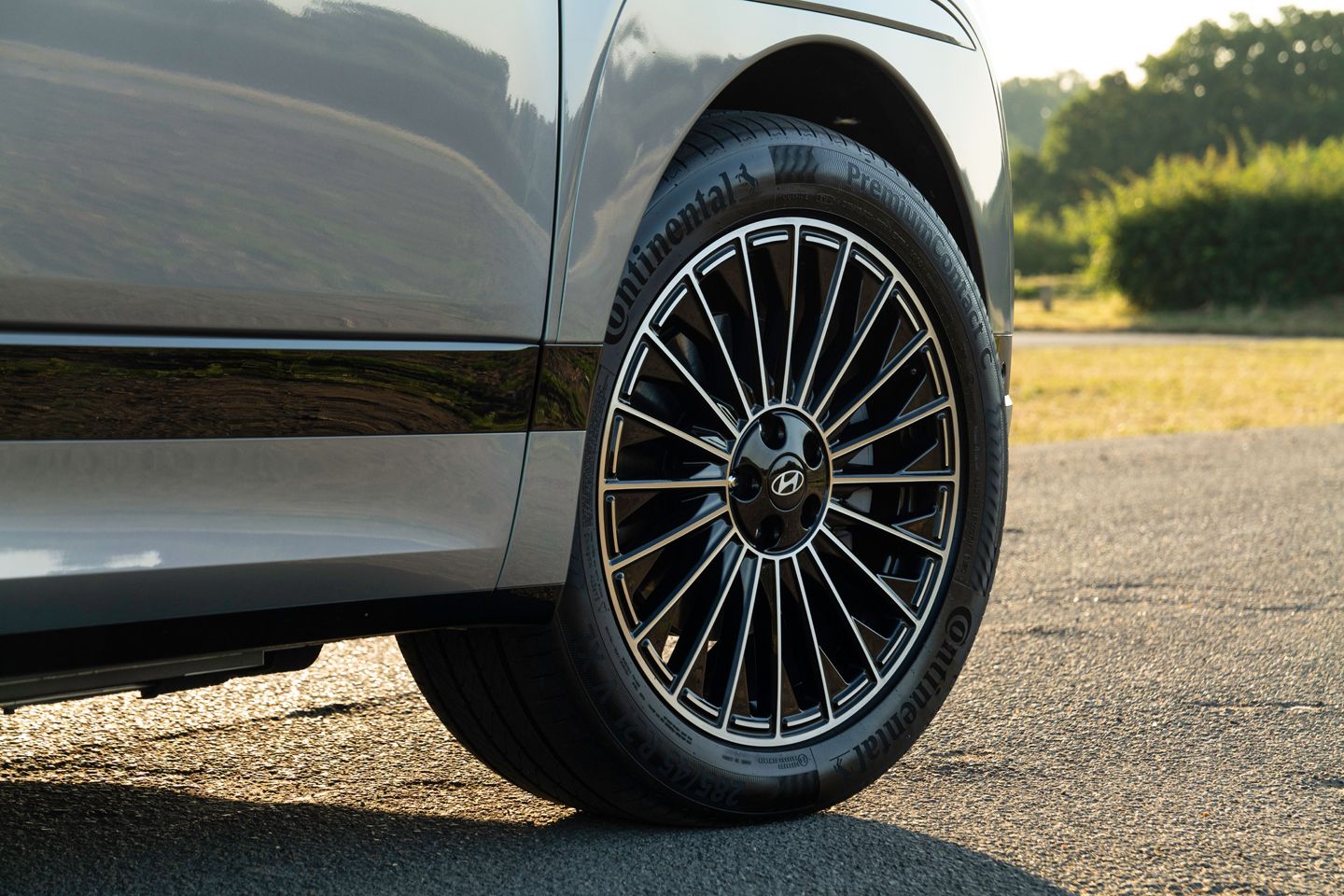
Mind, they all are. The range begins at £64,995 for the entry-level, Premium spec car with a sole 218bhp motor on its rear axle and a modest 9.4-second jog from 0-62mph. Upgrade to the £73,495 Ultimate and you gain an 89hp front motor for AWD and a 307hp total, 0-62mph in 6.7 seconds as well as lots of extra kit: half-fabric seats turn fully leather, 19-inch wheels become 20s, there’s a big BOSE stereo, a sunroof and a useful bunch of extra parking assists – as well as active noise cancellation tech to increase the interior hush. Or give the kids an even better stage for making their din upon.

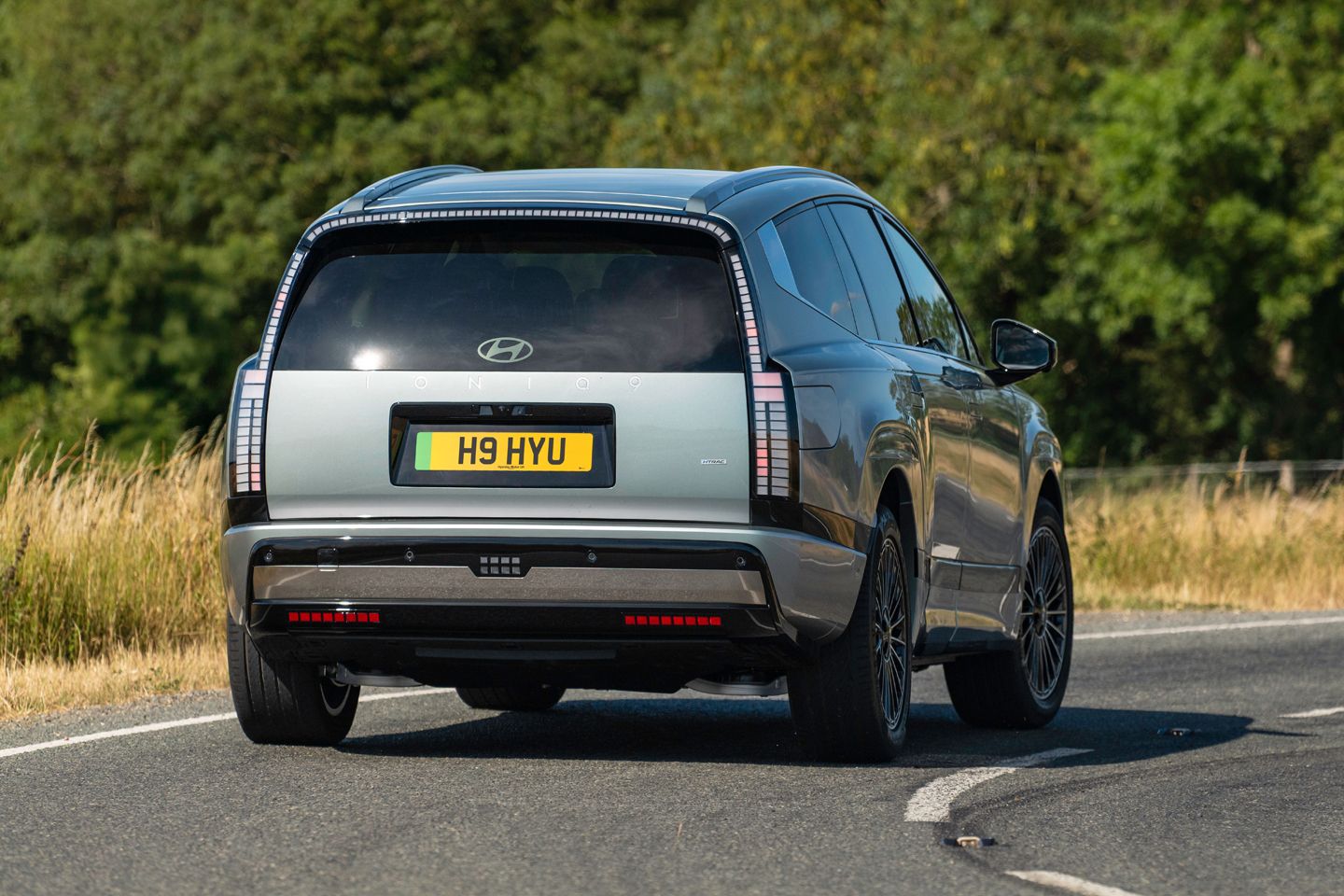
It’s naturally the £77,595 Calligraphy halo and its ‘Performance AWD’ that draws us in most. A pair of equal, 213.5hp motors combine for its headline, hot hatch-adjacent acceleration claims and range-best 124mph top speed. The wheels become 21s, the leather turns to Nappa and you can swap the traditional seven-seat layout for a more deluxe six-seat configuration where the middle row spins 180 degrees (albeit at a standstill). Digital side mirrors are a thousand-pound option that’s easily ignored.
You can apply a £1,500 discount to all of those prices with the government-mimicking Hyundai Electric Grant, while leasing costs via Hyundai are £599 per month for the base RWD car or £699 for the all-guns-blazing Calligraphy. Go elsewhere and you might dip under £500pm.
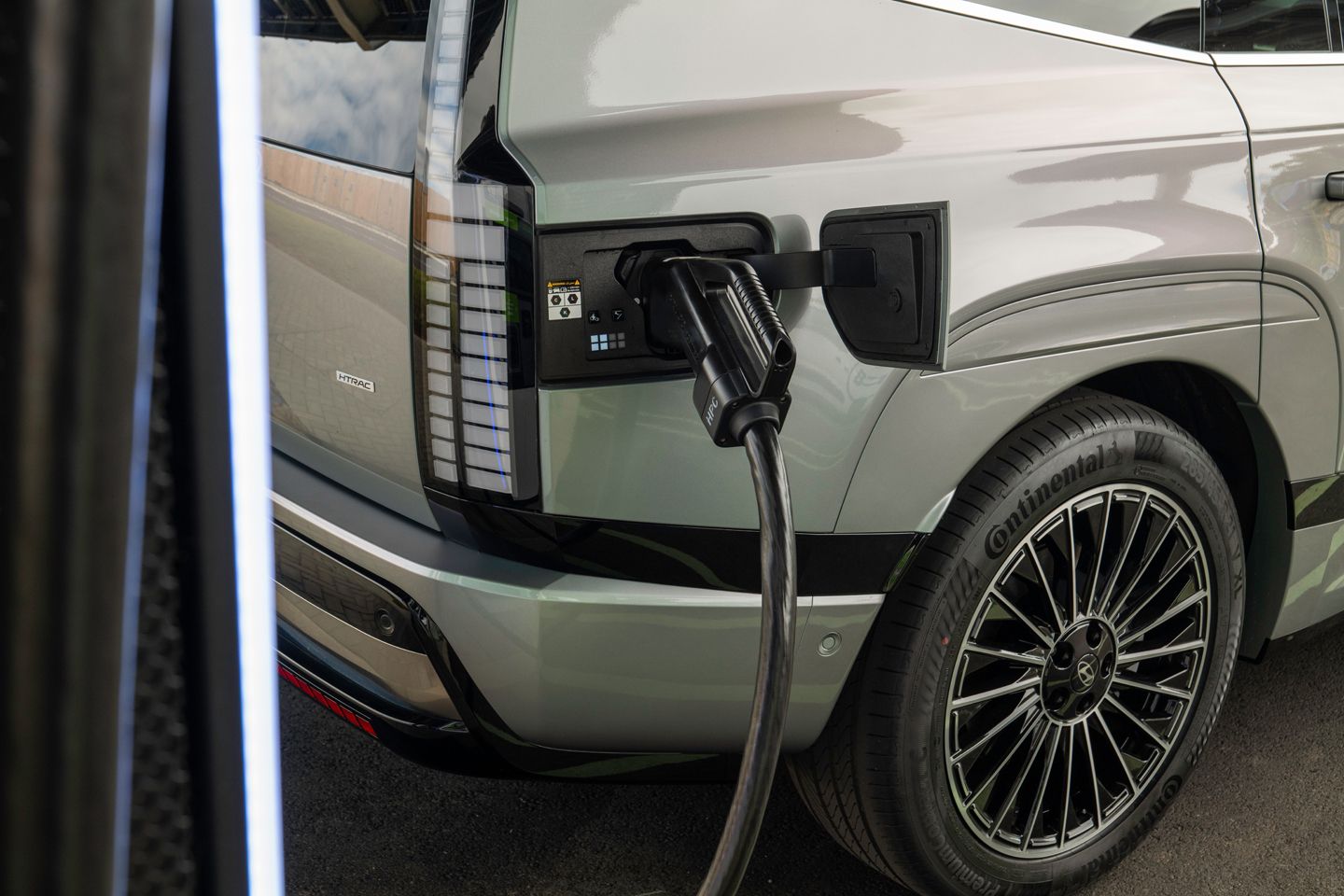
They all share a 110kWh battery, 800v charging architecture (for up to 233kW intake) and, curiously, they all claim on-paper efficiency of around 375 miles of range and three miles per kWh of charge, too. The digital range readout prioritises an average prediction but also hypothesises best- and worst-case scenarios in a smaller font, which feels like a simple yet ingenious little addition. It’s a feature shared with other Hyundai and Kia group cars and strikes me as a good-natured attempt at some refreshing honesty and pragmatism.
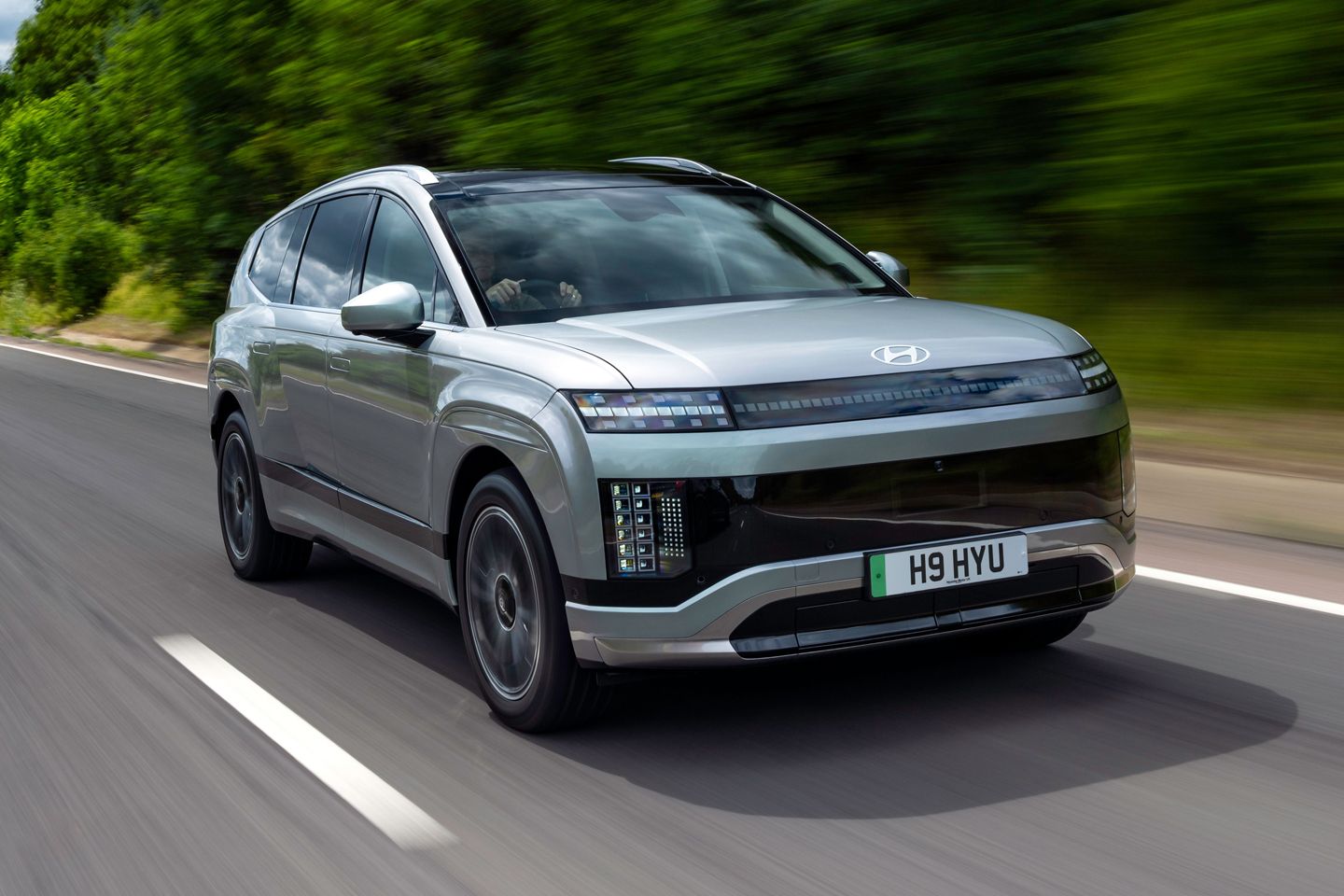
A sentiment exuded by the whole car. Mostly so in base, rear-drive trim – where, like the Kia, it drives as sharply as you feasibly need a big family bus to and accelerates keenly enough (just). Load it up with your nearest, dearest and their belongings and its performance may be left wanting, though the ride on its base 19s (with 60-section sidewalls!) is really quite nice and does a good impression of a pricier air setup while using conventional MacPherson struts up front and a multi-link setup out back.
As the wheel size and performance grow, its ride gets undeniably friskier, but even the 21s of the Calligraphy aren’t too offensive – it’s just a pity there can’t be more mix ‘n’ matching between the rims and power grades. More so because any perceived firmness in the Ioniq 9’s swagger simply isn’t paid back in its appetite for turns – this isn’t a fun car to drive by any conventional measure, it merely handles with enough pep to not feel cumbersome.
It’s been tuned to make three tons (as it may easily be with all the seats filled) as amiable as possible and while a bit of extra control can be gleaned by folks like us grabbing the paddleshifters that toggle its three levels of regen – ‘downchanging’ into corners helping reduce the head toss of harsher mechanical braking – this is a car to settle into, not spar with.
“The EV9 feels secure, balanced and, in slower speed turns, just a little bit throttle steerable,” said Matt Bird of the Ioniq 9’s numerically identical Kia cousin. “Given the remit and the dimensions, it drives very smartly indeed, making the driver feel right at home in something so large whatever the environment.” So it feels here, just with a mite more power across the board and ten per cent more battery for bulkier range figures – and all for a bit less money, too. On those terms, the Hyundai is unequivocally a bit of a winner, especially when the best-balanced Ioniq 9 of all – the mid-rung, 307hp all-wheel driver – doesn’t currently have a direct Kia equivalent.
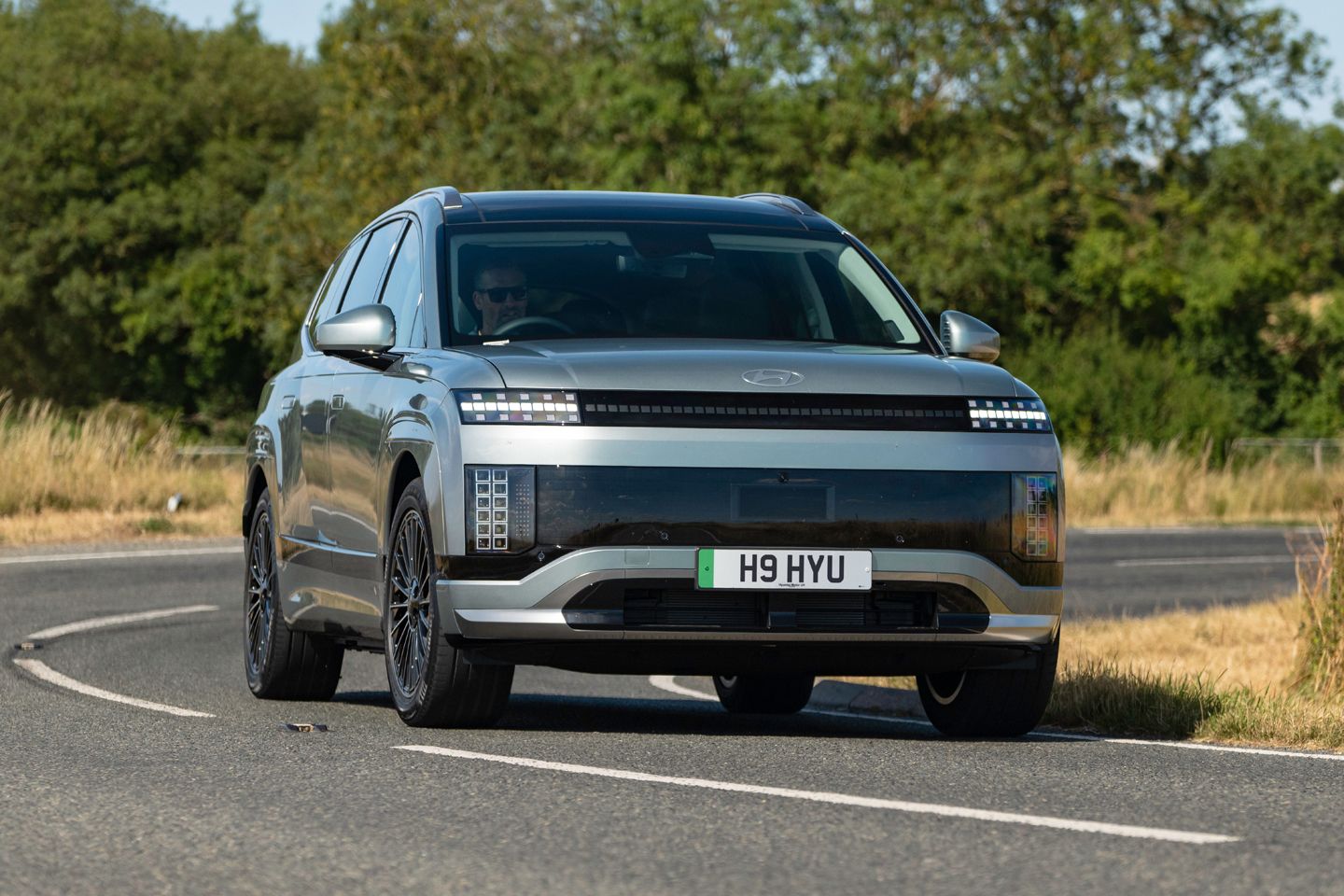
If JLR had presented this car to us wearing a Discovery badge, I reckon we’d praise the engineers for a precisely targeted, job well done. Sure, it won’t have the off-road smarts that JLR will force upon such a thing if its “all nameplates to have a BEV variant by 2030” declaration still holds true. Otherwise, this Hyundai’s polite driving manners, sophisticated but squared-off styling and plush yet pragmatic interior strike all the notes a plug-in Disco should.
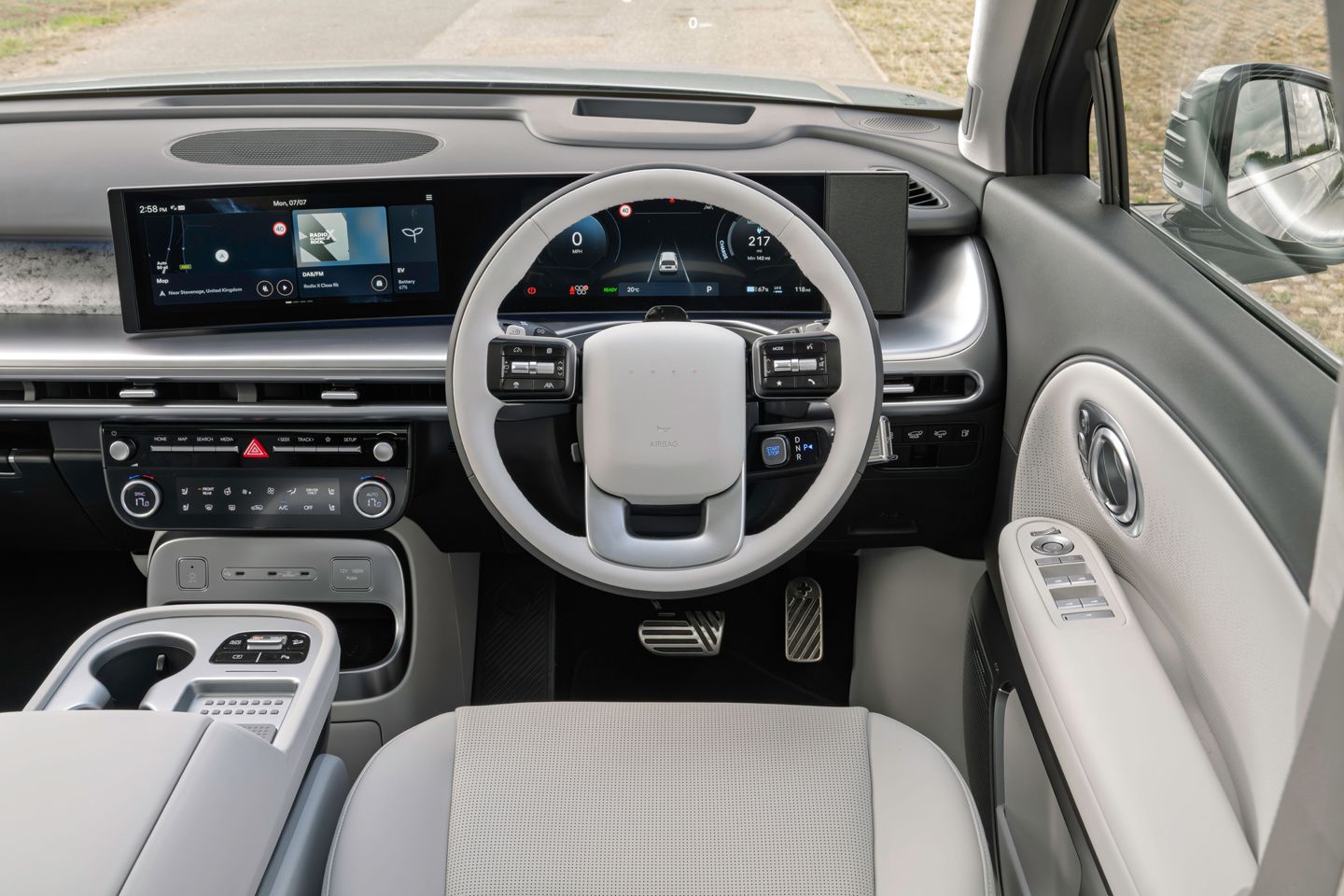
The pricier Volvo EX90 manages to feel newer and techier inside, but flipping that statement on its head reveals the Ioniq 9 to have the more usable interior on the move. It shares touch points and ideals with the entry Ioniq 5, a point I raise as a compliment rather than a criticism. There’s a chunky gear selector to swivel, sizeable door handles to tug and physical climate control dials to twizzle. The touchscreen is big enough to feel relevant but slim enough not to dominate. And there’s a full suite of electric window switches, not two shouldering the burden of four.
While those sent into a fit of pique by modern car interiors likely still won’t let the ‘9 talk them around, this sits among the better cabins at balancing contemporary tech with a bit of old-fashioned common sense. Same goes for the sheer onslaught of charging ports, cupholders (I counted nine), and its heated, vented and massaging seats as you venture further up the range.
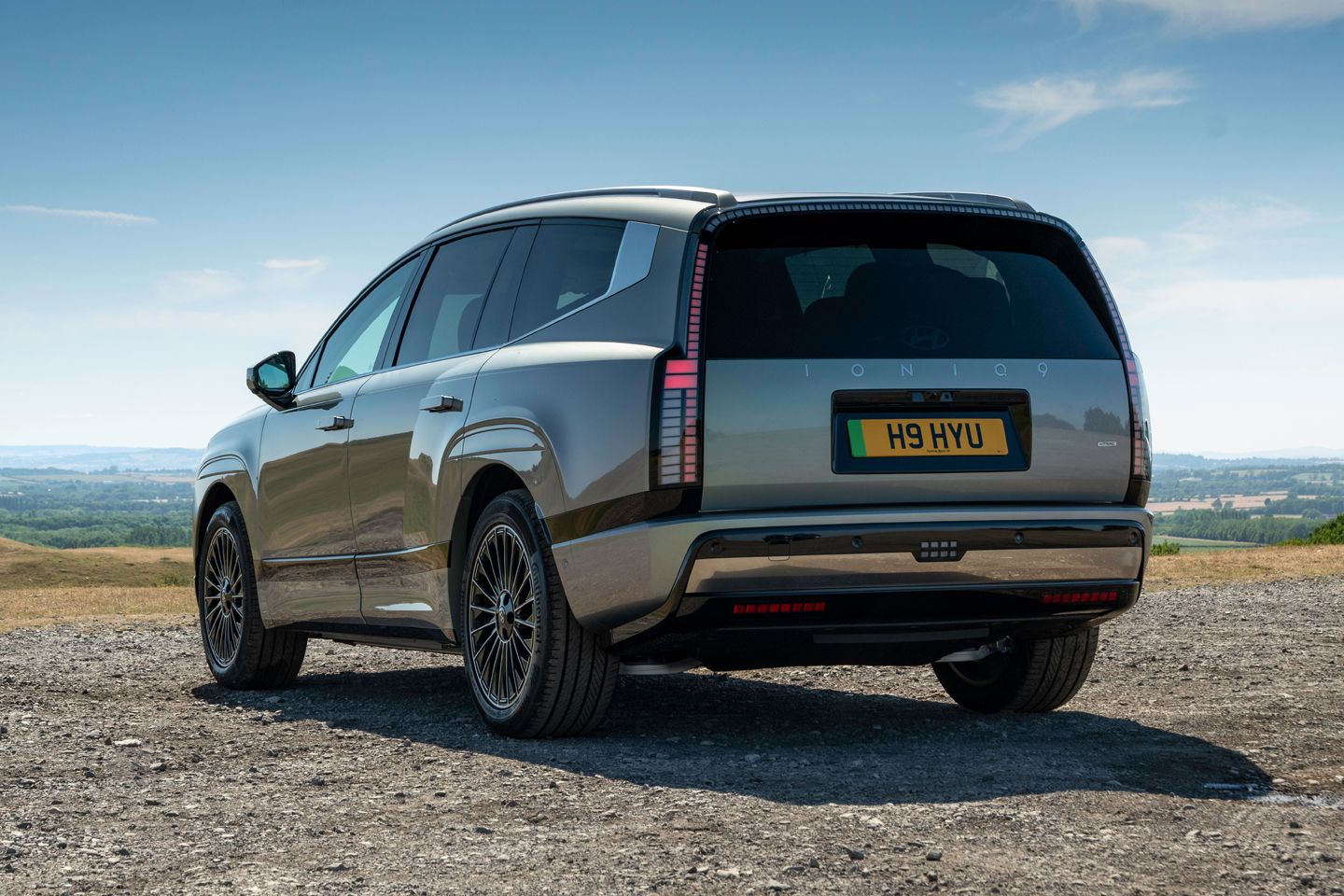
It’s bleeding massive, of course, and its lack of four-wheel steering means urban multi-storeys have the potential to induce panic attacks and merely mooching around in narrow environs takes a bit of patience. The remuneration is decent room in every row and 338 litres of boot volume – the same as a Skodiaq. And check out the rear quarter glass – its size benefits the side profile of the Ioniq 9, chiming neatly with the pronounced rear wheelarch, but it also ensures those banished to the rearmost chairs enjoy plenty of visibility. Though this may not be obvious PH fare, it tackles its unenviable brief with both class and tact. And there’s plenty for us all to appreciate about that.
SPECIFICATION | 2026 HYUNDAI IONIQ 9 AWD CALLIGRAPHY
Engine: Dual permanent magnet synchronous motor, 110kWh battery
Transmission: Single-speed, all-wheel drive
Power (hp): 427
Torque (lb ft): 516
0-62mph: 5.2sec
Top speed: 124mph
Weight: 2,610kg
Range: 372 miles combined (3.0mi/kWh claimed)
CO2: 0g/km
Price: £77,595