

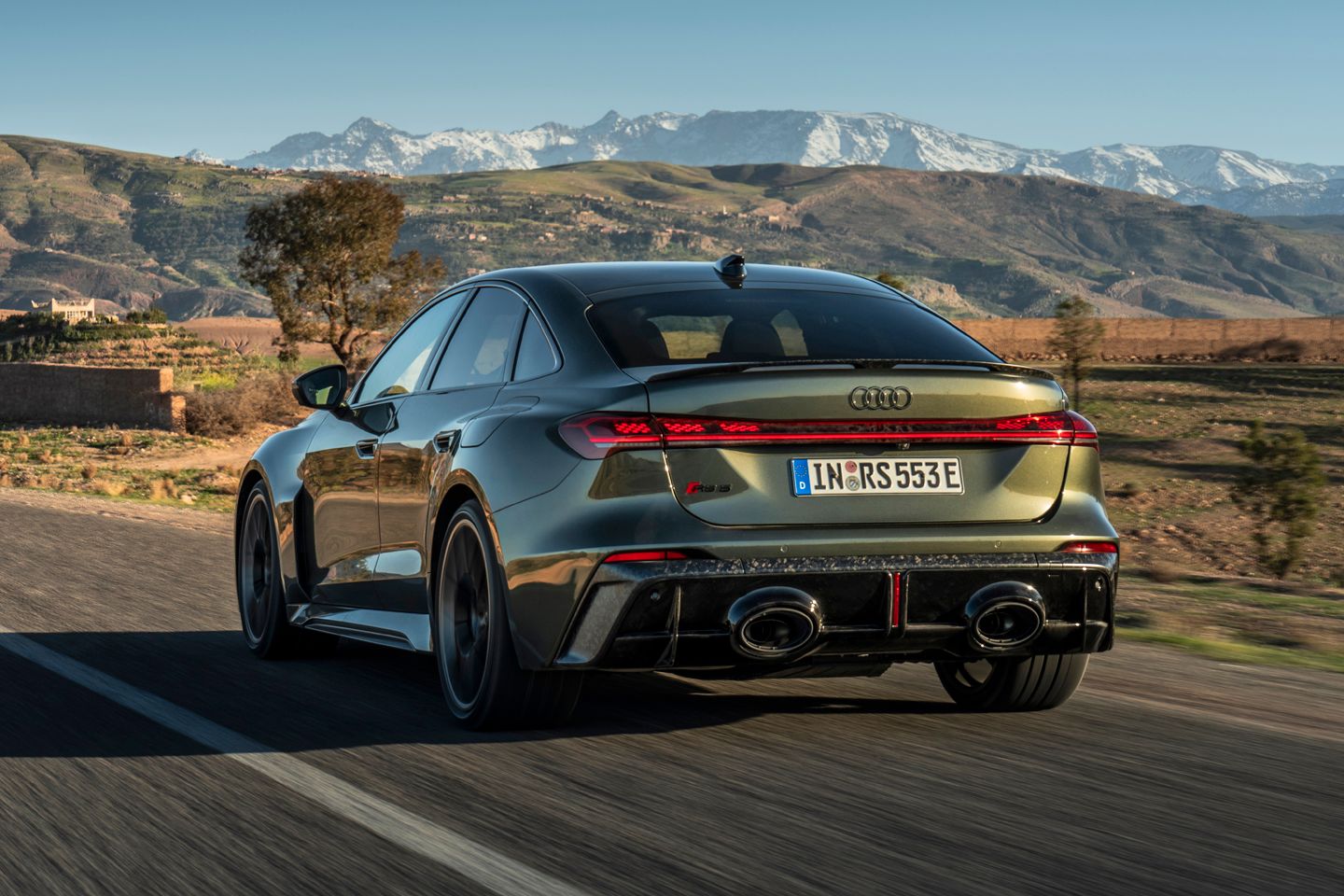
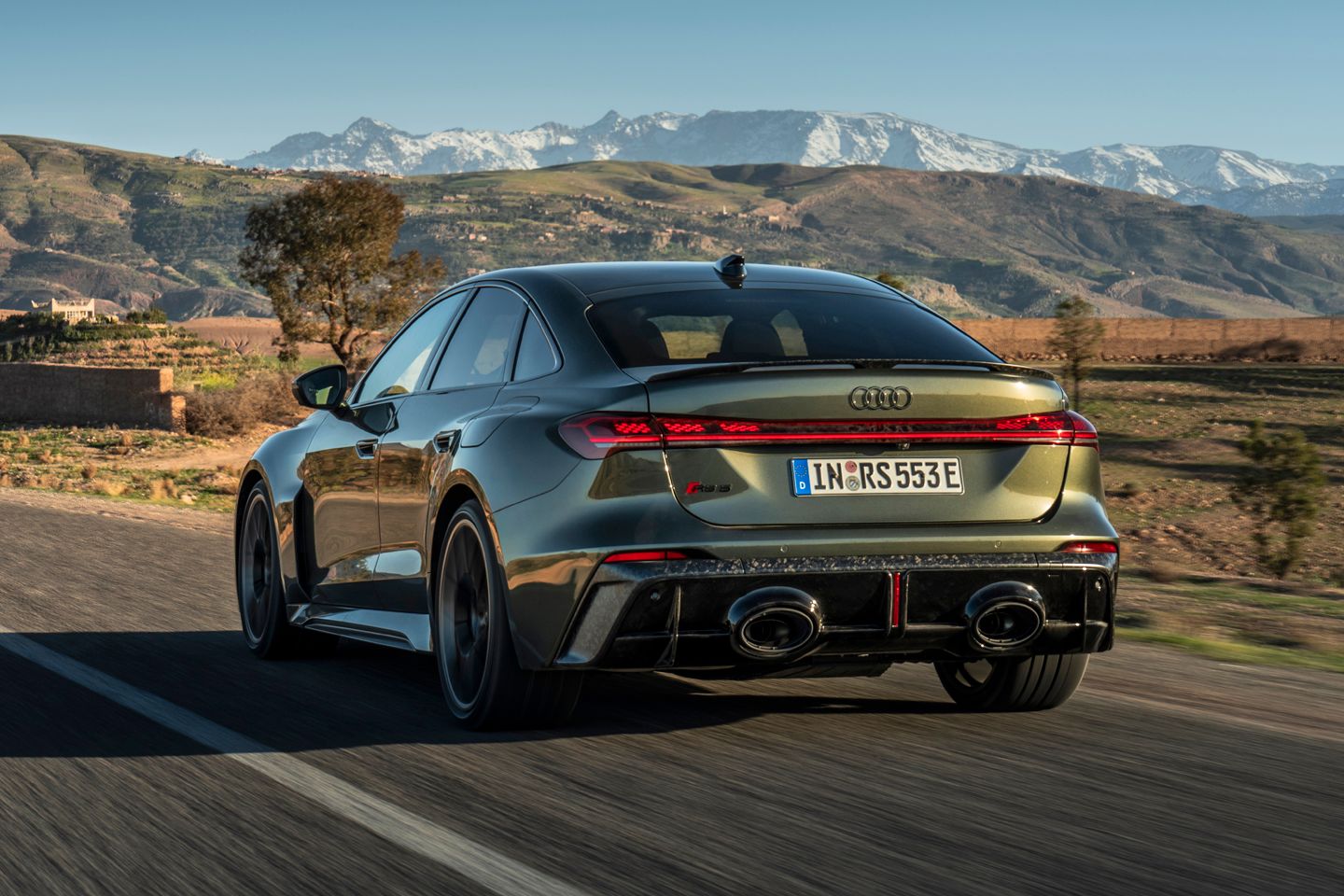
There’s a feeling at Audi Sport, the wholly owned RS-making subsidiary of Audi, that plug-in hybrids are more than just a short-term bridging technology. Selling pure big-engined sports saloons/estates is hard for tax and legislation reasons, but selling pure electric ones is hard for demand ones. So here we are, with the first RS Audi PHEV, the RS5, and until the demand/legislation conundrum changes, one imagines it won’t be the last. As per the new BMW M5, if we want new super-saloons/estates, this is one of the few ways we’ll get them.
The ‘5’ is a result of Audi’s brief flirtation with changing the model names throughout its range – with odd numbers for combustion cars and even numbers for EVs. They’ve u-turned on that idea, but not in time to save this model. This is effectively the new RS4, the latest in a sporty compact executive model line that stretches back to the RS2 of 1994. There have been highlights along the way.
Whether the new RS5 will be another depends on how Audi manages this best of/worst of both worlds technology. In some ways, PHEVs make a lot of sense; you get a useful zero emissions range, the reassurance of a quick fuel-fill and the thrill of an engine. On the other hand, by the time you’ve put an engine and a battery and some motors in, you can end up with a car that, like here, weighs the other side of 2.3 tonnes.

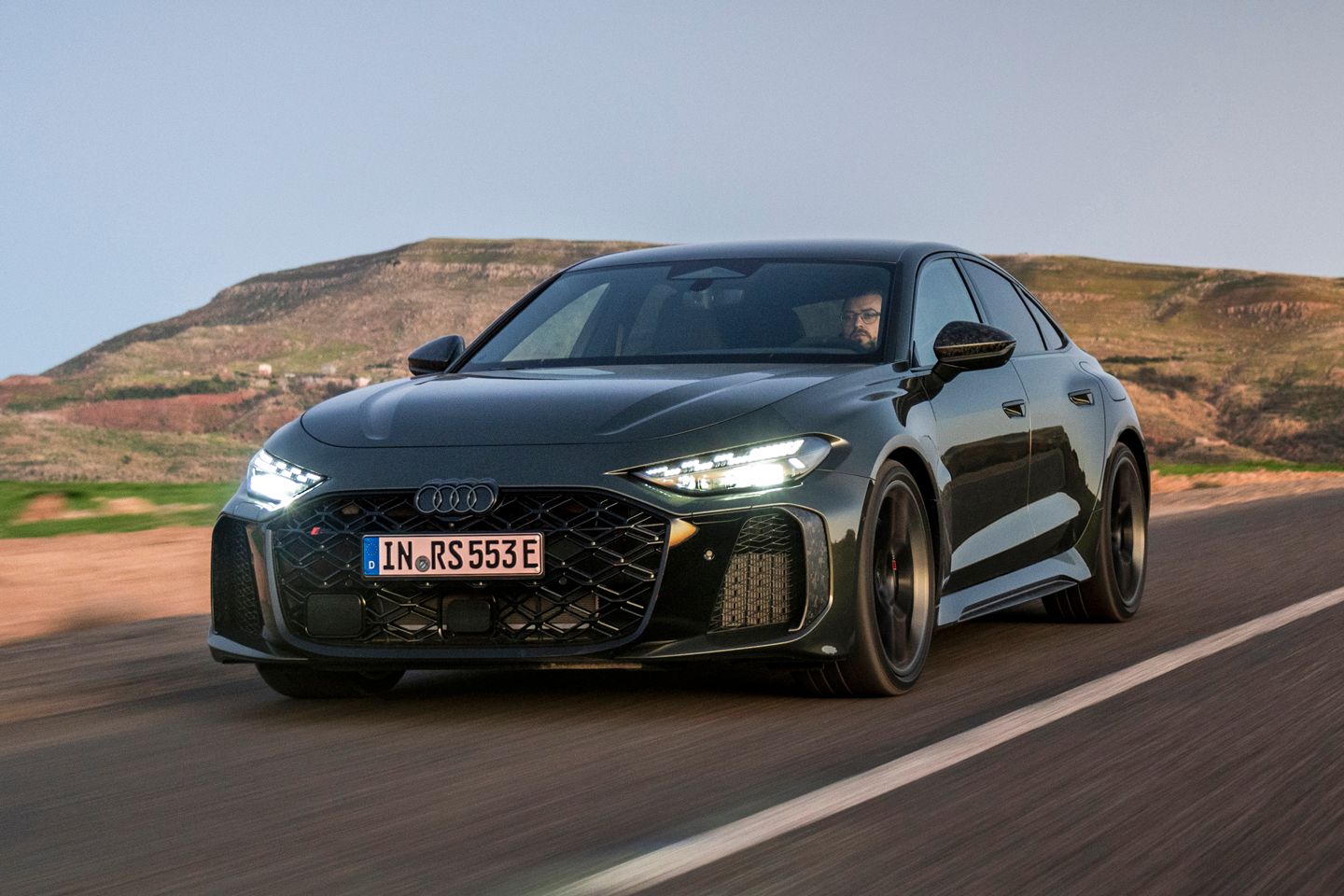
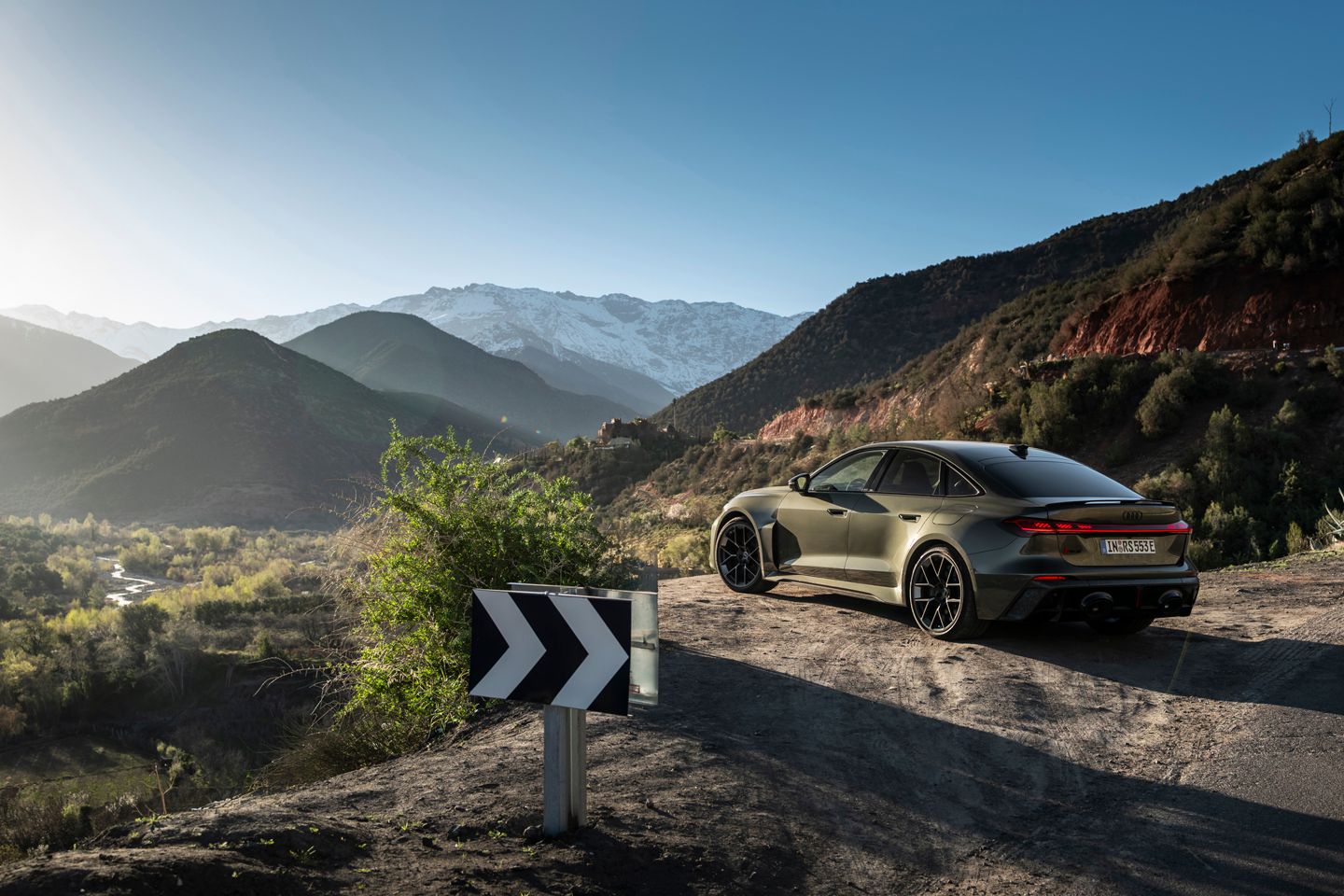
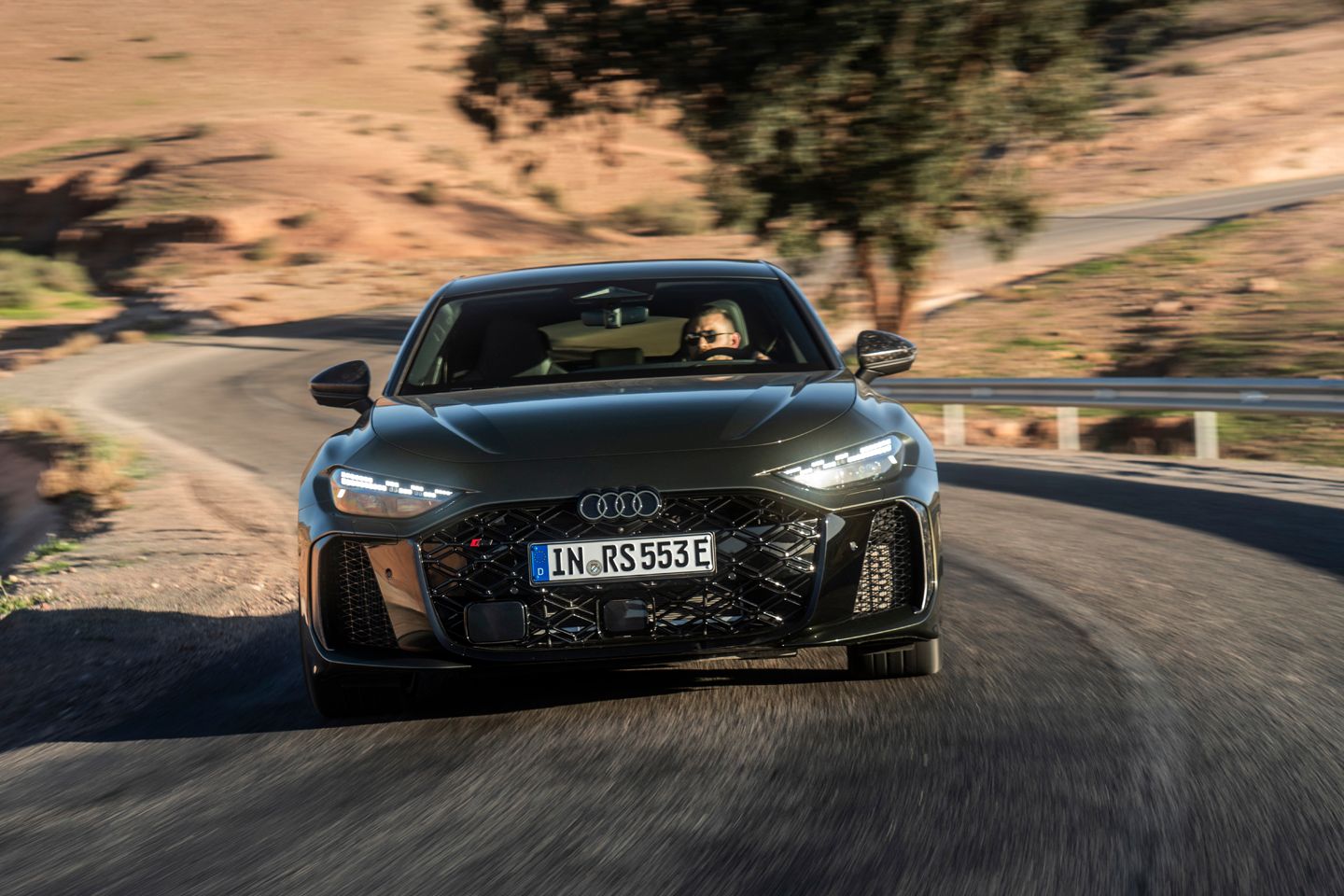
It’s available as what Audi calls a sedan (actually a rakish hatch, pictured) or an Avant (estate), which is historically the UK’s body style of choice. Prices will go from around £90,000 to £110,000 when deliveries start in June 2026. And in either body style the ‘B10’ RS5 is a considerably angrier-looking car than the regular A5, and bigger than its RS4 predecessor, too, at 4.9m long (+114mm), 2.1m wide across the mirrors (+77mm) and with a 2.9m wheelbase (also +77mm).
A 2.9-litre V6 engine that Audi Sport says is fundamentally new lives under the bonnet, making 509hp and 443lb ft on its own. It’s supplemented by an electric motor mounted in the eight-speed gearbox, which chips-in with 176hp/339lb ft to give a system total of 639hp and 590lb ft. All four wheels are driven through a torque-sensing centre differential that can put up to 85 per cent of torque to the rear wheels, but what happens when it gets there could be more significant.
Some sporty Audis (like the previous RS4) have had a clutch either side of the rear differential to help distribute power left and right. Which is dandy, but it can only work with the power it’s receiving. Here there’s an electric motor which can do ‘e-torque vectoring’, by adding braking or accelerative forces to each rear wheel independently. It only develops 5hp/30lb ft on its own but geared down Audi says it can apply a torque difference of 1475lb ft across the diff, while reacting in 15ms. That’s more responsive than torque vectoring via mechanical braking, and there’s the advantage that it can push its own torque to accelerate an outside wheel, too, so it’s not just throttle dependent. Plus it negates having active rear steer.
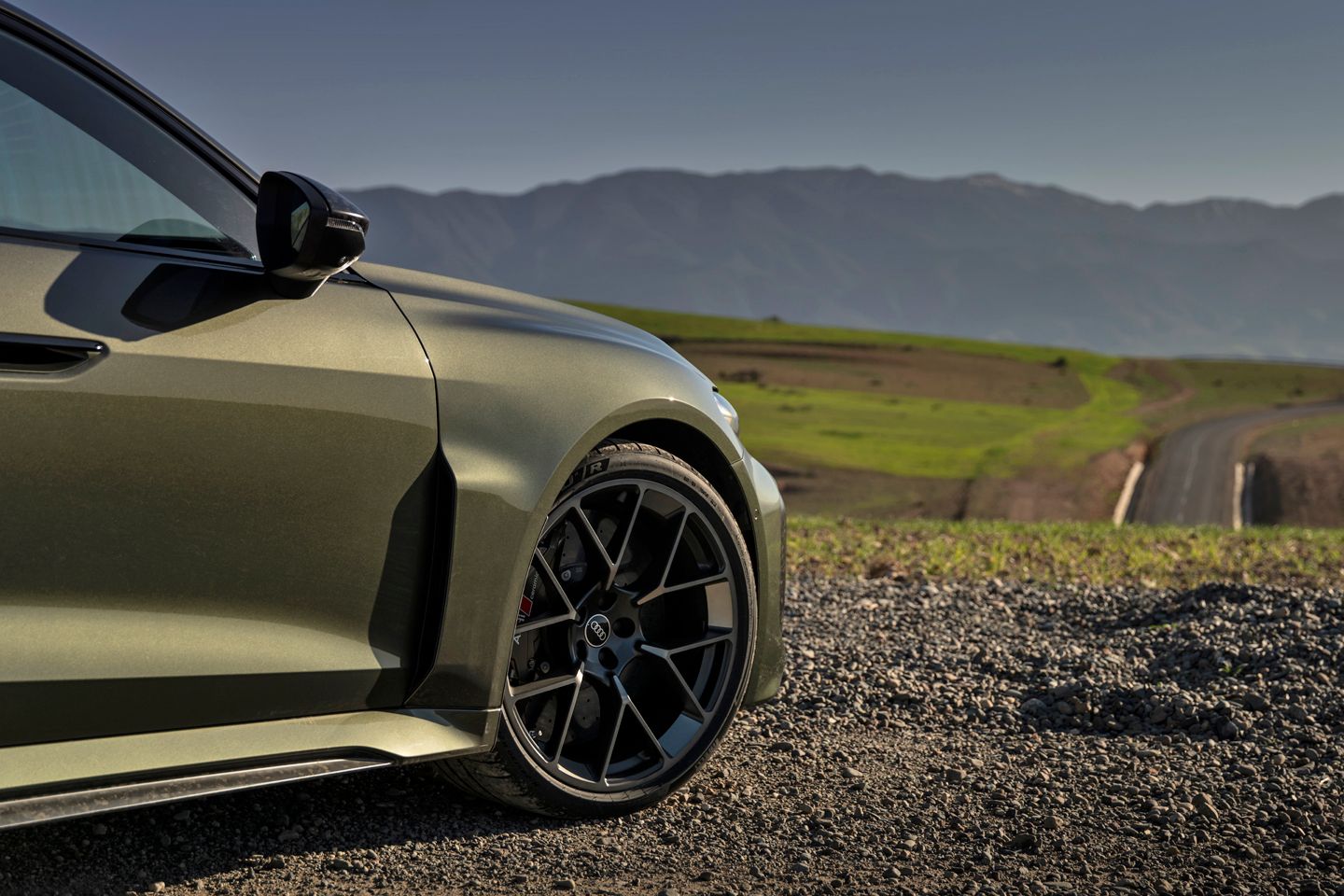
There is more. Most RS5s will be specced with 21-inch wheels, and if the Performance Pack option is ticked (mostly it will be), it gets 440mm front and 420mm rear carbon ceramic brakes: Audi knows previous RS models have had fade issues. Tyres are 285/30 R21s front and rear, bespoke Bridgestones or stickier Pirelli P Zero Rs, and on 10-inch wide front and 10.5-inch wide rear wheels; wider at the back to give greater sidewall stiffness and precision. There are coil springs, passive anti-roll bars and adaptive two-valve dampers with four modes of stiffness.
All of the RS5’s hardware exists to mitigate what happens when you spec a PHEV with a 22kWh battery mounted beneath the boot floor, which is that you get a kerbweight of 2,355kg (hatchback) or 2,370kg (Avant). There are other drawbacks too; the fuel tank is only 48 litres and the Avant’s boot only 361 litres, with a fixed floor as well, so there’s nowhere to hide a charge cable. It can still tow up to 1,900kg, though. You could perceive all of this kit as an unvirtuous circle; the opposite of shaving kilos off here and there that lets you fit smaller brakes, which saves more kilos … and so on. This goes the other way.
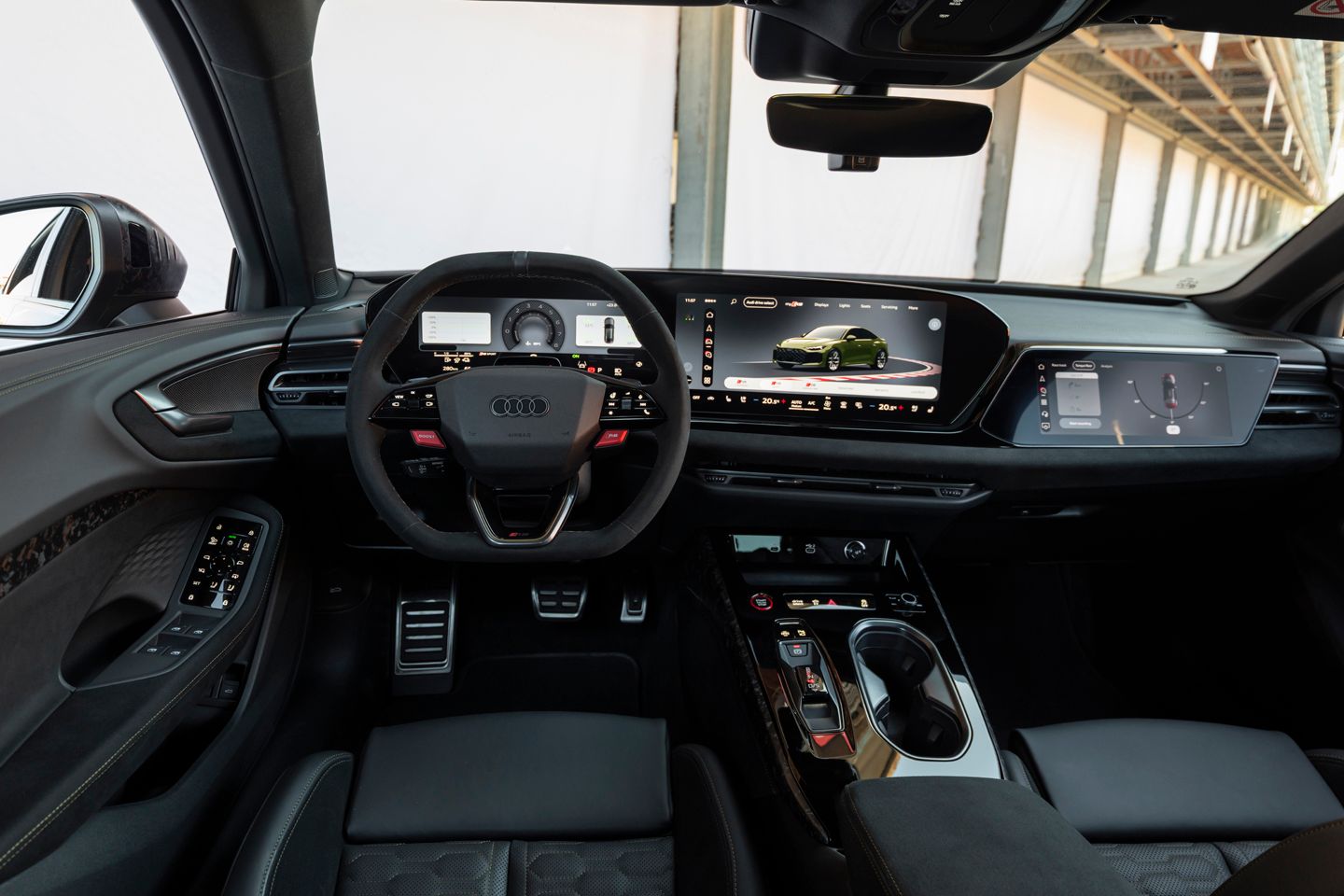
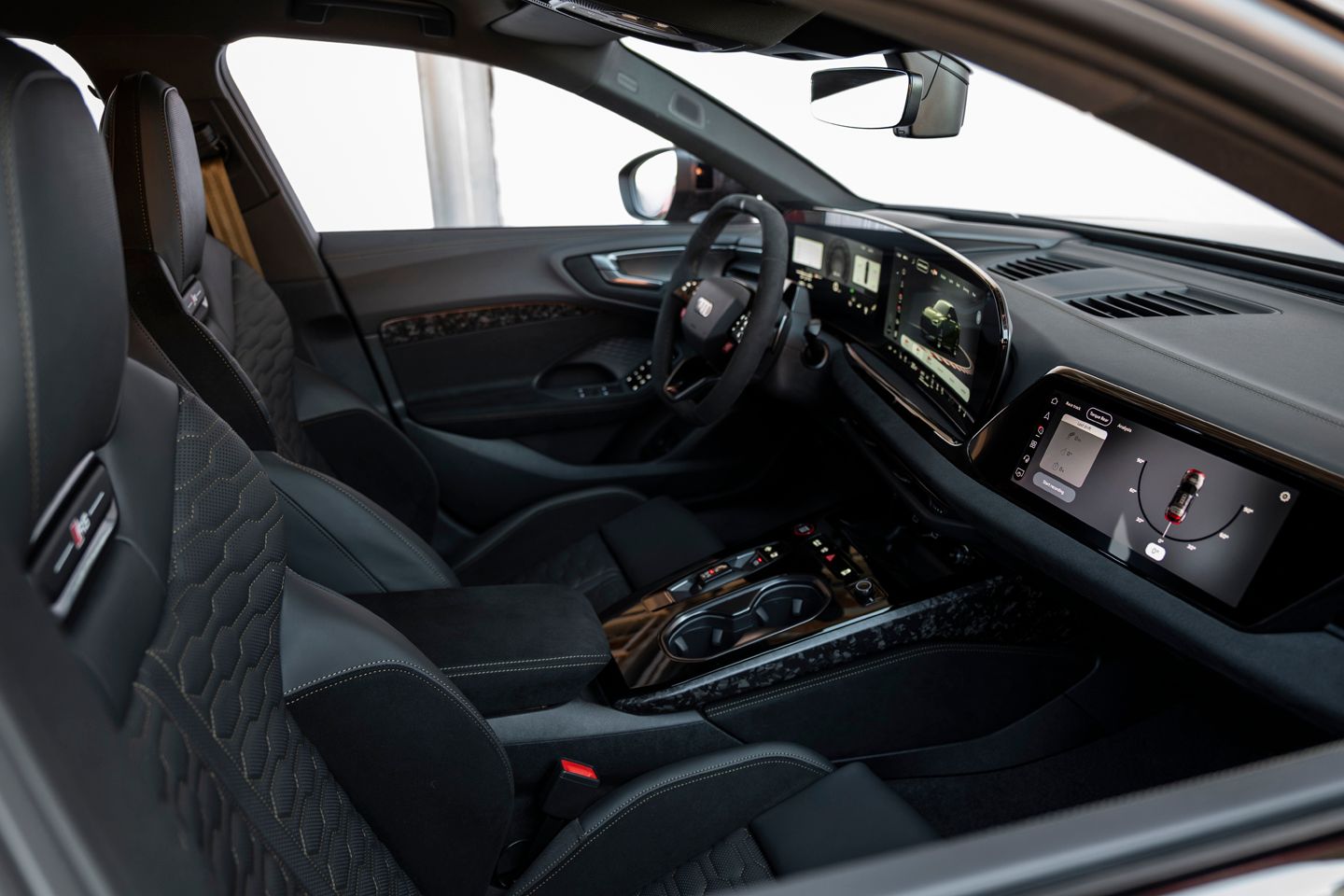
The interior is roomy enough, and has been given some black or stitched RS-appropriate highlights, including two shortcut buttons on the steering wheel for ‘boost’ (10-second max acceleration) and ‘RS’ (drive mode selector) functions. Front chairs have decent bolstering and make for a sound driving position, with reasonable ergonomics albeit too much touchscreen action: Audi’s still newish CEO Gernot Döllner wants to undo this and have more buttons, plus have rounder steering wheels, and I think he undid the weird naming strategy (including that bizarre thing they did with numbering cars based on power outputs), so he sounds like a sensible bloke.
So to drive it. The V6 is smooth, step-off and gearshifts likewise. The nice thing about having motors in gearboxes is that they can pitch-in during all kinds of occasions to smooth things out or assist in revving the engine quickly. Because the motor torque-fills, the turbos can be quite breathy with electrics picking up the slack. As a result, this is a car with a lot of dynamic characters – from silently creeping away without disturbing the neighbours, to having too-urgent throttle response if you’re absolutely on it.
Likewise its dynamic makeup is broad. The ride is pretty good. In the slackest of the damper modes – Comfort – there’s genuine absorbance to it on bad surfaces, without too much evidence that the thick anti-roll bars Audi has specified make the car thud and chunter all of apiece down the road. And we drove it on some pretty shabby roads. In its max-stiff RS Sport mode, things are very different.
In middling balanced modes, body control is still very tight, as I suppose it needs to be given the body weight. But a close control of pitch apparently also assists braking distances, by keeping more weight on the rear to ensure the rear discs can do some work. By-wire brake feel is genuinely good – never a time when I wanted more or less than I got.
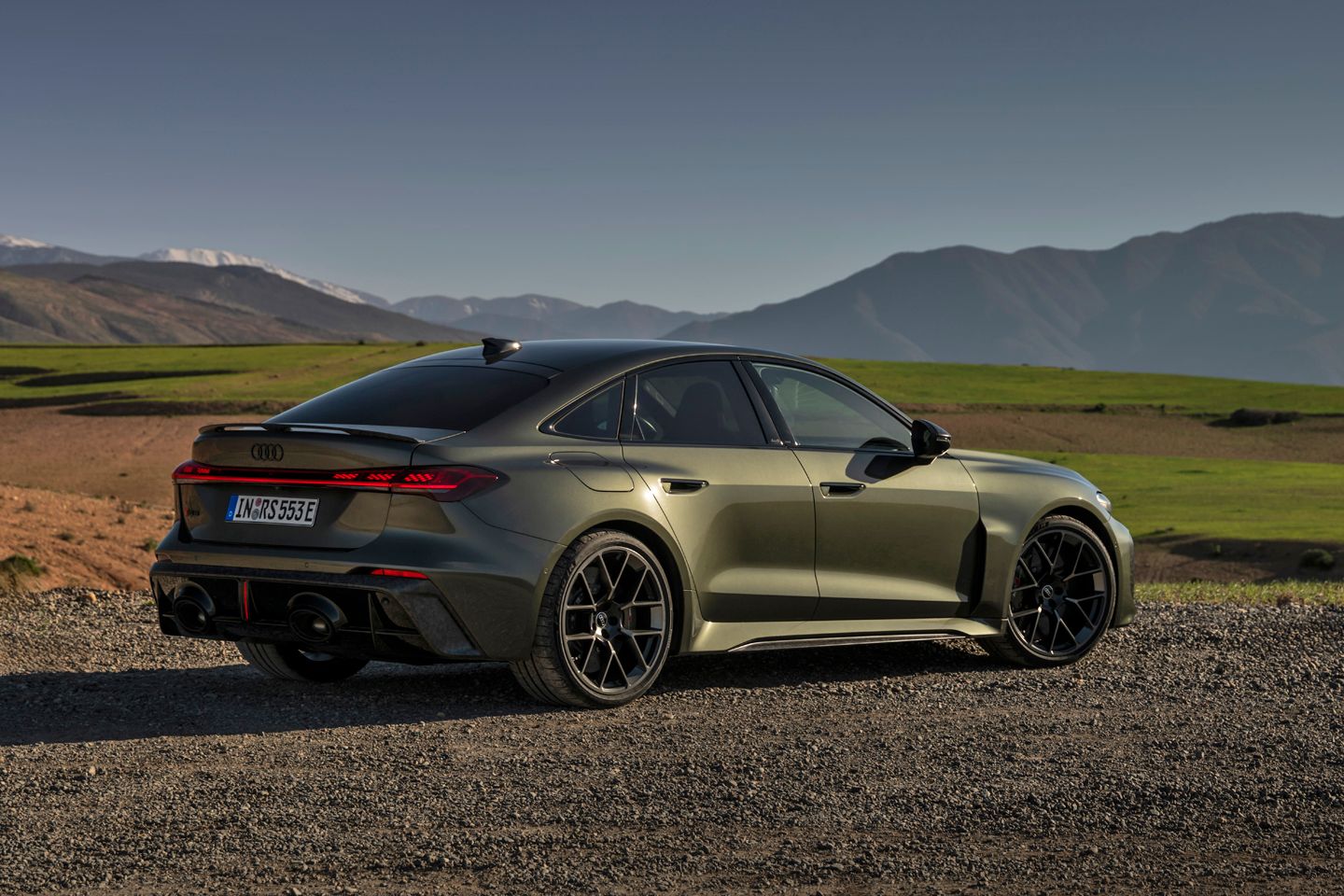
The RS5 steers more quickly than a regular A5, with a 13:1 rather than 15:1 ratio overall, a bit slower around straight ahead for stability, quickening towards the edges of its two-and-a-bit turns between locks. You get some road feel, too. The days of B7 RS4-style interaction and suppleness are, I think, behind us; it might not quite flow like an Alfa Giulia Quadrifoglio, but there’s a lot to like as a road car going at moderate speeds. It might be more broadly supple than a BMW M3 Competition.
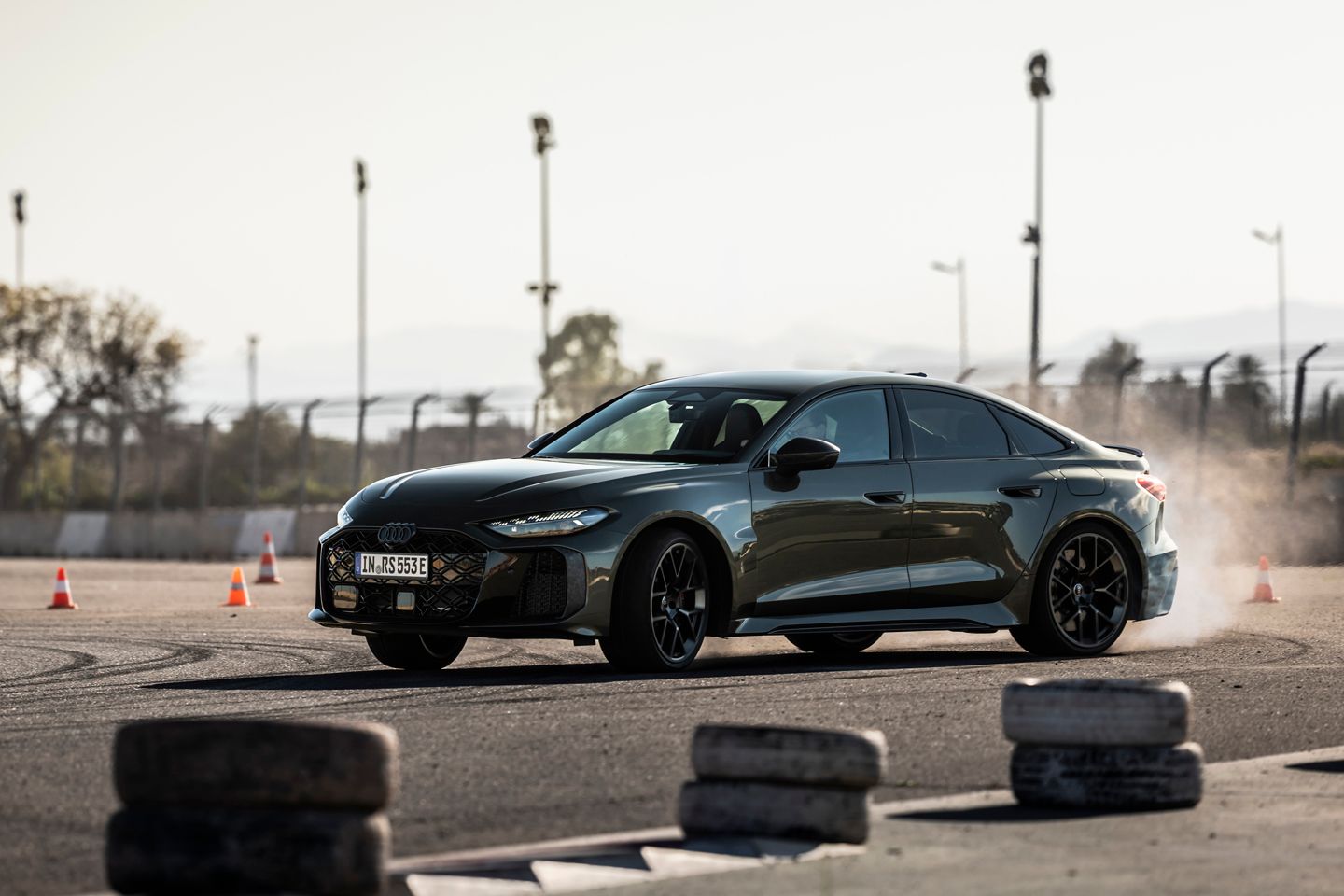
But even with all that kit and caboodle on board, Audi Sport still wants the RS5 to feel agile. In fact, it wants it to be fundamentally oversteery, and to demonstrate just how successful it thinks it has been, as well as a road drive it laid on some laps of a short track plus a slalom and a donut area, so we could appreciate just how wild the new RS5 is.
And it is incredibly mobile. If you ask the car to turn severely, the rear diff motor tugs on an inside wheel to sharpen the car’s cornering line, quelling any onset of understeer. That means you can either use less steering lock to scribe the cornering you want – or, if given more throttle, the system will overspeed the wheel with the most grip, in extremes pushing it out of line and into a very rear-biased drift. On track, if you’ve room, more gas rather than lifting off tends to be your friend.
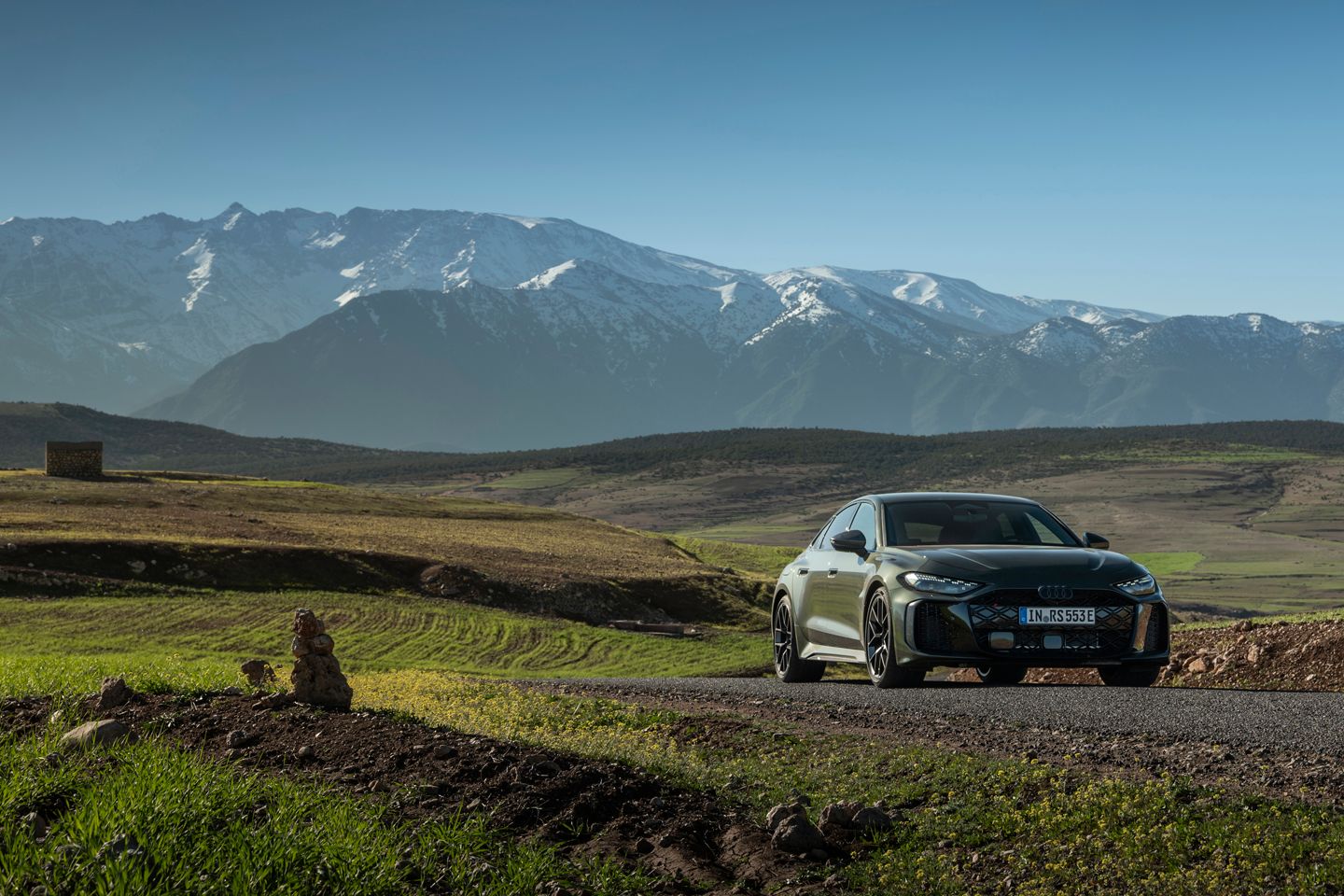
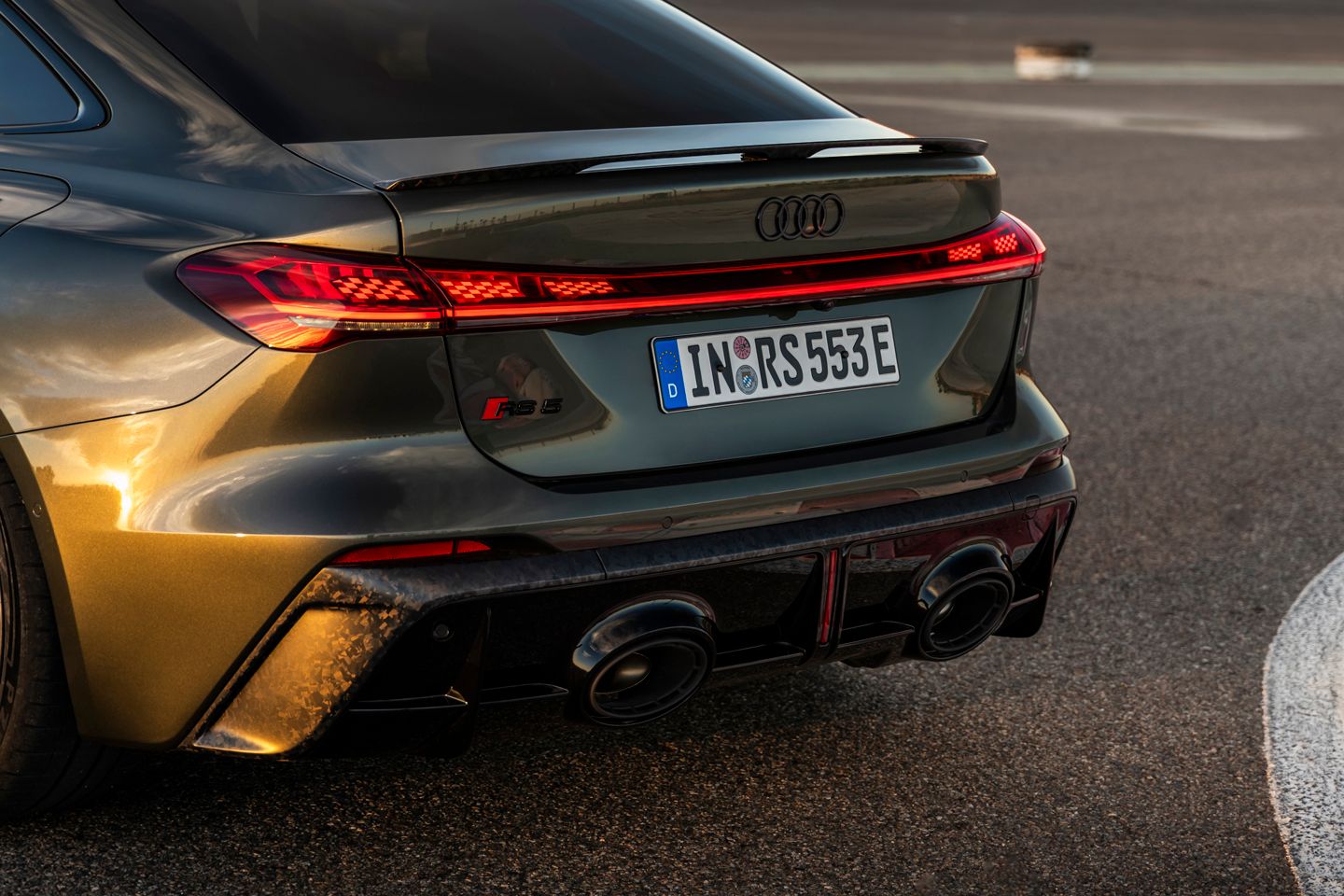
The weight distribution is about even, at 49:51 front:rear, so with balanced tyre sizes and the diff motor pulling and pushing at rear wheels, by the end of a slalom the RS5 could be thrown absurdly sideways. It’ll even hold a drift too; not quite to exclusively rear-drive standards like a BMW M3 in its drift mode, but the front end only wants to pull it straight in extremes.
Yet the system works at road speeds too. Maybe you feel it even more, because given everything is happening a bit slower, you can sense it cutting in and out, making this hefty car feel more lively than it has much right to. It cranks into a corner with, given everything that’s going on, a relatively natural feel – more so than some active-rear-steer equipped cars – and on a good deserted road it’s easy to get into a fast flowing rhythm.
Apparently, only a couple of race teams have so far used this e-torque vectoring idea; it hasn’t shown up in a road car before. But Audi Sport is so pleased with it that it’s going to use it again, and I wouldn’t be surprised if other car makers did too as an alternative to active rear steer. I don’t doubt that here it makes what could feel an oversized wagon considerably more nimble. Would the oversteering Audi be nicer if it was half a tonne lighter? Of course. But given it can’t be, they’ve chucked everything at it, and developed a car with a broad spread of ability – and no little entertainment.
Specification | 2026 Audi RS5
Engine: 2.9-litre (cc tbc), V6, petrol, plus electric motor
Transmission: 8-speed automatic, four-wheel drive
Power (hp): 639 (rpm tbc closer to launch)
Torque (lb ft): 590 (rpm tbc closer to launch)
0-62mph: 3.6secs
Top speed: 177mph (competition pack)
Weight: 2,355kg (hatch), 2370kg (estate)
MPG: TBC, approx. 70mpg
CO2: 87-106g/km
Price: £90-000-£110,000 (base hatch to Performance Pack Avant)